
The friction coefficient is a crucial parameter in the performance and application of tungsten carbide dies. As a trusted Tungsten Carbide Die supplier, I understand the significance of this technical aspect and its impact on various industries. In this blog, we will delve into what the friction coefficient of tungsten carbide die is, its influencing factors, and its importance in practical applications.
Understanding the Friction Coefficient of Tungsten Carbide Die
The friction coefficient is a dimensionless quantity that represents the ratio of the frictional force between two surfaces in contact to the normal force pressing the surfaces together. For a tungsten carbide die, it describes how easily or difficultly a workpiece slides against the die's surface during a forming or machining process.
Tungsten carbide is a composite material composed of tungsten carbide particles embedded in a metallic binder, usually cobalt. Its unique structure gives it excellent hardness, wear - resistance, and strength. The friction coefficient of a tungsten carbide die can vary depending on multiple factors.
Influencing Factors of the Friction Coefficient
Surface Finish
The surface finish of a tungsten carbide die plays a significant role in determining its friction coefficient. A smoother surface finish generally results in a lower friction coefficient. When the die surface is highly polished, there are fewer asperities (small bumps and valleys) to interlock with the workpiece surface. This reduces the frictional force and allows for a more efficient sliding motion. For example, in precision cold - heading processes where a wire or rod is formed into a specific shape, a die with a fine - polished surface can reduce the force required for deformation and minimize the wear on both the die and the workpiece.
Workpiece Material
The material of the workpiece also affects the friction coefficient of the tungsten carbide die. Different metals and alloys have different surface properties, hardness, and chemical reactivity. For instance, when forming a soft metal like aluminum, the friction coefficient may be relatively lower compared to forming a harder metal such as stainless steel. The interaction between the atoms of the workpiece material and the tungsten carbide surface can lead to different levels of adhesion and friction. In some cases, chemical reactions at the interface between the die and the workpiece can also occur, which may increase the friction coefficient.
Lubrication
Lubrication is an effective way to reduce the friction coefficient of a tungsten carbide die. Lubricants can form a thin film between the die and the workpiece, separating the two surfaces and reducing direct contact. There are various types of lubricants available, including oil - based, water - based, and solid lubricants. Oil - based lubricants are commonly used in metal - forming processes as they can provide good lubrication and cooling. Solid lubricants, such as graphite or molybdenum disulfide, can be applied in high - temperature or high - pressure environments where liquid lubricants may not be suitable. Proper lubrication not only reduces friction but also helps to prevent wear, galling (adhesive wear), and heat generation during the forming process.
Operating Conditions
The operating conditions, such as temperature, pressure, and sliding speed, have a considerable impact on the friction coefficient of a tungsten carbide die. At higher temperatures, the mechanical properties of both the die and the workpiece can change. The die may expand, and the workpiece material may become softer, which can affect the contact area and the friction force. Higher pressures can also increase the contact area between the die and the workpiece, leading to an increase in the friction coefficient. Similarly, a higher sliding speed can cause an increase in frictional heating, which may change the lubrication conditions and the surface properties of the die and the workpiece.
Importance of the Friction Coefficient in Practical Applications
Die Life
A lower friction coefficient can significantly extend the life of a tungsten carbide die. When the friction between the die and the workpiece is reduced, there is less wear on the die surface. Wear can lead to dimensional changes in the die, which can affect the quality of the formed parts. By minimizing friction, the die can maintain its shape and size for a longer period, reducing the frequency of die replacement and saving costs for the manufacturer.
Product Quality
The friction coefficient also has a direct impact on the quality of the formed products. In cold - heading and forging processes, excessive friction can cause surface defects on the workpiece, such as scratches, cracks, or uneven deformation. A lower friction coefficient ensures a more uniform distribution of stress during the forming process, resulting in parts with better surface finish, dimensional accuracy, and mechanical properties.
Energy Efficiency
In industrial manufacturing, reducing the friction coefficient of tungsten carbide dies can lead to improved energy efficiency. When the frictional force is lower, less energy is required to perform the forming or machining operation. This can translate into lower power consumption and reduced production costs. For large - scale manufacturing operations, even a small reduction in the friction coefficient can result in significant energy savings over time.
Our Products and Their Friction - Related Advantages
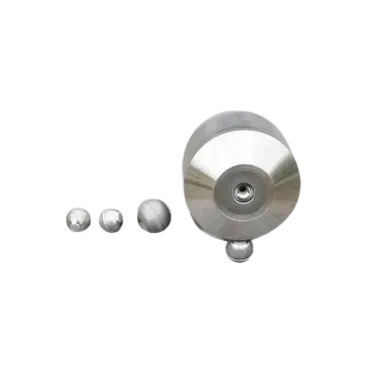
As a Tungsten Carbide Die supplier, we offer a wide range of high - quality dies designed to optimize the friction coefficient for different applications. Our Tungsten Carbide Die products are manufactured with advanced machining and surface - treatment techniques to ensure a smooth and consistent surface finish. This helps to minimize the friction coefficient and improve the overall performance of the die.
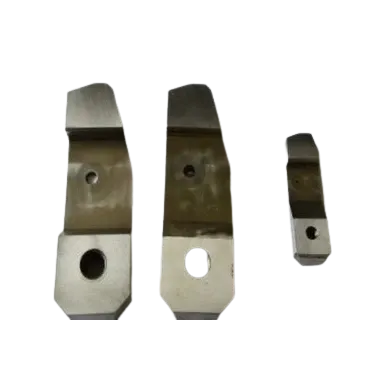
Our Carbide Cut Off Blade COB is another product where the control of the friction coefficient is crucial. In cutting operations, a lower friction coefficient allows for cleaner cuts, reduces the cutting force, and extends the blade's life. We use high - quality carbide materials and precision grinding processes to achieve the desired friction characteristics for our cut - off blades.
For cold - heading applications, our Carbide Cold Heading Dies are engineered to provide low - friction performance. By carefully selecting the binder content and optimizing the grain size of the tungsten carbide, we can enhance the die's wear - resistance and reduce the friction coefficient. This enables efficient and precise cold - heading processes, resulting in high - quality formed parts.
Conclusion
The friction coefficient of a tungsten carbide die is a complex parameter that is influenced by multiple factors, including surface finish, workpiece material, lubrication, and operating conditions. Understanding and controlling the friction coefficient is essential for maximizing the die life, improving product quality, and enhancing energy efficiency in industrial manufacturing processes.
As a reliable Tungsten Carbide Die supplier, we are committed to providing products with optimal friction characteristics. Our expertise in material selection, manufacturing processes, and surface treatment allows us to offer dies that meet the diverse needs of our customers.
If you are interested in our Tungsten Carbide Die products or have any questions regarding the friction coefficient and its application in your specific process, we encourage you to contact us for a detailed discussion. Our team of experts is ready to assist you in finding the most suitable solutions for your manufacturing requirements.
References
- Callister, W. D., & Rethwisch, D. G. (2011). Materials Science and Engineering: An Introduction. Wiley.
- Kalpakjian, S., & Schmid, S. R. (2008). Manufacturing Engineering and Technology. Pearson Prentice Hall.
- Shaw, M. C. (2005). Metal Cutting Principles. Oxford University Press.