
Hey there! As a supplier of Carbon Steel Balls, I often get asked about the fatigue resistance of these little round wonders. So, I thought I'd take a deep dive into this topic and share what I've learned over the years.
First off, let's talk about what fatigue resistance actually means. In simple terms, fatigue resistance is the ability of a material to withstand repeated loading and unloading without failing. When it comes to carbon steel balls, this is super important because they're often used in applications where they're subjected to a lot of stress and wear.
Carbon steel is an alloy of iron and carbon, with the carbon content typically ranging from 0.05% to 2.1%. The amount of carbon in the steel has a big impact on its properties, including its fatigue resistance. Generally speaking, higher carbon content can lead to increased hardness and strength, which can improve fatigue resistance. However, too much carbon can also make the steel more brittle, which can actually reduce its fatigue resistance.
One of the key factors that affects the fatigue resistance of carbon steel balls is the quality of the steel itself. At our company, we use only the highest quality carbon steel to ensure that our balls have excellent fatigue resistance. We source our steel from trusted suppliers and subject it to rigorous testing to make sure it meets our strict standards.
Another important factor is the manufacturing process. The way the carbon steel balls are made can have a big impact on their fatigue resistance. For example, if the balls are not properly heat-treated, they may not have the right balance of hardness and toughness, which can lead to premature failure. At our facility, we use state-of-the-art manufacturing techniques to ensure that our carbon steel balls are produced with the highest level of precision and quality.
In addition to the quality of the steel and the manufacturing process, the surface finish of the carbon steel balls also plays a role in their fatigue resistance. A smooth surface finish can reduce friction and wear, which can help to extend the life of the balls. We use advanced polishing techniques to ensure that our carbon steel balls have a smooth, uniform surface finish.
So, how do you know if a carbon steel ball has good fatigue resistance? Well, there are a few ways to tell. One is to look at the specifications provided by the manufacturer. Reputable manufacturers will typically provide information about the fatigue resistance of their products, including things like the number of cycles they can withstand before failing.
Another way to test the fatigue resistance of carbon steel balls is to perform a fatigue test. This involves subjecting the balls to a repeated loading and unloading cycle and measuring how long they last before failing. At our company, we perform fatigue tests on all of our carbon steel balls to ensure that they meet our high standards of quality and performance.
Now, let's talk about some of the applications where carbon steel balls are commonly used. One of the most common applications is in bearings. Bearings are used in a wide range of industries, including automotive, aerospace, and manufacturing. In these applications, the carbon steel balls are subjected to a lot of stress and wear, so it's important that they have good fatigue resistance.
Another application where carbon steel balls are used is in valves. Valves are used to control the flow of fluids and gases in a variety of systems, including plumbing, HVAC, and industrial processes. The carbon steel balls in valves need to be able to withstand repeated opening and closing cycles without failing, so good fatigue resistance is essential.
Carbon steel balls are also used in a variety of other applications, such as ball screws, linear guides, and gears. In all of these applications, the fatigue resistance of the carbon steel balls is crucial to ensuring the reliable operation of the equipment.
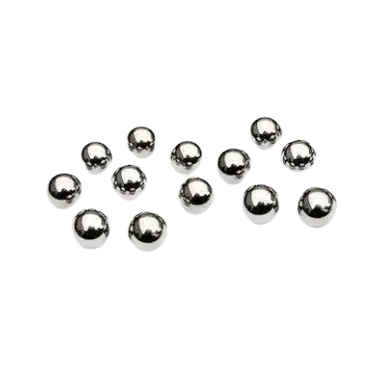
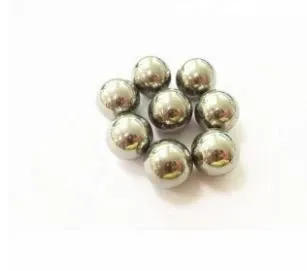
If you're in the market for carbon steel balls, I highly recommend checking out our Carbon Steel Ball products. We offer a wide range of sizes and grades to meet the needs of different applications. Whether you need balls for bearings, valves, or any other application, we have the right solution for you.
In addition to our carbon steel balls, we also offer Din 5401 Steel Ball and 316 Stainless Steel Balls. These products also have excellent fatigue resistance and are suitable for a variety of applications.
If you have any questions about the fatigue resistance of our carbon steel balls or any of our other products, please don't hesitate to contact us. Our team of experts is always happy to help you find the right solution for your needs. We can provide you with detailed information about our products, including their fatigue resistance, and help you choose the best option for your application.
In conclusion, the fatigue resistance of carbon steel balls is an important factor to consider when choosing a ball for your application. By using high-quality steel, advanced manufacturing techniques, and a smooth surface finish, we can ensure that our carbon steel balls have excellent fatigue resistance and will provide reliable performance for years to come. If you're interested in learning more about our carbon steel balls or any of our other products, please don't hesitate to contact us. We'd love to hear from you and help you find the right solution for your needs.
References:
- ASM Handbook, Volume 1: Properties and Selection: Irons, Steels, and High-Performance Alloys
- Metals Handbook Desk Edition, Third Edition
- Carbon Steel Balls: A Guide to Selection and Application