
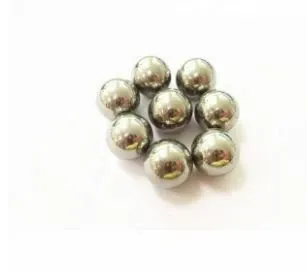
When it comes to stainless steel balls, the differences between those made in different countries are multi - faceted, encompassing aspects such as manufacturing standards, raw material quality, production technology, and price. As a stainless steel ball supplier, I've had the privilege of dealing with products from various regions and understanding these distinctions in detail.
Manufacturing Standards
Manufacturing standards play a pivotal role in determining the quality and performance of stainless steel balls. Different countries have their own sets of regulations and specifications.
In the United States, standards such as those set by the American Society for Testing and Materials (ASTM) are widely recognized. ASTM standards are known for their rigor and comprehensiveness, covering a wide range of properties including chemical composition, hardness, and dimensional accuracy. For instance, ASTM A320 is a standard for alloy - steel and stainless - steel bolting materials for low - temperature service. When it comes to stainless steel balls, these standards ensure that the products meet high - quality benchmarks, which are crucial for applications in industries like aerospace and medical devices.
Germany, on the other hand, is renowned for its precision engineering and strict manufacturing standards. The Deutsches Institut für Normung (DIN) standards are highly respected globally. Din 5401 Steel Ball is a prime example. DIN 5401 specifies requirements for steel balls in terms of their diameter, roundness, and surface finish. German - made stainless steel balls adhering to these standards are often favored in high - end machinery and automotive applications due to their consistent quality and high precision.
In China, the Chinese National Standards (GB) have been continuously evolving. With the rapid development of the manufacturing industry in China, the GB standards have become more in line with international best practices. Chinese manufacturers are increasingly focusing on meeting or even exceeding these standards to enhance the competitiveness of their stainless steel balls in the global market.
Raw Material Quality
The quality of raw materials is another significant factor contributing to the differences between stainless steel balls from different countries.
Australia is rich in high - grade iron ore, which is a key raw material for stainless steel production. Stainless steel balls made from Australian - sourced iron ore often have a relatively pure chemical composition. This purity can result in better corrosion resistance and mechanical properties. For example, in marine applications where stainless steel balls are exposed to a harsh salt - water environment, balls made from high - quality Australian raw materials can withstand corrosion for a longer period.
Japan is known for its advanced steel - making technology and strict control over raw material quality. Japanese manufacturers pay great attention to the selection and processing of raw materials. They are able to produce stainless steel with a fine - grained microstructure, which enhances the strength and toughness of the stainless steel balls. Japanese - made stainless steel balls are often used in high - precision bearings and electronic devices where reliability and performance are of utmost importance.
In some developing countries, although the raw materials may be available, the lack of advanced beneficiation and purification techniques can lead to stainless steel balls with relatively lower purity and less consistent quality.

Production Technology
The production technology employed in different countries also creates notable differences in stainless steel balls.
Sweden is at the forefront of advanced steel - making and ball - manufacturing technologies. Swedish manufacturers use state - of - the - art forging and machining processes. For example, they utilize precision forging techniques to shape the stainless steel balls, which can ensure a more uniform internal structure and better mechanical properties. Additionally, their advanced heat - treatment processes can precisely control the hardness and toughness of the balls. Swedish - made stainless steel balls are often used in high - performance industrial equipment where high - speed rotation and heavy loads are involved.
In India, the manufacturing industry has been growing rapidly in recent years. Indian manufacturers are gradually adopting modern production technologies. However, compared with some developed countries, there may still be a gap in terms of the scale of automation and the precision of manufacturing processes. Some Indian - made stainless steel balls are more suitable for cost - sensitive applications where a certain level of quality is required but not the highest - end performance.
Price
Price is an important consideration for customers when choosing stainless steel balls. Generally, stainless steel balls from developed countries tend to be more expensive. This is mainly due to the higher cost of raw materials, strict manufacturing standards, and advanced production technologies. For example, German and Swedish - made stainless steel balls are often priced at a premium because of their high quality and precision.
On the contrary, stainless steel balls from some developing countries may offer more competitive prices. Chinese manufacturers, for instance, are able to produce stainless steel balls at a relatively lower cost due to economies of scale and efficient production management. However, it's important to note that lower price doesn't necessarily mean lower quality. With the continuous improvement of technology and quality control in China, Chinese - made stainless steel balls are increasingly recognized for their good balance between price and quality.
Application Suitability
The differences in stainless steel balls from different countries also affect their suitability for various applications.
For high - precision medical equipment, 316 Stainless Steel Balls made in the United States or Japan are often preferred. These countries' strict manufacturing standards and high - quality raw materials ensure that the balls meet the stringent requirements for cleanliness, biocompatibility, and dimensional accuracy in medical applications.
In the construction industry, where large - scale and cost - effective stainless steel balls are needed, Chinese - made balls are a popular choice. They can provide a reliable solution at a reasonable price, meeting the basic requirements of construction machinery and equipment.
For high - speed and high - load industrial bearings, Swedish or German - made stainless steel balls are the top candidates. Their excellent mechanical properties and precision manufacturing make them capable of withstanding the harsh operating conditions in these applications.
Conclusion
In conclusion, the differences between stainless steel balls made in different countries are the result of a combination of factors including manufacturing standards, raw material quality, production technology, price, and application suitability. As a stainless steel ball supplier, I understand the unique features of products from different regions. Whether you are looking for high - end, precision - engineered stainless steel balls or cost - effective solutions, there are options available from different countries.
If you are in the market for stainless steel balls and want to discuss your specific requirements, I invite you to reach out for a procurement consultation. We can work together to find the most suitable stainless steel balls for your applications.
References
- ASTM International. (2023). ASTM standards related to stainless steel.
- Deutsches Institut für Normung e.V. (2023). DIN standards for steel balls.
- Chinese National Standards. (2023). GB standards for stainless steel products.
- Industry reports on global stainless steel ball manufacturing.