
Hey there! As a supplier of spherical rollers, I often get asked about the differences between spherical rollers and other types of rollers. So, I thought I'd take a few minutes to break it down for you.
First off, let's talk about what rollers are used for. Rollers are a type of rolling element that are used in bearings to reduce friction between moving parts. They come in all sorts of shapes and sizes, and each type has its own unique set of characteristics and applications.
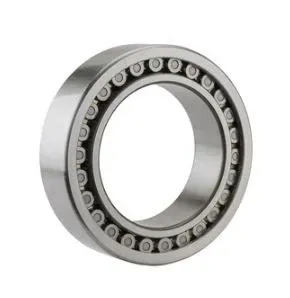
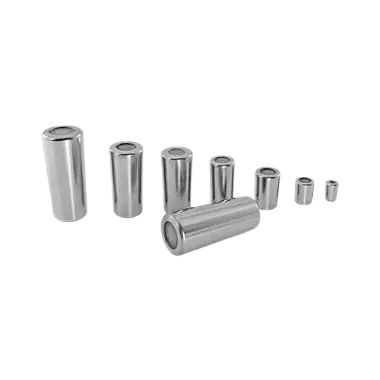
One of the most common types of rollers is the Cylindrical Roller. These rollers are, as the name suggests, cylindrical in shape. They're great for applications where high radial loads are involved. Cylindrical rollers have a large contact area with the raceway, which allows them to handle heavy loads without deforming too much. They're often used in things like machine tools, electric motors, and automotive transmissions.
But here's the thing: cylindrical rollers aren't so hot when it comes to handling misalignment. If the shaft and the housing aren't perfectly aligned, cylindrical rollers can wear out quickly and cause problems. That's where spherical rollers come in.
Spherical rollers are designed to handle misalignment. They have a spherical outer surface, which allows them to self-align within the bearing housing. This means that even if the shaft and the housing aren't perfectly in line, the spherical rollers can still function properly. They're like little self-correcting machines!
Another advantage of spherical rollers is their ability to handle both radial and axial loads. Radial loads are forces that act perpendicular to the shaft, while axial loads are forces that act parallel to the shaft. Spherical rollers can handle a combination of these loads, making them very versatile. They're commonly used in heavy-duty applications such as mining equipment, construction machinery, and paper mills.
Now, let's compare spherical rollers to Conical Rollers. Conical rollers are tapered in shape, which gives them a unique advantage when it comes to handling axial loads. They're really good at pushing or pulling in one direction, which makes them ideal for applications where there's a significant axial force. For example, they're often used in automotive wheel bearings, where they help to keep the wheels in place and handle the forces generated by turning and braking.
However, conical rollers aren't as good at handling misalignment as spherical rollers. And they also have a more limited ability to handle radial loads compared to spherical rollers. So, if you're dealing with a situation where there's a lot of misalignment and a combination of radial and axial loads, spherical rollers are probably the way to go.
Then there are Gravity Taper Roller. These rollers are a bit of a specialized type. They're designed to use gravity to their advantage, which can be really useful in certain applications. Gravity taper rollers are often used in conveyor systems, where they help to move materials along by using the force of gravity.
But again, like conical rollers, gravity taper rollers have their limitations. They're not as good at handling misalignment as spherical rollers, and they may not be able to handle as wide a range of loads.
In terms of materials, spherical rollers are usually made from high-quality steel. This gives them the strength and durability they need to handle heavy loads and harsh operating conditions. Other types of rollers can also be made from steel, but the specific type of steel and the manufacturing process can vary depending on the application.
When it comes to lubrication, all types of rollers need proper lubrication to work well. Lubrication helps to reduce friction, prevent wear, and dissipate heat. Spherical rollers, in particular, need to be lubricated regularly to ensure their self-aligning feature works properly.
So, to sum it up, the main difference between spherical rollers and other types of rollers is their ability to handle misalignment and a combination of radial and axial loads. Spherical rollers are like the all-rounders of the roller world, able to adapt to different situations and keep things running smoothly.
If you're in the market for rollers and you're not sure which type is right for your application, don't hesitate to reach out. As a spherical roller supplier, I've got the knowledge and experience to help you make the best choice. Whether you're dealing with a small machine or a large industrial operation, I can provide you with the right spherical rollers to meet your needs.
Contact me to start a conversation about your roller requirements. Let's work together to find the perfect solution for your business.
References
- "Rolling Bearing Technology" by SKF
- "Handbook of Bearings" by Timken Company