
Hey there! As a supplier of stainless steel balls, I often get asked about the difference between solid and hollow stainless steel balls. It's a topic that's not only interesting but also crucial for those in industries where these balls are used. So, let's dive right in and explore what sets these two types of balls apart.
Physical Characteristics
Density and Weight
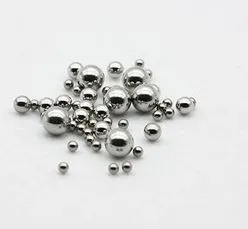
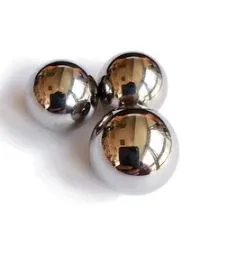
One of the most obvious differences between solid and hollow stainless steel balls is their density and weight. Solid stainless steel balls, as the name suggests, are made of a solid piece of stainless steel throughout. This means they have a significantly higher density compared to hollow ones. For example, a solid 316 Stainless Steel Balls will weigh much more than a hollow ball of the same size. This difference in weight can be a major factor when choosing which type of ball to use. In applications where weight is a concern, such as in aerospace or certain mechanical devices, hollow balls might be the better choice.
Structure
The structure of solid and hollow stainless steel balls is also very different. A solid ball has a uniform and continuous structure, which gives it high strength and durability. It can withstand high pressure and stress without deforming easily. On the other hand, hollow balls have an empty space inside. This structure makes them more flexible in some ways but also less strong than solid balls. They can be more prone to damage if exposed to excessive force.
Manufacturing Processes
Solid Stainless Steel Balls
Solid stainless steel balls are typically manufactured through a process called cold heading or hot forging. In cold heading, a piece of stainless steel wire is cut to the appropriate length and then formed into a ball shape using a series of dies. This process is fast and efficient, and it can produce high - quality balls with precise dimensions. Hot forging, on the other hand, involves heating the stainless steel to a high temperature and then shaping it into a ball. This method is often used for larger balls or when a higher level of strength is required.
Hollow Stainless Steel Balls
Making hollow stainless steel balls is a more complex process. One common method is to use a casting process. First, a mold is created with the desired shape of the hollow ball. Then, molten stainless steel is poured into the mold, leaving an empty space in the center. After the steel cools and solidifies, the ball is removed from the mold and finished to the required specifications. Another method is to start with a solid ball and then drill or machine out the center to create the hollow space. However, this method is more time - consuming and can be more expensive.
Performance and Applications
Solid Stainless Steel Balls
Because of their high strength and density, solid stainless steel balls are widely used in applications where durability and precision are essential. In the manufacturing of bearings, for instance, solid balls ensure smooth and reliable operation. The high load - bearing capacity of solid balls makes them suitable for heavy - duty machinery. They are also commonly used in valve applications, where they need to withstand high pressures and corrosive environments. Large Steel Ball such as solid ones are often used in construction equipment and mining machinery.
Hollow Stainless Steel Balls
Hollow stainless steel balls, due to their lower weight and unique structure, have their own set of applications. They are often used in industries where weight reduction is a priority, like in the automotive and aerospace sectors. In automotive engines, hollow balls can be used in certain components to reduce the overall weight of the engine, which in turn can improve fuel efficiency. They are also used in some decorative applications because of their interesting appearance. Additionally, in some chemical processes, hollow balls can be used as carriers for catalysts due to their large surface area.
Cost Considerations
Solid Stainless Steel Balls
The cost of solid stainless steel balls is generally higher than that of hollow balls. This is mainly because of the higher material consumption. Since solid balls are made entirely of stainless steel, more raw material is needed, which drives up the cost. Also, the manufacturing processes for solid balls, especially those involving high - precision machining, can be expensive. However, in applications where the performance of solid balls is crucial, the higher cost is often justified.
Hollow Stainless Steel Balls
Hollow stainless steel balls are relatively cheaper due to the lower amount of stainless steel used. The reduced material cost is a significant advantage, especially for large - scale applications. However, the complex manufacturing processes for hollow balls can sometimes offset the cost savings, especially for small - batch production.
Quality and Durability
Solid Stainless Steel Balls
Solid balls are known for their high quality and durability. The solid structure provides excellent resistance to wear and tear. They can maintain their shape and performance over long periods, even in harsh environments. With proper heat treatment and surface finishing, solid 316 Stainless Steel Balls can be highly resistant to corrosion, making them suitable for use in marine and chemical industries.
Hollow Stainless Steel Balls
The durability of hollow stainless steel balls depends on the manufacturing process and the quality of the materials used. While they are generally less durable than solid balls, improvements in manufacturing technology have made it possible to produce high - quality hollow balls that can withstand moderate stress and corrosion. However, they are more likely to be damaged if subjected to high - impact forces.
Conclusion
In the end, the choice between solid and hollow stainless steel balls depends on a variety of factors, including the specific application, weight requirements, cost, and durability needs. If you need high - strength, heavy - duty performance, solid balls are your best bet. But if weight reduction and cost - effectiveness are your main concerns, hollow balls might be the way to go.
As a stainless steel ball supplier, I'm here to help you make the right choice for your needs. Whether you're looking for 316 Stainless Steel Balls, Large Steel Ball, or Weldable Steel Balls, we can provide high - quality products at competitive prices. If you're interested in discussing your requirements further and getting a quote, please don't hesitate to reach out. Let's find the perfect stainless steel balls for your application together!
References
- ASM Handbook Committee. (2004). ASM Handbook Volume 15: Casting. ASM International.
- Schmid, S. (2009). Manufacturing Processes for Design Professionals. Wiley.
- Kalpakjian, S., & Schmidt, S. R. (2010). Manufacturing Engineering & Technology. Pearson.