
In the realm of industrial manufacturing and engineering, large steel balls play a pivotal role in a wide array of applications. As a prominent supplier of large steel balls, I often encounter inquiries regarding the diameter of these essential components. Understanding the significance of the diameter in relation to the performance and suitability of large steel balls is crucial for both manufacturers and end - users. In this blog, we will delve deep into the topic of the diameter of large steel balls, exploring its implications, common sizes, and how it affects various applications.
The Importance of Diameter in Large Steel Balls
The diameter of a large steel ball is not just a simple measurement; it is a critical parameter that determines the ball's functionality, durability, and efficiency in different settings. In applications such as ball mills, for instance, the diameter of the steel balls directly impacts the grinding efficiency. Larger diameter balls are capable of exerting greater force, which is beneficial for breaking down larger particles. On the other hand, smaller diameter balls are more suitable for fine grinding, as they can provide a more precise and uniform grinding action.
In the field of bearings, the diameter of the steel balls must be carefully selected to ensure proper fit and smooth operation. A ball with an incorrect diameter can lead to increased friction, premature wear, and even bearing failure. Therefore, accurate diameter control is essential to maintain the performance and longevity of the bearings.
Common Diameters of Large Steel Balls
The diameters of large steel balls can vary significantly depending on the specific application. In general, large steel balls can range from a few inches to several feet in diameter. For industrial applications like ball mills, common diameters might include 2 inches, 3 inches, and 4 inches. These sizes are often used in the mining and cement industries for grinding ores and raw materials.
In the aerospace and automotive industries, where precision is of utmost importance, smaller but still relatively large steel balls with diameters in the range of 1 to 2 inches are commonly used in bearings and other high - performance components. These Precision Steel Balls are manufactured to extremely tight tolerances to ensure optimal performance.
For some heavy - duty applications, such as in large - scale industrial machinery, steel balls with diameters of 6 inches or more may be required. These large - diameter balls are designed to withstand high loads and provide reliable operation in harsh environments.
Factors Affecting the Choice of Diameter
Several factors need to be considered when choosing the diameter of a large steel ball. The first and most obvious factor is the application itself. Different applications have different requirements in terms of force, precision, and wear resistance. For example, in a ball mill used for coarse grinding, larger diameter balls are preferred to break down large chunks of material. In contrast, for a precision bearing in a high - speed machine, smaller and more precisely sized balls are necessary.
The material being processed also plays a role in determining the ball diameter. Harder materials may require larger diameter balls to generate enough force for grinding or processing. Additionally, the size and shape of the equipment in which the steel balls will be used need to be taken into account. The ball diameter must be compatible with the internal dimensions of the equipment to ensure proper operation.
Manufacturing Processes and Diameter Control
Manufacturing large steel balls requires a high level of precision and expertise. The process typically starts with the selection of high - quality steel materials, such as Carbon Steel Ball. The steel is then melted and cast into rough ball shapes. After casting, the balls undergo a series of machining operations, including grinding and polishing, to achieve the desired diameter and surface finish.
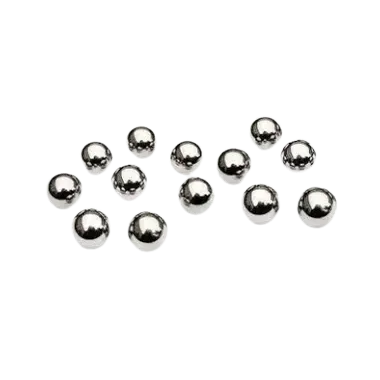
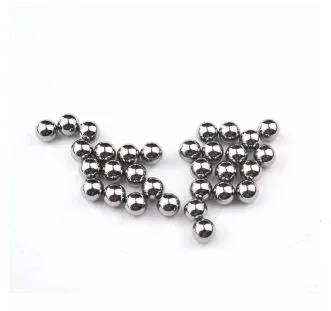
During the manufacturing process, strict quality control measures are implemented to ensure that the diameter of each steel ball meets the specified requirements. Advanced measuring instruments, such as laser gauges and coordinate measuring machines, are used to accurately measure the diameter at multiple points on the ball. Any deviation from the specified diameter is carefully monitored and corrected to ensure the consistency and quality of the final product.
Inch vs. Metric Diameters
In the global market, both inch and metric diameters are used for large steel balls. Inch Steel Ball are more commonly used in countries that follow the imperial system of measurement, such as the United States. On the other hand, metric - sized balls are widely used in countries that adopt the metric system.
When dealing with international customers, it is important to be able to provide steel balls in both inch and metric diameters to meet the diverse needs of the market. Our company, as a leading supplier of large steel balls, offers a wide range of products in both measurement systems, ensuring that we can serve customers from all over the world.
Custom - Made Diameters
In addition to standard diameters, we also offer custom - made large steel balls to meet the specific requirements of our customers. Whether it is a unique diameter for a special application or a specific tolerance level, our experienced engineering team can work closely with customers to design and manufacture the perfect steel balls.
Custom - made steel balls are particularly useful in industries where standard sizes do not meet the specific needs of the application. For example, in some research and development projects, non - standard diameter balls may be required to test new materials or processes. Our ability to provide custom - made solutions sets us apart from other suppliers and allows us to better serve our customers.
Conclusion
The diameter of a large steel ball is a crucial factor that affects its performance, suitability, and application. As a professional supplier of large steel balls, we understand the importance of providing high - quality products with accurate diameters. Whether you need standard or custom - made steel balls, we have the expertise and resources to meet your needs.
If you are in the market for large steel balls, we invite you to contact us for more information. Our team of experts is ready to assist you in selecting the right diameter and type of steel balls for your specific application. We are committed to providing excellent customer service and high - quality products to ensure your satisfaction.
References
- "Industrial Ball Mills: Design and Operation" by J. Y. O'Connor
- "Bearing Technology Handbook" by T. A. Harris
- "Materials Science and Engineering: An Introduction" by W. D. Callister Jr. and D. G. Rethwisch