
As a supplier of Spherical Rollers, I often encounter inquiries about the damping capacity of these essential components. Damping capacity is a critical property that influences the performance and longevity of machinery in various industrial applications. In this blog, we will delve into what the damping capacity of spherical rollers is, its significance, and how it relates to the overall functionality of mechanical systems.
Understanding Damping Capacity
Damping capacity refers to the ability of a material or component to dissipate energy when subjected to cyclic loading or vibrations. In the context of spherical rollers, it is the capacity to absorb and reduce the amplitude of vibrations generated during operation. When a machine is in motion, there are inevitably forces acting on its components, causing vibrations. These vibrations can lead to noise, increased wear and tear, and even structural damage if not properly managed.
Spherical rollers, with their unique design, play a crucial role in damping these vibrations. The spherical shape allows for self - alignment, which helps in distributing the load evenly across the roller and the raceway. This distribution of load reduces the stress concentration points, thereby minimizing the generation of excessive vibrations. Additionally, the material properties of the spherical rollers contribute significantly to their damping capacity.
Factors Affecting the Damping Capacity of Spherical Rollers
Material Composition
The choice of material for spherical rollers is a key determinant of their damping capacity. Common materials used include high - carbon chromium steel, stainless steel, and ceramic. High - carbon chromium steel is widely used due to its excellent hardness, wear resistance, and good damping properties. The internal structure of the steel, with its fine grains and appropriate alloying elements, helps in dissipating energy through internal friction.
Stainless steel, on the other hand, is preferred in applications where corrosion resistance is crucial. Although its damping capacity may be slightly lower than that of high - carbon chromium steel, it still provides sufficient vibration absorption in many cases. Ceramic materials, such as silicon nitride, are known for their high stiffness and low density. They can offer unique damping characteristics, especially in high - speed and high - temperature applications.
Roller Design
The design of spherical rollers also impacts their damping capacity. The diameter, length, and curvature of the rollers all play a role. A larger diameter roller generally has a greater mass, which can contribute to better damping as it requires more energy to set it into motion. The length of the roller affects the contact area with the raceway. A longer roller provides a larger contact area, which can distribute the load more evenly and reduce vibrations.
The curvature of the spherical surface is designed to ensure proper self - alignment. A well - designed curvature allows the roller to adapt to misalignments in the bearing system, reducing the generation of additional vibrations caused by misalignment. Additionally, the internal geometry of the roller, such as the presence of grooves or chamfers, can also influence the flow of lubricant and the damping effect.
Lubrication
Lubrication is another important factor. A proper lubricant forms a thin film between the roller and the raceway, which acts as a cushion and helps in absorbing vibrations. The viscosity of the lubricant is a critical parameter. A lubricant with the right viscosity can provide sufficient damping while also ensuring smooth operation. Too high a viscosity may cause excessive drag, while too low a viscosity may not provide adequate lubrication and damping.
Significance of Damping Capacity in Industrial Applications
Reducing Noise and Vibration
One of the most obvious benefits of good damping capacity in spherical rollers is the reduction of noise and vibration in machinery. In applications such as motors, gearboxes, and conveyor systems, excessive noise can be a nuisance and may even pose a health risk to workers. By using spherical rollers with high damping capacity, the amplitude of vibrations is reduced, resulting in quieter operation.

Improving Machine Efficiency
Vibrations can cause energy losses in a machine. When components vibrate, energy is wasted in the form of heat and noise. By damping these vibrations, spherical rollers help in improving the overall efficiency of the machine. This means less energy is consumed to achieve the same level of performance, leading to cost savings and a more sustainable operation.
Extending Component Lifespan
Excessive vibrations can accelerate the wear and tear of machine components. The constant impact and stress caused by vibrations can lead to fatigue failure, pitting, and spalling of the roller and raceway surfaces. By reducing vibrations, spherical rollers with good damping capacity can extend the lifespan of the bearings and other related components, reducing maintenance costs and downtime.
Comparing with Other Roller Types
When comparing spherical rollers with other types of rollers, such as Needle Roller and taper rollers, their damping characteristics stand out. Needle rollers are typically used in applications where space is limited and high radial load capacity is required. However, due to their small diameter and relatively low mass, their damping capacity may be lower compared to spherical rollers.
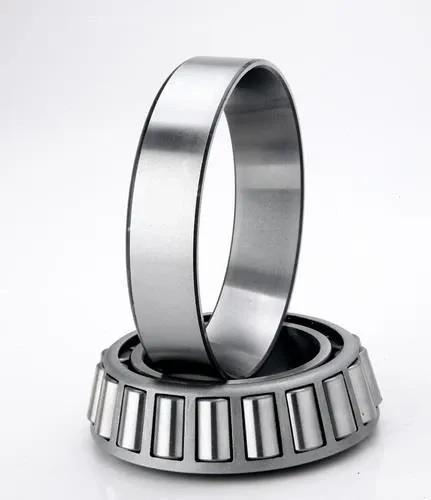
Taper rollers are designed to handle both radial and axial loads. The Taper Roller Disign provides a unique load - distribution mechanism. While they can offer good vibration resistance in certain applications, spherical rollers are often better at self - alignment and can provide more consistent damping performance, especially in applications with misalignment issues.
Applications of Spherical Rollers with High Damping Capacity
Automotive Industry
In the automotive industry, spherical rollers are used in various components such as wheel bearings, transmissions, and engines. In wheel bearings, the damping capacity of spherical rollers helps in reducing road noise and vibrations, providing a smoother and more comfortable ride. In transmissions, they ensure smooth gear shifting by damping the vibrations generated during the meshing of gears.
Aerospace Industry
The aerospace industry demands high - performance components that can withstand extreme conditions. Spherical rollers with good damping capacity are used in aircraft engines, landing gear systems, and flight control mechanisms. In engines, they help in reducing vibrations caused by high - speed rotation and combustion forces. In landing gear systems, they absorb the shock and vibrations during takeoff and landing.
Industrial Machinery
In industrial machinery such as pumps, compressors, and machine tools, spherical rollers play a vital role in ensuring reliable operation. They help in reducing vibrations and noise, which is crucial for the safety and efficiency of the machinery. For example, in a pump, the damping capacity of the spherical rollers can prevent excessive vibrations that could lead to leaks or damage to the pump housing.
Conclusion
The damping capacity of spherical rollers is a complex yet essential property that significantly impacts the performance of mechanical systems. It is influenced by factors such as material composition, roller design, and lubrication. By understanding and optimizing these factors, we can enhance the damping capacity of spherical rollers, leading to quieter operation, improved machine efficiency, and extended component lifespan.
If you are in need of high - quality Spherical Roller for your industrial applications, we are here to provide you with the best solutions. Our team of experts can assist you in selecting the right rollers based on your specific requirements. Whether you need rollers for automotive, aerospace, or industrial machinery, we have the experience and expertise to meet your needs. Contact us to start a procurement discussion and find the perfect spherical rollers for your project.
References
- Harris, T. A., & Kotzalas, M. N. (2007). Rolling Bearing Analysis. Wiley.
- Jones, A. R. (1960). Basic Theory of Lubrication for Rolling - Contact Bearings. NASA Technical Note.
- Stachowiak, G. W., & Batchelor, A. W. (2005). Engineering Tribology. Elsevier.