
In the realm of mechanical engineering and industrial applications, taper rollers play a pivotal role in a wide array of machinery. As a dedicated taper roller supplier, I am often asked about the technical nuances of these components, one of the most common inquiries being about the contact angle of a taper roller. In this blog post, I aim to delve into the concept of the contact angle of a taper roller, its significance, and how it impacts the performance of various systems.
Understanding Taper Rollers
Before we dive into the contact angle, let's briefly understand what taper rollers are. Taper rollers are conical in shape, with a larger diameter at one end and a smaller diameter at the other. They are designed to handle both radial and axial loads simultaneously, making them suitable for applications where a combination of forces is present. Taper rollers are widely used in automotive transmissions, heavy machinery, and industrial equipment.
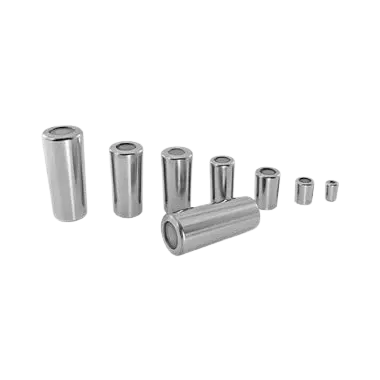
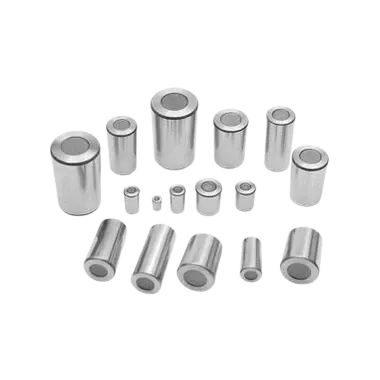
There are different types of taper rollers available in the market, each with its own unique characteristics and applications. For instance, Cylindrical Roller has its own set of advantages in specific scenarios, offering a different load - distribution pattern compared to traditional taper rollers. Another type is the Gravity Taper Roller, which is engineered to work effectively under the influence of gravity in certain applications. You can explore a comprehensive range of Taper Rollers on our website, which are designed to meet diverse industrial needs.
Defining the Contact Angle
The contact angle of a taper roller is defined as the angle between the line of contact of the roller with the raceway and a line perpendicular to the axis of rotation. In simpler terms, it is the angle at which the taper roller makes contact with the surface it is rolling on. This angle is a critical parameter as it directly affects the load - carrying capacity, friction, and overall performance of the taper roller bearing.
Mathematically, the contact angle is measured in degrees. A larger contact angle means that the roller is more inclined to the axis of rotation, which allows it to handle greater axial loads. Conversely, a smaller contact angle is more suitable for applications where the radial load is dominant.
Significance of the Contact Angle
Load - Carrying Capacity
The contact angle has a direct impact on the load - carrying capacity of the taper roller bearing. When the contact angle is increased, the bearing can withstand higher axial loads. This is because a larger contact angle distributes the axial load over a larger area of the roller and the raceway. In applications such as automotive wheel hubs, where there are significant axial forces due to cornering and braking, taper rollers with larger contact angles are often used to ensure the durability and reliability of the bearing.
On the other hand, for applications where the radial load is the primary concern, such as in some industrial conveyor systems, taper rollers with smaller contact angles are preferred. These rollers can effectively handle the radial forces while minimizing the internal stresses within the bearing.
Friction and Efficiency
The contact angle also affects the friction within the bearing. A larger contact angle generally results in higher friction because the roller has to overcome a greater resistance as it rolls along the raceway. This increased friction can lead to higher energy consumption and heat generation. Therefore, in applications where energy efficiency is a priority, a careful balance needs to be struck between the load - carrying capacity and the friction.
In high - speed applications, minimizing friction is crucial to prevent overheating and premature wear of the bearing. In such cases, taper rollers with optimized contact angles are selected to ensure smooth operation and long service life.
Alignment and Stability
The contact angle plays a role in the alignment and stability of the taper roller bearing. A well - designed contact angle helps to keep the roller in proper alignment with the raceway, reducing the risk of misalignment and subsequent damage to the bearing. This is particularly important in applications where the shaft may be subject to misalignment due to manufacturing tolerances or external forces.
Factors Affecting the Contact Angle
Design Requirements
The design requirements of the application are the primary factor influencing the selection of the contact angle. For example, in a heavy - duty construction equipment, where large axial and radial loads are present, a larger contact angle may be required to ensure the bearing can handle the forces. In contrast, a precision instrument may require a smaller contact angle to minimize friction and ensure accurate operation.
Material Properties
The material properties of the roller and the raceway also affect the contact angle. Harder materials can withstand higher contact pressures, which may allow for the use of a larger contact angle without causing excessive wear. Additionally, the surface finish of the roller and the raceway can impact the friction and the contact angle. A smoother surface finish generally results in lower friction and more consistent contact angle performance.
Lubrication
Lubrication is another important factor. Proper lubrication reduces the friction between the roller and the raceway, which can indirectly affect the contact angle. Inadequate lubrication can lead to increased friction, overheating, and changes in the contact angle, ultimately reducing the performance and lifespan of the bearing.
Measuring the Contact Angle
Measuring the contact angle of a taper roller is a precise process that requires specialized equipment. One common method is to use optical measuring instruments, which can accurately determine the angle of the roller's contact with the raceway. Another approach is to use coordinate - measuring machines (CMMs), which can provide highly accurate measurements of the geometric parameters of the roller and the bearing assembly.
During the manufacturing process, strict quality control measures are in place to ensure that the contact angle of each taper roller meets the specified requirements. Any deviation from the desired contact angle can have a significant impact on the performance of the bearing, so it is essential to maintain tight tolerances.
Selecting the Right Contact Angle for Your Application
As a taper roller supplier, we understand that selecting the right contact angle is crucial for the success of your application. When choosing a taper roller bearing, it is important to consider the following steps:
- Understand the Load Requirements: Determine the magnitude and direction of the radial and axial loads that the bearing will be subjected to. This will help you decide whether a larger or smaller contact angle is more appropriate.
- Evaluate the Operating Conditions: Consider factors such as speed, temperature, and lubrication. High - speed applications may require a contact angle that minimizes friction, while high - temperature environments may necessitate a contact angle that can withstand the thermal expansion.
- Consult with Experts: Our team of experienced engineers is available to provide you with professional advice on selecting the right taper roller bearing with the optimal contact angle for your specific application. We can analyze your requirements and recommend the most suitable products from our extensive range of Taper Rollers.
Conclusion
The contact angle of a taper roller is a critical parameter that significantly affects the performance, load - carrying capacity, and lifespan of the bearing. As a taper roller supplier, we are committed to providing high - quality products with precisely engineered contact angles to meet the diverse needs of our customers.
Whether you are in the automotive, heavy machinery, or industrial equipment industry, choosing the right taper roller with the appropriate contact angle is essential for the efficient and reliable operation of your machinery. If you have any questions or need assistance in selecting the right taper roller for your application, please feel free to reach out to us. We are here to help you make the best choice and ensure the success of your projects.
References
- Harris, T. A., & Kotzalas, M. N. (2007). Rolling Bearing Analysis. Wiley.
- Stachowiak, G. W., & Batchelor, A. W. (2005). Engineering Tribology. Butterworth - Heinemann.
- Lundberg, G., & Palmgren, A. (1947). Dynamic Capacity of Roller Bearings. Acta Polytechnica Scandinavica, Mechanical Engineering Series, 1.