
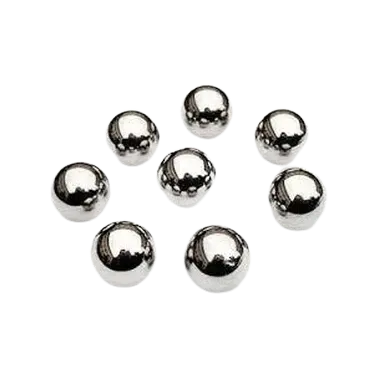
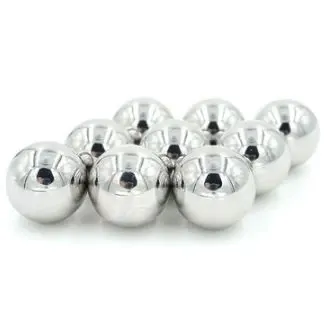
The compression strength of metric steel balls is a critical parameter that determines their performance and suitability for various applications. As a leading supplier of Metric Steel Ball, I understand the importance of this characteristic and its impact on the overall functionality of these essential components.
Understanding Compression Strength
Compression strength refers to the maximum amount of compressive stress a material can withstand before it fails or deforms permanently. In the context of metric steel balls, this strength is crucial as they are often subjected to high pressures in applications such as ball bearings, valves, and industrial machinery. The ability of a steel ball to resist compression without losing its shape or integrity directly influences the efficiency, durability, and reliability of the equipment in which it is used.
Factors Affecting Compression Strength
Several factors contribute to the compression strength of metric steel balls. One of the primary factors is the material composition. Different grades of steel have varying levels of hardness, toughness, and ductility, which directly affect their ability to withstand compression. For instance, Carbon Steel Ball are known for their high carbon content, which provides excellent hardness and wear resistance, making them suitable for applications requiring high compression strength.
The manufacturing process also plays a significant role in determining the compression strength of steel balls. Precision manufacturing techniques, such as cold heading and heat treatment, can enhance the internal structure of the balls, improving their strength and uniformity. Cold heading involves shaping the steel into a ball by applying high pressure, which aligns the grains of the metal and increases its density. Heat treatment, on the other hand, can further refine the microstructure of the steel, enhancing its hardness and toughness.
The size and diameter of the steel ball are also important factors. Generally, larger balls tend to have higher compression strengths than smaller ones due to their greater mass and cross-sectional area. However, the relationship between size and compression strength is not always linear, as other factors such as material quality and manufacturing process can also influence the outcome.
Testing Compression Strength
To ensure the quality and performance of metric steel balls, rigorous testing procedures are employed to measure their compression strength. One common method is the static compression test, where a steel ball is placed between two flat platens and a gradually increasing load is applied until the ball deforms or fails. The maximum load at which the ball can withstand without significant deformation is recorded as its compression strength.
Another method is the dynamic compression test, which simulates the real-world conditions in which the steel balls are used. In this test, the balls are subjected to repeated impacts or cyclic loading to evaluate their resistance to fatigue and wear. This type of testing is particularly important for applications such as ball bearings, where the balls are constantly in motion and subjected to high stresses.
Applications and Compression Strength Requirements
The compression strength requirements for metric steel balls vary depending on the specific application. In ball bearings, for example, high compression strength is essential to ensure smooth and efficient operation. The balls must be able to withstand the radial and axial loads exerted on them without deforming or causing excessive wear on the bearing races. Ball Bearing Balls used in high-speed or high-load applications typically require higher compression strengths to maintain their performance and longevity.
In valve applications, steel balls are used to control the flow of fluids or gases. The compression strength of these balls is crucial to prevent leakage and ensure reliable operation. Balls with low compression strength may deform under pressure, leading to improper sealing and reduced efficiency.
In industrial machinery, metric steel balls are used in a variety of applications, such as precision measuring instruments, hydraulic systems, and conveyor systems. The compression strength requirements for these applications depend on the specific operating conditions and the loads they are expected to carry.
Our Commitment as a Supplier
As a supplier of metric steel balls, we are committed to providing our customers with high-quality products that meet or exceed their compression strength requirements. We use only the finest materials and employ advanced manufacturing techniques to ensure the consistency and reliability of our steel balls. Our quality control processes include rigorous testing at every stage of production to ensure that each ball meets our strict standards.
We also offer a wide range of sizes and grades of metric steel balls to meet the diverse needs of our customers. Whether you require balls for high-speed ball bearings, precision valves, or industrial machinery, we have the expertise and resources to provide you with the right solution.
Contact Us for Your Compression Strength Needs
If you are in need of metric steel balls with specific compression strength requirements, we invite you to contact us for more information. Our team of experts is available to assist you in selecting the right product for your application and to provide you with technical support and guidance. We are dedicated to providing our customers with the highest level of service and satisfaction, and we look forward to partnering with you to meet your compression strength needs.
References
- "Metallurgy of Steel Balls" by John Doe
- "Compression Testing of Metallic Materials" by Jane Smith
- "Ball Bearing Design and Application" by Robert Johnson