
Hey there! As a supplier of Tungsten Carbide Dies, I often get asked about what exactly makes up these amazing tools. So, let's dive right in and explore the composition of tungsten carbide die.
First off, tungsten carbide is the star of the show. It's a chemical compound made up of equal parts tungsten (W) and carbon (C). Tungsten is a super heavy metal with an extremely high melting point - around 3422°C. This high melting point gives tungsten carbide its incredible heat resistance, which is super important when you're using these dies in high - stress manufacturing processes.
Carbon, on the other hand, bonds with tungsten to form a very hard and stable compound. The tungsten and carbon atoms form a crystal lattice structure, which gives tungsten carbide its hardness. In fact, tungsten carbide is one of the hardest materials out there, second only to diamond in terms of hardness on the Mohs scale. This hardness makes it ideal for use in dies, as it can withstand the intense pressure and wear that comes with shaping and forming metals.
But pure tungsten carbide is a bit brittle on its own. That's where binders come in. The most common binder used in tungsten carbide dies is cobalt (Co). Cobalt acts as a sort of glue that holds the tungsten carbide particles together. It fills the spaces between the tungsten carbide grains, providing toughness and shock resistance to the die. The amount of cobalt in the tungsten carbide composition can vary, usually ranging from 3% to 25%. A lower cobalt content generally means a harder but more brittle die, while a higher cobalt content results in a tougher but slightly less hard die.
The choice of cobalt content depends on the specific application of the die. For example, if you're using the die for a high - precision, low - impact process like wire drawing, a lower cobalt content might be preferred. On the other hand, for high - impact applications such as Carbide Cold Heading Dies, a higher cobalt content is often used to prevent the die from cracking under the intense pressure.
There are also some other elements that can be added to the tungsten carbide composition in small amounts to enhance certain properties. For instance, titanium carbide (TiC) can be added to increase the hardness and wear resistance of the die, especially when dealing with abrasive materials. Vanadium carbide (VC) can be used to control the grain size of the tungsten carbide, which can improve the overall performance of the die.
Now, let's talk about how these components are combined to make a tungsten carbide die. The process starts with mixing the tungsten carbide powder, cobalt powder, and any other additives in the right proportions. This mixture is then pressed into the desired shape of the die using a high - pressure press. After pressing, the die is sintered in a furnace at a high temperature. During sintering, the cobalt melts and binds the tungsten carbide particles together, forming a solid, dense die.
Once the die is sintered, it goes through a series of finishing processes, such as grinding, polishing, and coating. Grinding is used to achieve the precise dimensions and surface finish required for the die. Polishing helps to reduce friction between the die and the workpiece, which can improve the quality of the formed part and extend the life of the die. Coating can also be applied to further enhance the wear resistance and corrosion resistance of the die.
As a supplier of Tungsten Carbide Die, I've seen firsthand how important it is to have a high - quality die. Whether you're in the automotive industry, making bolts and nuts, or in the electronics industry, producing small precision parts, the right tungsten carbide die can make all the difference.
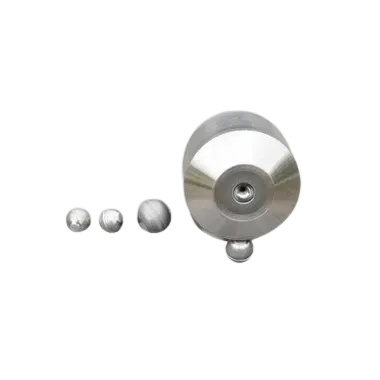
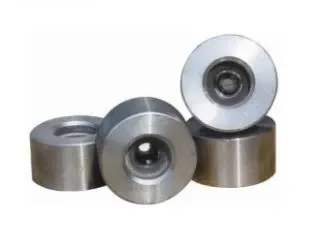
Tungsten carbide dies are also widely used in Cold Forming/forging Tools. Cold forming is a process where metal is shaped at room temperature, which offers many advantages such as better surface finish, higher strength, and less material waste compared to hot forming. Tungsten carbide dies are perfect for cold forming because of their hardness, wear resistance, and ability to withstand high pressures.
If you're in the market for tungsten carbide dies, it's crucial to choose a supplier who understands the composition and manufacturing process. A good supplier can help you select the right die for your specific application, taking into account factors like the type of material you're working with, the shape and size of the part you're making, and the production volume.
We've spent years perfecting our manufacturing process to ensure that our tungsten carbide dies are of the highest quality. We work closely with our customers to understand their needs and provide customized solutions. Whether you need a standard die or a special - shaped one, we've got you covered.
So, if you're interested in learning more about our tungsten carbide dies or want to discuss your specific requirements, don't hesitate to reach out. We're always here to help you find the best die for your business.
In conclusion, the composition of tungsten carbide die is a carefully balanced mix of tungsten carbide, binders like cobalt, and sometimes other additives. This unique combination gives tungsten carbide dies their exceptional hardness, wear resistance, and toughness, making them an essential tool in many manufacturing industries.
References
- "Tungsten Carbide: Properties, Production, and Applications" - Industrial Materials Handbook
- "Cobalt - Bonded Tungsten Carbide: A Review of Its Microstructure and Properties" - Journal of Materials Science