
Weldable steel balls are essential components in various industrial applications, from construction to machinery manufacturing. Understanding their properties, such as the coefficient of thermal expansion (CTE), is crucial for ensuring the reliability and performance of the final products. In this blog post, I'll delve into the concept of the coefficient of thermal expansion of weldable steel balls, and as a supplier of these high - quality products, I'll share some insights that can help you make informed decisions for your projects.
Understanding the Coefficient of Thermal Expansion
The coefficient of thermal expansion is a measure of how much a material expands or contracts when its temperature changes. It is defined as the fractional change in length or volume per degree change in temperature. For linear expansion, the formula is (\alpha=\frac{\Delta L}{L_0\Delta T}), where (\alpha) is the linear coefficient of thermal expansion, (\Delta L) is the change in length, (L_0) is the original length, and (\Delta T) is the change in temperature.
In the case of weldable steel balls, the CTE is an important parameter. When the temperature of the steel balls changes during welding or in the operating environment, they will expand or contract. If the CTE is not properly considered, it can lead to issues such as stress concentration, cracking, or misalignment in the assembled structures.
Factors Affecting the CTE of Weldable Steel Balls
The CTE of weldable steel balls is influenced by several factors:
Chemical Composition
The chemical composition of the steel plays a significant role in determining its CTE. Different alloying elements have different effects on the thermal expansion behavior. For example, elements like carbon, manganese, and silicon can increase the CTE to some extent, while elements such as nickel and chromium can reduce it. High - quality weldable steel balls are carefully formulated to achieve a balanced chemical composition that provides a suitable CTE for specific applications.
Heat Treatment
Heat treatment processes, such as annealing, quenching, and tempering, can also affect the CTE of steel balls. These processes alter the microstructure of the steel, which in turn impacts its thermal expansion properties. For instance, a fine - grained microstructure obtained through proper heat treatment may have a different CTE compared to a coarse - grained one.
Manufacturing Process
The manufacturing process of the steel balls, including forging, machining, and surface finishing, can introduce internal stresses in the balls. These internal stresses can influence the thermal expansion behavior. Well - controlled manufacturing processes are essential to minimize internal stresses and ensure consistent CTE values across the production batch.

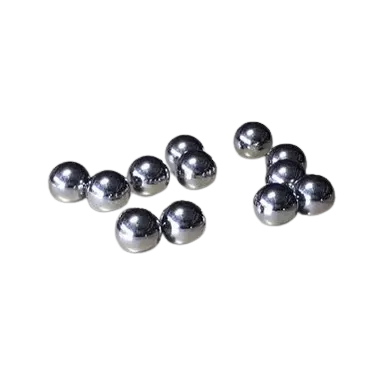
Typical Values of CTE for Weldable Steel Balls
The CTE of weldable steel balls can vary depending on their specific composition and treatment. Generally, the linear CTE of common weldable steel balls ranges from approximately (10\times10^{-6}/^{\circ}C) to (13\times10^{-6}/^{\circ}C) in the temperature range of 20 - 100°C. However, for specialized steels with specific alloying elements or heat treatments, the CTE can deviate from this range.
It's important to note that these values are approximate, and for precise applications, it's necessary to obtain the exact CTE data from the steel ball supplier or through laboratory testing.
Importance of Considering CTE in Applications
In many applications, considering the CTE of weldable steel balls is of utmost importance:
Welding Applications
During the welding process, the steel balls are exposed to high temperatures. If the CTE of the steel balls and the surrounding materials is significantly different, it can cause thermal stress during cooling, leading to weld defects such as cracks or porosity. By selecting steel balls with a compatible CTE with the base metal, the risk of such defects can be minimized.
High - Temperature Environments
In applications where the steel balls operate in high - temperature environments, such as in engines or furnaces, the CTE becomes even more critical. The expansion and contraction of the steel balls need to be coordinated with the other components in the system to ensure smooth operation and prevent damage.
Precision Assemblies
In precision assemblies, any small change in the dimensions of the steel balls due to thermal expansion can affect the overall performance and accuracy of the system. By carefully controlling the CTE, the precision and reliability of the assemblies can be maintained.
Our Weldable Steel Balls and Their CTE
As a supplier of weldable steel balls, we understand the importance of providing products with a well - defined CTE. Our steel balls are manufactured using advanced technology and strict quality control measures.
We offer a wide range of High Chrome Steel Balls and Chorme Steel Ball that are known for their excellent thermal stability. Our Precision Steel Balls are also designed to have consistent CTE values, which is crucial for precision - demanding applications.
Our team of experts conducts thorough testing on the steel balls to ensure that their CTE meets the required standards. We provide detailed technical data sheets for each batch of products, including the CTE information, so that our customers can make informed decisions based on their specific application requirements.
How to Select Weldable Steel Balls Based on CTE
When selecting weldable steel balls based on CTE, the following steps can be followed:
Identify the Application Requirements
First, determine the temperature range in which the steel balls will operate. Consider factors such as the maximum and minimum temperatures during welding, normal operation, and any potential temperature fluctuations in the environment.
Consider the Compatibility with Other Materials
If the steel balls will be welded or assembled with other materials, ensure that their CTE is compatible with those of the surrounding materials. This can help avoid thermal stress and ensure the long - term stability of the assembled structure.
Consult with the Supplier
Our team of technical experts is always ready to assist you in selecting the right weldable steel balls based on your CTE requirements. We can provide in - depth advice and guidance to help you choose the most suitable products for your projects.
Conclusion
The coefficient of thermal expansion of weldable steel balls is a critical property that needs to be carefully considered in various industrial applications. By understanding the factors affecting the CTE, typical values, and the importance of considering it in applications, you can make better decisions when selecting weldable steel balls.
As a reliable supplier of weldable steel balls, we are committed to providing high - quality products with well - defined CTE values. If you have any questions or need to discuss your specific requirements for weldable steel balls, please feel free to contact us. We look forward to working with you to meet your industrial needs.
References
- Callister, W. D., & Rethwisch, D. G. (2011). Materials Science and Engineering: An Introduction. Wiley.
- ASM Handbook Committee. (1990). ASM Handbook Volume 1: Properties and Selection: Irons, Steels, and High - Performance Alloys. ASM International.