
As a supplier of Inch Steel Balls, I often encounter inquiries about the coefficient of friction of these precision components. Understanding the coefficient of friction is crucial for various applications, from industrial machinery to automotive systems. In this blog post, I will delve into the concept of the coefficient of friction, its significance in the context of inch steel balls, and how it impacts performance in different scenarios.
What is the Coefficient of Friction?
The coefficient of friction is a dimensionless quantity that represents the ratio of the force of friction between two surfaces to the normal force pressing the surfaces together. It is denoted by the Greek letter μ (mu) and can be classified into two types: static friction (μs) and kinetic friction (μk). Static friction is the force that resists the initiation of motion between two stationary surfaces, while kinetic friction is the force that opposes the relative motion of two surfaces in contact.
The coefficient of friction depends on several factors, including the nature of the materials in contact, the surface roughness, the presence of lubricants, and the normal force. For example, a smooth surface will generally have a lower coefficient of friction than a rough surface, and the use of lubricants can significantly reduce friction by creating a thin film between the surfaces.
Coefficient of Friction in Inch Steel Balls
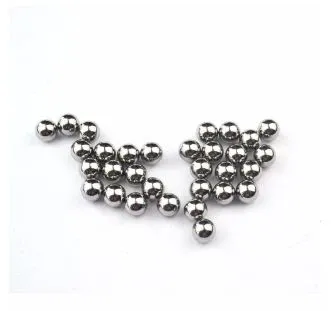
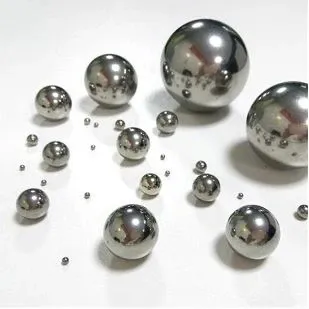
Inch steel balls are widely used in various applications, such as bearings, valves, and precision instruments. The coefficient of friction plays a crucial role in determining the performance and efficiency of these components. A low coefficient of friction is desirable in most applications as it reduces wear and tear, minimizes energy consumption, and improves the overall reliability of the system.
The coefficient of friction of inch steel balls can vary depending on several factors, including the material of the ball, the surface finish, the contact material, and the operating conditions. For example, steel balls made of high-quality materials, such as chrome steel or stainless steel, generally have a lower coefficient of friction than those made of lower-grade materials. Additionally, a smooth surface finish can reduce friction by minimizing the contact area between the ball and the mating surface.
Factors Affecting the Coefficient of Friction in Inch Steel Balls
- Material Composition: The material of the inch steel ball can significantly affect its coefficient of friction. For example, chrome steel balls are known for their high hardness and wear resistance, which can result in a lower coefficient of friction compared to other materials. Stainless steel balls, on the other hand, offer excellent corrosion resistance but may have a slightly higher coefficient of friction due to their composition.
- Surface Finish: The surface finish of the inch steel ball plays a crucial role in determining its coefficient of friction. A smooth surface finish can reduce friction by minimizing the contact area between the ball and the mating surface. Additionally, a polished surface can help to prevent the accumulation of debris and contaminants, which can increase friction and wear.
- Contact Material: The material of the mating surface can also affect the coefficient of friction of the inch steel ball. For example, a steel ball in contact with a soft material, such as brass or aluminum, may have a higher coefficient of friction than when in contact with a harder material, such as steel or ceramic.
- Lubrication: The use of lubricants can significantly reduce the coefficient of friction of inch steel balls. Lubricants create a thin film between the ball and the mating surface, which helps to reduce friction and wear. The type of lubricant used can also affect the coefficient of friction, with synthetic lubricants generally offering better performance than mineral oils.
- Operating Conditions: The operating conditions, such as temperature, speed, and load, can also affect the coefficient of friction of inch steel balls. For example, high temperatures can cause the lubricant to break down, resulting in increased friction and wear. Similarly, high speeds and loads can increase the contact pressure between the ball and the mating surface, which can also lead to increased friction.
Measuring the Coefficient of Friction
Measuring the coefficient of friction of inch steel balls can be a challenging task, as it requires specialized equipment and techniques. One common method for measuring the coefficient of friction is the use of a tribometer, which is a device that measures the frictional force between two surfaces in contact. Another method is the use of a pin-on-disk test, where a pin is pressed against a rotating disk, and the frictional force is measured.
In addition to these methods, there are also several theoretical models and equations that can be used to estimate the coefficient of friction of inch steel balls. These models take into account various factors, such as the material properties, surface roughness, and operating conditions, to provide an estimate of the coefficient of friction.
Importance of the Coefficient of Friction in Applications
The coefficient of friction of inch steel balls is an important parameter that can significantly affect the performance and efficiency of various applications. In bearings, for example, a low coefficient of friction can reduce the amount of energy required to rotate the shaft, resulting in improved efficiency and reduced wear. In valves, a low coefficient of friction can ensure smooth operation and prevent leakage.
In precision instruments, such as watches and medical devices, the coefficient of friction of inch steel balls can affect the accuracy and reliability of the device. A low coefficient of friction can help to minimize the effects of friction on the movement of the components, resulting in improved performance and accuracy.
Conclusion
In conclusion, the coefficient of friction is a crucial parameter that affects the performance and efficiency of inch steel balls in various applications. Understanding the factors that affect the coefficient of friction, such as material composition, surface finish, contact material, lubrication, and operating conditions, is essential for selecting the right inch steel balls for your application.
As a supplier of Inch Steel Balls, I am committed to providing high-quality products that meet the specific requirements of my customers. Whether you need Solid Steel Balls for industrial applications or Metal Balls for precision instruments, I have the expertise and resources to help you find the right solution.
If you have any questions or need further information about the coefficient of friction of inch steel balls or any other products, please do not hesitate to contact me. I look forward to discussing your requirements and providing you with the best possible solutions.
References
- Bowden, F. P., & Tabor, D. (1950). Friction and Lubrication of Solids. Oxford University Press.
- Bhushan, B. (2013). Tribology and Mechanics of Magnetic Storage Devices. Springer Science & Business Media.
- ASTM G115 - 98(2013) Standard Guide for Measuring and Reporting Friction Coefficients. ASTM International.