
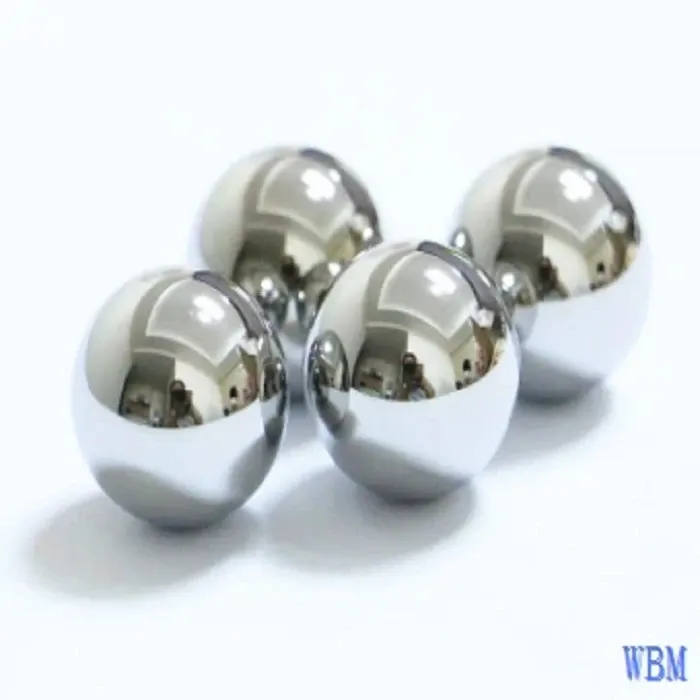
Stainless steel balls are widely used in various industries due to their excellent properties such as corrosion resistance, high strength, and good wear resistance. As a leading stainless steel ball supplier, I often receive inquiries about the chemical composition of these balls. In this blog post, I will delve into the details of the chemical composition of stainless steel balls and how it affects their performance.
The Basics of Stainless Steel
Stainless steel is an alloy primarily composed of iron (Fe) with a minimum of 10.5% chromium (Cr) by mass. The addition of chromium is crucial as it forms a thin, protective oxide layer on the surface of the steel, known as the passive layer. This passive layer prevents the underlying metal from reacting with oxygen, moisture, and other corrosive agents, thus providing corrosion resistance.
Key Elements in Stainless Steel Balls
Chromium (Cr)
Chromium is the most important alloying element in stainless steel balls. As mentioned earlier, it forms a self - healing passive layer that protects the ball from corrosion. The higher the chromium content, the better the corrosion resistance. In most stainless steel balls, the chromium content ranges from 16% to 26%. For example, in Type 304 stainless steel, which is commonly used for stainless steel balls, the chromium content is around 18 - 20%. This level of chromium provides good general corrosion resistance in a wide range of environments, including mild chemical and atmospheric conditions.
Nickel (Ni)
Nickel is another significant element in stainless steel balls. It enhances the corrosion resistance of stainless steel, especially in acidic environments. Nickel also improves the ductility and toughness of the steel, making the balls more resistant to impact and deformation. In Type 304 stainless steel, the nickel content is typically around 8 - 10.5%. Type 316 stainless steel, which is more corrosion - resistant than Type 304, contains about 10 - 14% nickel. The addition of nickel also helps to maintain the austenitic structure of the stainless steel at room temperature, which is beneficial for the ball's mechanical properties.
Molybdenum (Mo)
Molybdenum is added to stainless steel balls to further enhance their corrosion resistance, particularly in chloride - containing environments. It improves the pitting and crevice corrosion resistance of the steel. Type 316 stainless steel, for instance, contains about 2 - 3% molybdenum. This makes it suitable for applications in marine environments, where the presence of saltwater can cause pitting corrosion on less resistant materials.
Carbon (C)
Carbon is present in stainless steel in small amounts. While it can increase the hardness and strength of the steel, too much carbon can reduce its corrosion resistance. In most stainless steel balls, the carbon content is kept low, usually less than 0.08% in Type 304 and Type 316 stainless steels. This balance ensures that the balls have both good mechanical properties and corrosion resistance.
Manganese (Mn)
Manganese is used as a deoxidizer and desulfurizer during the steel - making process. It also helps to improve the hot - working properties of the steel. In some stainless steel grades, manganese can partially replace nickel. For example, in some austenitic stainless steels, the manganese content can be up to 2%.
Silicon (Si)
Silicon is added to stainless steel as a deoxidizer. It also improves the oxidation resistance of the steel at high temperatures. In stainless steel balls, the silicon content is typically around 0.5 - 1%.
Phosphorus (P) and Sulfur (S)
Phosphorus and sulfur are considered impurities in stainless steel. They can have a negative impact on the corrosion resistance and mechanical properties of the steel. Therefore, their content is usually kept very low, typically less than 0.045% for phosphorus and less than 0.03% for sulfur.
How Chemical Composition Affects Performance
Corrosion Resistance
The combination of chromium, nickel, and molybdenum plays a crucial role in determining the corrosion resistance of stainless steel balls. As mentioned earlier, chromium forms the passive layer, while nickel and molybdenum enhance the stability of this layer in different environments. For example, in a chemical processing plant where the balls may be exposed to various chemicals, Type 316 stainless steel balls with higher nickel and molybdenum content are preferred over Type 304 balls due to their superior corrosion resistance.
Mechanical Properties
The carbon content affects the hardness and strength of the balls. Higher carbon content can increase the hardness, but it may also reduce the ductility and corrosion resistance. The presence of other elements such as nickel and manganese also influences the mechanical properties. Nickel improves the toughness and ductility, while manganese helps with the hot - working properties, ensuring that the balls can be manufactured to the desired shape and size without cracking or deforming.
Different Grades of Stainless Steel Balls and Their Chemical Compositions
Type 304 Stainless Steel Balls
As one of the most commonly used grades, Type 304 stainless steel balls have a chemical composition of approximately 18 - 20% chromium, 8 - 10.5% nickel, less than 0.08% carbon, and small amounts of other elements such as manganese, silicon, phosphorus, and sulfur. These balls are suitable for a wide range of applications, including food processing, automotive, and general industrial uses. They offer good corrosion resistance and mechanical properties at a relatively low cost. You can find more information about Ball Bearing Balls on our website.
Type 316 Stainless Steel Balls
Type 316 stainless steel balls contain about 16 - 18% chromium, 10 - 14% nickel, 2 - 3% molybdenum, less than 0.08% carbon, and other minor elements. The addition of molybdenum makes them more resistant to pitting and crevice corrosion, especially in chloride - rich environments. They are commonly used in marine applications, chemical processing, and medical equipment. For more details on Solid Steel Balls, please visit our website.
Type 440C Stainless Steel Balls
Type 440C is a martensitic stainless steel with a higher carbon content (around 0.95 - 1.2%) compared to Type 304 and Type 316. It contains about 16 - 18% chromium and small amounts of other elements. These balls are known for their high hardness and wear resistance. They are often used in high - precision bearings, valve components, and other applications where high - strength and wear - resistant materials are required. You can learn more about Metal Ball on our website.
Conclusion
The chemical composition of stainless steel balls is a complex combination of various elements, each playing a specific role in determining the ball's properties. Understanding the chemical composition is essential for selecting the right grade of stainless steel balls for different applications. As a stainless steel ball supplier, we have a wide range of stainless steel balls with different chemical compositions to meet the diverse needs of our customers.
If you are interested in purchasing stainless steel balls for your specific application, we would be delighted to assist you. Our team of experts can help you choose the most suitable grade of stainless steel balls based on your requirements. Contact us today to start the procurement process and discuss your needs in detail.
References
- ASM Handbook, Volume 1: Properties and Selection: Irons, Steels, and High - Performance Alloys
- Stainless Steel: A Guide to Properties, Processing, and Applications by John R. Davis