
Hey there! As a supplier of solid steel balls, I've been getting a lot of questions lately about the brittleness of these little round wonders. So, I thought I'd sit down and write a blog post to clear up some of the confusion.
First off, let's talk about what brittleness actually means. In simple terms, brittleness is the tendency of a material to break or shatter when subjected to stress, rather than bending or deforming. It's the opposite of ductility, which is the ability of a material to stretch or bend without breaking.
Now, when it comes to solid steel balls, brittleness can be a bit of a double-edged sword. On one hand, a certain amount of brittleness can be beneficial. For example, in applications where high hardness and wear resistance are required, a more brittle steel ball can hold up better under heavy loads and abrasive conditions. This is because the hard, brittle surface of the ball can resist scratching and deformation, which helps to maintain its shape and performance over time.
On the other hand, too much brittleness can be a problem. If a steel ball is too brittle, it may crack or shatter when subjected to sudden impacts or high stress. This can lead to premature failure of the ball and the equipment it's used in, which can be costly and time-consuming to repair.
So, what factors affect the brittleness of solid steel balls? Well, there are several things to consider, including the type of steel used, the manufacturing process, and the heat treatment.
Let's start with the type of steel. Different types of steel have different properties, including hardness, ductility, and brittleness. For example, Carbon Steel Ball is a common choice for solid steel balls because it's relatively inexpensive and has good strength and hardness. However, carbon steel can also be more brittle than other types of steel, especially if it's not properly heat-treated.
Stainless steel, on the other hand, is known for its corrosion resistance and ductility. It's generally less brittle than carbon steel, which makes it a good choice for applications where the ball may be exposed to moisture or other corrosive substances. However, stainless steel can also be more expensive than carbon steel, so it may not be the best choice for all applications.
The manufacturing process also plays a role in the brittleness of solid steel balls. There are several methods for making steel balls, including cold heading, hot forging, and machining. Each method has its own advantages and disadvantages, and the choice of method can affect the final properties of the ball.
Cold heading is a process where a steel wire is cut into small pieces and then formed into a ball shape using a cold heading machine. This method is relatively fast and inexpensive, but it can also result in a ball with a more brittle surface. This is because the cold working process can cause the steel to become harder and more brittle.
Hot forging, on the other hand, involves heating the steel to a high temperature and then shaping it into a ball using a forging press. This method can result in a ball with a more uniform structure and better mechanical properties. However, hot forging is also more expensive and time-consuming than cold heading.
Machining is another method for making steel balls. This involves cutting a steel rod or bar into a ball shape using a lathe or other machining equipment. Machining can produce a ball with a very precise shape and size, but it can also be more expensive and time-consuming than other methods.
Finally, heat treatment is an important step in the manufacturing process that can significantly affect the brittleness of solid steel balls. Heat treatment involves heating the steel to a specific temperature and then cooling it at a controlled rate to change its microstructure and properties.
There are several types of heat treatment that can be used for steel balls, including annealing, quenching, and tempering. Annealing is a process where the steel is heated to a high temperature and then cooled slowly to relieve internal stresses and make the steel more ductile. Quenching, on the other hand, involves heating the steel to a high temperature and then cooling it rapidly in a quenching medium, such as oil or water. This can make the steel harder and more brittle.
Tempering is a process that is often used after quenching to reduce the brittleness of the steel. It involves heating the quenched steel to a lower temperature and then cooling it slowly. This can help to relieve internal stresses and make the steel more ductile without sacrificing too much hardness.

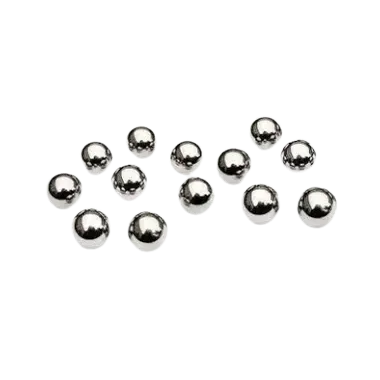
So, how can you tell if a solid steel ball is too brittle? Well, there are several ways to test the brittleness of a steel ball, including the Charpy impact test and the Rockwell hardness test.
The Charpy impact test involves striking a notched steel ball with a pendulum and measuring the amount of energy required to break the ball. A higher energy absorption indicates a more ductile ball, while a lower energy absorption indicates a more brittle ball.
The Rockwell hardness test involves pressing a hard indenter into the surface of the steel ball and measuring the depth of the indentation. A higher hardness value indicates a harder, more brittle ball, while a lower hardness value indicates a softer, more ductile ball.
In conclusion, the brittleness of solid steel balls is an important factor to consider when choosing the right ball for your application. By understanding the factors that affect brittleness, such as the type of steel, the manufacturing process, and the heat treatment, you can make an informed decision and choose a ball that will provide the best performance and durability for your needs.
If you're in the market for solid steel balls, Ball Bearing Balls and Inch Steel Ball are just some of the options we offer. We have a wide range of sizes, materials, and grades to choose from, and we can help you find the perfect ball for your application.
If you have any questions or would like to discuss your specific requirements, please don't hesitate to get in touch. We're here to help you find the best solution for your needs and ensure that you're completely satisfied with your purchase.
References
- ASM Handbook, Volume 1: Properties and Selection: Irons, Steels, and High-Performance Alloys
- Metals Handbook Desk Edition, 3rd Edition
- Steel Ball Manufacturing: A Comprehensive Guide