
Hey there! As a metal ball supplier, I've been getting a lot of questions lately about the acoustic properties of metal balls. So, I thought I'd take a deep - dive into this topic and share what I know with you all.
First off, let's understand what we mean by acoustic properties. Acoustic properties refer to how a material behaves when it comes into contact with sound waves. This includes things like how it absorbs, reflects, or transmits sound.
When it comes to metal balls, their acoustic properties are quite unique. Metals in general are good conductors of sound. This is because the atoms in metals are closely packed together in a regular lattice structure. The close - packed atoms allow sound waves to travel through the metal ball relatively easily.
One of the most interesting things about the acoustic properties of metal balls is their ability to resonate. Resonance occurs when an object vibrates at its natural frequency in response to an external sound wave. Metal balls have specific natural frequencies at which they can resonate. When a sound wave with a frequency that matches the natural frequency of the metal ball hits it, the ball starts to vibrate vigorously. This can produce a distinct, clear tone.
For example, if you take a set of metal balls of different sizes, each ball will have a different natural frequency. Smaller metal balls typically have higher natural frequencies and will produce higher - pitched tones when they resonate, while larger metal balls will have lower natural frequencies and produce lower - pitched tones. This property is often used in musical instruments. Some percussion instruments use metal balls or metal components similar to balls to create unique and beautiful sounds.
Another important acoustic property is the reflection of sound waves. Metal balls are excellent reflectors of sound. When a sound wave hits a metal ball, a large portion of the sound is reflected back. This is because metals have a high acoustic impedance compared to air. Acoustic impedance is a measure of how much a material resists the flow of sound waves. Since the acoustic impedance of metal is much higher than that of air, most of the sound energy is reflected when it encounters a metal ball.
This reflective property can be both an advantage and a disadvantage. In some applications, like in acoustic chambers where you want to control the direction of sound, metal balls can be used to reflect sound waves in a specific way. However, in other situations, such as in a room where you want to reduce echo, the high reflectivity of metal balls might be a problem.
Now, let's talk about absorption. While metals are not great at absorbing sound, metal balls can still absorb a small amount of sound energy. When a sound wave hits a metal ball, some of the energy is converted into heat energy within the metal. This is due to internal friction within the metal as the atoms vibrate in response to the sound wave. The amount of sound absorbed by a metal ball depends on factors like the type of metal, its surface finish, and the frequency of the sound wave.
For instance, metals with more impurities or a rougher surface might absorb slightly more sound than pure, smooth - surfaced metals. Higher - frequency sound waves are also more likely to be absorbed by the metal ball compared to lower - frequency waves.
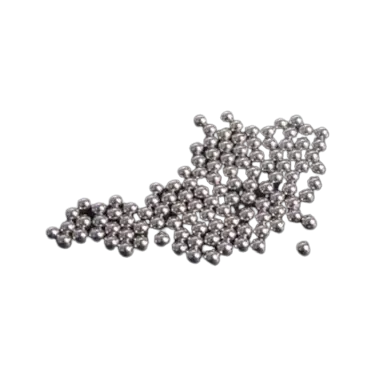
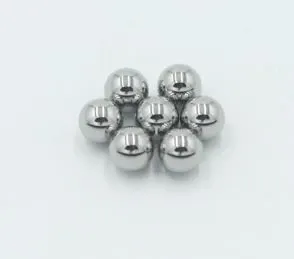
If you're in the market for high - quality metal balls, you can check out our Metal Ball products. We offer a wide range of metal balls with different sizes, materials, and finishes to meet your specific needs.
Our Precision Steel Balls are known for their high precision and excellent acoustic properties. They are made from top - grade steel and are carefully manufactured to ensure consistent quality. Whether you're using them for musical instruments, acoustic experiments, or industrial applications, our precision steel balls will not disappoint.
And if you need metric - sized metal balls, we've got you covered with our Metric Steel Ball collection. These balls are available in a variety of metric sizes, allowing you to find the perfect fit for your project.
In industrial applications, the acoustic properties of metal balls can be very useful. For example, in some machinery, metal balls are used as part of a vibration - sensing system. The way the metal ball vibrates and produces sound can be used to detect abnormal vibrations in the machinery, which could indicate a problem.
In the field of acoustics research, metal balls are often used as test objects. Scientists can study how sound waves interact with metal balls to better understand the fundamental principles of sound propagation, reflection, and absorption.
If you're interested in learning more about the acoustic properties of our metal balls or if you're looking to purchase them for your project, don't hesitate to get in touch. We're here to help you find the right metal balls for your needs and answer any questions you might have.
To sum it up, the acoustic properties of metal balls are quite fascinating. Their ability to resonate, reflect, and absorb sound makes them useful in a wide range of applications, from music to industry and research. So, if you're in the market for metal balls and need high - quality products with great acoustic properties, give us a chance to serve you.
References
- "Physics of Sound" by Richard E. Berg and David G. Stork
- "Acoustics: An Introduction" by Leo L. Beranek