
Hey there! As a supplier of stainless steel balls, I often get asked about the different grades of stainless steel used to make these nifty little spheres. So, I thought I'd put together a blog post to shed some light on this topic.
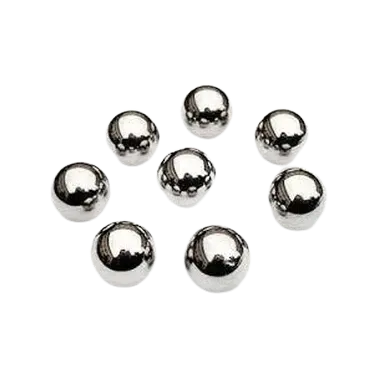
Stainless steel balls are used in a wide range of applications, from industrial machinery to jewelry making. The grade of stainless steel used to make these balls can have a significant impact on their performance and durability. Let's take a closer look at some of the most common grades.
304 Stainless Steel
304 stainless steel is one of the most widely used grades for making stainless steel balls. It's a versatile and affordable option that offers good corrosion resistance and mechanical properties. This grade contains around 18% chromium and 8% nickel, which gives it its characteristic shine and resistance to rust.
304 stainless steel balls are commonly used in applications where corrosion resistance is important, but high strength isn't a primary concern. They're often found in food processing equipment, medical devices, and decorative items. The relatively low cost of 304 stainless steel makes it a popular choice for mass-produced items.
316 Stainless Steel
If you need even better corrosion resistance, 316 stainless steel is the way to go. This grade contains molybdenum, which enhances its resistance to pitting and crevice corrosion, especially in environments with chloride ions. Chloride-rich environments can be found in coastal areas, as well as in some industrial processes.
316 stainless steel balls are commonly used in marine applications, chemical processing plants, and pharmaceutical equipment. They're also a popular choice for applications where hygiene is crucial, such as in the food and beverage industry. While 316 stainless steel is more expensive than 304, its superior corrosion resistance makes it worth the investment in many cases.
440C Stainless Steel
For applications that require high hardness and wear resistance, 440C stainless steel is a top choice. This grade is a martensitic stainless steel, which means it can be heat-treated to achieve high levels of hardness. 440C stainless steel contains around 17% chromium and a small amount of carbon, which gives it excellent wear resistance.
440C stainless steel balls are commonly used in ball bearings, valves, and other high-stress applications. They're also used in some cutting tools and precision instruments. However, one drawback of 440C stainless steel is its relatively poor corrosion resistance compared to 304 and 316. So, it's not the best choice for applications where corrosion is a major concern.
Other Grades
In addition to the above grades, there are several other grades of stainless steel that can be used to make stainless steel balls. For example, 17-4 PH stainless steel is a precipitation-hardening stainless steel that offers high strength and good corrosion resistance. It's often used in aerospace and automotive applications.

Another grade is 201 stainless steel, which is a more affordable alternative to 304 stainless steel. However, 201 stainless steel has lower corrosion resistance and mechanical properties compared to 304. It's commonly used in applications where cost is a major factor and corrosion resistance requirements are not as stringent.
Choosing the Right Grade
So, how do you choose the right grade of stainless steel for your application? Well, it depends on several factors, including the environment in which the balls will be used, the required level of corrosion resistance, the mechanical properties needed, and the budget.
If you're working in a corrosive environment, such as a marine or chemical processing environment, 316 stainless steel is probably your best bet. If you need high hardness and wear resistance, 440C stainless steel might be the way to go. And if cost is a major concern and corrosion resistance requirements are not too high, 304 or 201 stainless steel could be suitable.
As a stainless steel ball supplier, I'm here to help you make the right choice. I can provide you with samples of different grades so you can test them in your application. I can also offer advice on the best grade based on your specific requirements.
Related Products
In addition to stainless steel balls, we also offer other types of steel balls, such as High Chrome Steel Balls and Carbon Steel Ball. High chrome steel balls are known for their high hardness and wear resistance, making them suitable for high-stress applications. Carbon steel balls are more affordable and are commonly used in general industrial applications.
We also have a wide range of Ball Bearing Balls available. These balls are designed to provide smooth and efficient operation in ball bearings, which are used in a variety of machinery and equipment.
Contact Us for Procurement
If you're interested in purchasing stainless steel balls or any of our other products, don't hesitate to get in touch. We offer high-quality products at competitive prices, and we're committed to providing excellent customer service. Whether you need a small quantity for a prototype or a large order for mass production, we can meet your needs.
So, if you have any questions or would like to discuss your requirements, feel free to reach out. I'm looking forward to working with you and helping you find the perfect stainless steel balls for your application.
References
- ASM Handbook, Volume 1: Properties and Selection: Irons, Steels, and High-Performance Alloys
- Stainless Steel World Magazine
- Corrosion Resistance of Stainless Steels, by George S. Frankel