
Hey there! As a taper roller supplier, I'm super stoked to dive into the world of customization options for taper rollers with you. Taper rollers are pretty awesome components used in a wide range of industries, from automotive to heavy machinery. And the ability to customize them can really make a huge difference in how well they perform in different applications.
Material Selection
One of the first and most important customization options is the choice of material. The material you pick for your taper rollers can have a massive impact on their durability, strength, and resistance to wear and tear.
For general applications, high - carbon chromium bearing steel is a popular choice. It's known for its excellent hardness and wear resistance. This steel can handle heavy loads and high - speed operations, making it suitable for things like automotive transmissions and industrial gearboxes.
If you're dealing with a corrosive environment, stainless steel is the way to go. It can withstand exposure to moisture, chemicals, and other harsh elements without rusting or corroding. You can find stainless steel taper rollers in food processing equipment, marine applications, and medical devices.
There are also some advanced materials like ceramics. Ceramic taper rollers offer several advantages, such as lower density, higher hardness, and better heat resistance compared to steel. They can be used in high - performance applications where reducing weight and increasing efficiency are crucial, like in aerospace and high - end racing vehicles.
Size and Dimensions
Another key area of customization is the size and dimensions of the taper rollers. The diameter, length, and taper angle can all be adjusted to meet specific requirements.
The diameter of the taper roller affects its load - carrying capacity. Larger diameter rollers can handle heavier loads, while smaller ones are more suitable for applications where space is limited. For example, in a small precision instrument, you might need a taper roller with a very small diameter to fit into the tight space.
The length of the roller also plays a role. Longer rollers can distribute the load over a larger area, which can improve the overall stability and performance of the bearing. On the other hand, shorter rollers might be preferred in applications where high - speed rotation is required.
The taper angle is crucial as well. A steeper taper angle can provide better thrust load capacity, which is important in applications where there are significant axial forces. For instance, in a heavy - duty truck axle, a proper taper angle is needed to handle the axial loads generated during acceleration and braking.
Surface Finish
The surface finish of taper rollers can be customized to enhance their performance. A smooth surface finish can reduce friction and wear between the roller and the raceway, which in turn can increase the efficiency and lifespan of the bearing.
We can offer different levels of surface polish, from a standard finish to a super - smooth mirror - like finish. The super - smooth finish is often used in high - precision applications, such as in computer hard drives or optical instruments, where even the slightest amount of friction can cause problems.
In addition to polishing, we can also apply special coatings to the surface of the taper rollers. For example, a nitride coating can improve the hardness and wear resistance of the roller, while a polymer coating can provide lubrication and reduce noise.
Cage Design
The cage is an important part of the taper roller bearing assembly. It holds the rollers in place and ensures they are evenly spaced. There are several customization options for the cage design.
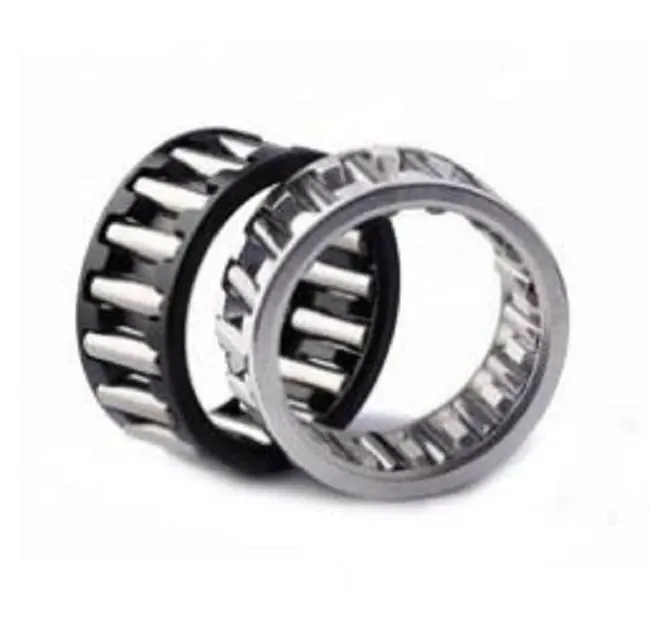
The material of the cage can be selected based on the application requirements. Common materials include steel, brass, and synthetic polymers. Steel cages are strong and durable, making them suitable for heavy - load applications. Brass cages have good corrosion resistance and can operate at higher temperatures. Synthetic polymer cages are lightweight and can reduce noise and vibration, which is beneficial in applications where quiet operation is desired.
The design of the cage can also be customized. For example, a full - complement cage can hold more rollers, which increases the load - carrying capacity of the bearing. On the other hand, a window - type cage allows for better lubricant flow, which can improve the cooling and lubrication of the rollers.
Internal Clearance
Internal clearance refers to the amount of free movement between the rollers and the raceway. It can be customized to meet different operating conditions.
For applications where the temperature changes significantly, a larger internal clearance might be required. This is because the components of the bearing will expand or contract with temperature changes, and a larger clearance can prevent the bearing from seizing up.
In high - precision applications, a smaller internal clearance is often preferred. It can improve the accuracy and stiffness of the bearing, which is important for things like machine tool spindles.
Lubrication
Lubrication is essential for the proper functioning of taper rollers. We can customize the lubrication options to meet the specific needs of different applications.
For normal operating conditions, grease lubrication is a common choice. Grease is easy to apply and can provide long - term lubrication. We can offer different types of grease with varying viscosities and additives. For example, a high - temperature grease can be used in applications where the bearing is exposed to high heat, while a grease with anti - wear additives can be used in heavy - load applications.
In some cases, oil lubrication might be more suitable. Oil can provide better cooling and can handle higher - speed operations. We can also customize the oil lubrication system, such as the type of oil used, the oil supply method (e.g., splash lubrication or forced - feed lubrication), and the oil filtration system.
Other Related Products
If you're also interested in other types of rolling elements, we have some great options. You can check out our [Needle Roller]( /rolling - elements/taper - roller/needle - roller - factory.html) products. Needle rollers are very useful in applications where space is limited but high load - carrying capacity is still required. You can also learn more about them on this [Needle Roller]( /rolling - elements/taper - roller/needle - roller.html) page. Another interesting option is the [Cross Roller]( /rolling - elements/taper - roller/cross - roller.html), which has unique design features that make it suitable for specific applications.
Wrapping Up
So, as you can see, there are a ton of customization options available for taper rollers. Whether it's the material, size, surface finish, cage design, internal clearance, or lubrication, we can work with you to create the perfect taper rollers for your specific needs.
If you're in the market for taper rollers or want to learn more about our customization options, don't hesitate to reach out. We're here to help you find the best solutions for your applications. Let's have a chat and see how we can make your projects a success!
References
- Harris, T. A., & Kotzalas, M. N. (2007). Rolling Bearing Analysis. Wiley.
- Gupta, P. K. (2002). Ball and Roller Bearings: Design, Application, and Analysis. CRC Press.