
Torque characteristics play a crucial role in the performance and application of cylindrical rollers. As a trusted cylindrical roller supplier, I have witnessed firsthand the significance of understanding these characteristics to meet the diverse needs of our customers. In this blog, we will delve into the torque characteristics of cylindrical rollers, exploring how they impact various industrial applications.
Understanding Torque in Cylindrical Rollers
Torque is a measure of the rotational force applied to an object. In the context of cylindrical rollers, torque is essential for transmitting power and enabling smooth rotation within mechanical systems. When a cylindrical roller is subjected to a load, it generates a torque that is directly related to the magnitude of the load and the radius of the roller.
The torque characteristics of cylindrical rollers are influenced by several factors, including the material properties, surface finish, and geometric design of the rollers. High - quality materials, such as bearing steel, offer excellent strength and durability, which can enhance the torque - carrying capacity of the rollers. A smooth surface finish reduces friction, allowing for more efficient torque transmission. Additionally, precise geometric design, such as accurate diameter and length tolerances, ensures uniform load distribution and optimal torque performance.
Static Torque Characteristics
Static torque refers to the torque required to initiate rotation in a stationary cylindrical roller. This characteristic is particularly important in applications where the roller needs to start moving from a standstill, such as conveyor systems and industrial machinery.
The static torque of a cylindrical roller is affected by the coefficient of static friction between the roller and its mating surfaces. A higher coefficient of static friction means that more torque is needed to overcome the initial resistance and start the roller rotating. Our company, as a cylindrical roller supplier, focuses on manufacturing rollers with low - friction surfaces to minimize the static torque requirements. This not only reduces the energy consumption during startup but also extends the service life of the rollers and the associated components.
For example, in a conveyor system, if the static torque of the cylindrical rollers is too high, the motor may struggle to start the conveyor, leading to increased wear on the motor and the drive system. By using our cylindrical rollers with optimized static torque characteristics, the conveyor can start smoothly, improving the overall efficiency of the operation.
Dynamic Torque Characteristics
Dynamic torque is the torque required to maintain the rotation of a cylindrical roller at a constant speed. This characteristic is crucial in continuous - motion applications, such as automotive engines, machine tools, and power transmission systems.
The dynamic torque of a cylindrical roller is influenced by factors such as the rotational speed, the load magnitude, and the lubrication conditions. As the rotational speed increases, the dynamic torque may change due to factors like centrifugal forces and fluid friction in the lubricant. A proper lubrication system is essential to reduce friction and heat generation, ensuring stable dynamic torque performance.
In automotive applications, cylindrical rollers are used in various components, such as wheel bearings and transmission systems. The dynamic torque characteristics of these rollers directly affect the fuel efficiency and performance of the vehicle. Our high - quality cylindrical rollers are designed to provide consistent dynamic torque under different operating conditions, contributing to improved vehicle performance and reduced maintenance costs.
Torque Capacity and Load Distribution
The torque capacity of a cylindrical roller is the maximum torque that the roller can withstand without experiencing excessive deformation or failure. This capacity is determined by the material strength, the size, and the design of the roller.
Proper load distribution is also critical for maximizing the torque capacity of cylindrical rollers. In a multi - roller system, the load should be evenly distributed among the rollers to prevent overloading of individual rollers. Our company uses advanced manufacturing techniques to ensure that the cylindrical rollers have uniform dimensions and surface properties, which helps in achieving optimal load distribution.
For instance, in a large - scale industrial gearbox, multiple cylindrical rollers are used to transmit high - torque power. If the load is not evenly distributed, some rollers may experience higher stress levels, leading to premature failure. By using our precision - manufactured cylindrical rollers, the load can be distributed evenly, increasing the overall torque - carrying capacity of the gearbox and extending its service life.
Comparison with Other Types of Rollers
When considering the torque characteristics of cylindrical rollers, it is also useful to compare them with other types of rollers, such as Interroll Tapered Roller, Spherical Roller, and Conical Rollers.
Tapered rollers are designed to handle both radial and axial loads. They have a unique geometry that allows them to distribute the load more effectively in applications where there are combined loads. However, their torque characteristics may be different from cylindrical rollers, especially in terms of the load - distribution pattern and the friction coefficient.
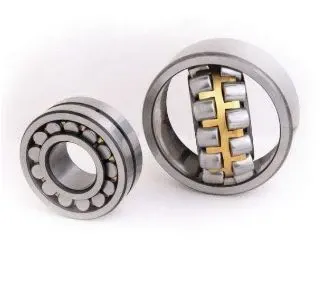
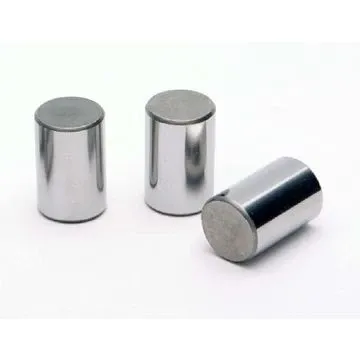
Spherical rollers are capable of self - alignment, which makes them suitable for applications where misalignment may occur. The torque characteristics of spherical rollers are influenced by their ability to adjust to misaligned shafts, and they may have different static and dynamic torque requirements compared to cylindrical rollers.
Conical rollers, with their conical shape, are used in specific applications where the load needs to be transferred at an angle. Their torque characteristics are also distinct from those of cylindrical rollers, depending on the angle of the cone and the load - transfer mechanism.
As a cylindrical roller supplier, we understand the specific requirements of different applications and can provide expert advice on whether cylindrical rollers are the best choice or if other types of rollers may be more suitable.
Applications of Cylindrical Rollers Based on Torque Characteristics
The unique torque characteristics of cylindrical rollers make them suitable for a wide range of applications. In the automotive industry, they are used in engines, transmissions, and wheel hubs to transmit power and support rotational motion. The ability to handle high - torque loads and provide smooth rotation is essential for the performance and reliability of vehicles.
In the manufacturing industry, cylindrical rollers are widely used in machine tools, such as lathes, milling machines, and grinders. They help in precision machining by providing accurate rotational support and efficient torque transmission.
In the aerospace industry, where reliability and performance are of utmost importance, cylindrical rollers are used in various components, including landing gear systems and aircraft engines. Their high - torque capacity and low - friction characteristics ensure safe and efficient operation under extreme conditions.
Importance of Choosing the Right Cylindrical Roller Supplier
Selecting the right cylindrical roller supplier is crucial for ensuring the optimal performance of your application. A reliable supplier should have a deep understanding of the torque characteristics of cylindrical rollers and be able to provide high - quality products tailored to your specific needs.
Our company, as a leading cylindrical roller supplier, has a team of experienced engineers and technicians who are dedicated to researching and developing innovative roller solutions. We use state - of - the - art manufacturing equipment and strict quality control processes to ensure that our cylindrical rollers meet the highest industry standards.
We also offer comprehensive technical support and after - sales service. Whether you need assistance in selecting the right roller for your application or have any questions about torque characteristics, our team is always ready to help.
Conclusion
In conclusion, the torque characteristics of cylindrical rollers are complex and vital aspects that impact their performance in various industrial applications. Understanding static and dynamic torque, torque capacity, and load distribution is essential for choosing the right cylindrical roller for your specific needs.
As a trusted cylindrical roller supplier, we are committed to providing high - quality products with excellent torque characteristics. Our expertise and dedication to innovation allow us to meet the diverse requirements of our customers and contribute to the success of their applications.
If you are interested in learning more about our cylindrical rollers or have specific requirements for your application, we invite you to contact us for a detailed discussion. We look forward to working with you to find the best roller solutions for your business.
References
- Harris, T. A., & Kotzalas, M. N. (2007). Rolling Bearing Analysis. John Wiley & Sons.
- Jones, A. (1960). Basic Theory of Lubrication for Rolling - Element Bearings. ASME Journal of Basic Engineering.