
Preload requirements for ball bearing balls are crucial factors that significantly impact the performance, lifespan, and reliability of ball bearings. As a leading supplier of high - quality Ball Bearing Balls, I understand the importance of these preload requirements and am here to share in - depth knowledge on this topic.
Understanding Preload in Ball Bearings
Preload in ball bearings refers to the application of a constant axial or radial force to the bearing before it is put into operation. This force eliminates the internal clearance between the balls and the raceways, ensuring that the balls are in continuous contact with the raceways. There are several reasons for applying preload. Firstly, it enhances the stiffness of the bearing. A preloaded bearing can better resist deformation under load, which is essential for applications where high precision is required, such as in machine tools and aerospace equipment. Secondly, preload helps to improve the rotational accuracy of the bearing. By reducing the internal clearance, the balls move more smoothly along the raceways, minimizing vibrations and noise during operation.
Types of Preload
There are mainly two types of preload: constant - pressure preload and constant - position preload.
Constant - Pressure Preload
In constant - pressure preload, a spring or other elastic element is used to apply a constant force to the bearing. This type of preload has the advantage of automatically adjusting to changes in the bearing's internal dimensions due to temperature variations or wear. For example, in a high - speed spindle application, as the temperature of the bearing rises during operation, the bearing may expand. With constant - pressure preload, the spring can compress slightly to maintain the preload force, ensuring stable performance.
Constant - Position Preload
Constant - position preload is achieved by adjusting the axial or radial position of the bearing components. This method provides a fixed preload value, which is suitable for applications where the load and operating conditions are relatively stable. For instance, in some precision measuring instruments, constant - position preload can ensure high - precision positioning and measurement.
Factors Affecting Preload Requirements
Several factors influence the preload requirements for ball bearing balls.
Load Conditions
The magnitude and direction of the load are important considerations. In applications with heavy radial loads, a higher preload may be required to prevent excessive deformation of the bearing. For example, in a large - scale industrial crusher, the bearings need to withstand significant radial forces, so a relatively high preload is necessary to maintain the integrity of the bearing structure. On the other hand, in applications with mainly axial loads, such as in a screw - driven linear motion system, the preload should be adjusted accordingly to ensure proper load distribution among the balls.
Rotational Speed
The rotational speed of the bearing also affects the preload requirements. At high speeds, centrifugal forces acting on the balls can cause changes in the internal clearance of the bearing. To counteract these effects, a higher preload may be needed to keep the balls in proper contact with the raceways. For example, in a high - speed electric motor, the bearings must be preloaded appropriately to prevent the balls from skidding or vibrating at high rotational speeds.
Temperature
Temperature variations can cause thermal expansion or contraction of the bearing components. This can change the internal clearance and preload of the bearing. In applications where the operating temperature fluctuates widely, such as in automotive engines or outdoor machinery, the preload should be designed to accommodate these temperature changes. A constant - pressure preload system is often a good choice in such cases.
Precision Requirements
The level of precision required in the application is a key factor. In high - precision applications, such as in semiconductor manufacturing equipment or optical instruments, very tight preload tolerances are necessary to ensure accurate positioning and smooth operation. Even a small deviation in preload can lead to significant errors in these applications.
Calculating Preload Requirements
Calculating the appropriate preload for ball bearing balls is a complex process that requires considering multiple factors. There are several methods and formulas available for preload calculation.
One common approach is based on the bearing's internal geometry and the expected load conditions. The Hertzian contact theory is often used to analyze the contact stress between the balls and the raceways. By knowing the material properties of the bearing components, the diameter of the balls, and the curvature of the raceways, the preload force can be calculated to ensure that the contact stress remains within the allowable range.
Another method is to use empirical data and industry standards. Many bearing manufacturers provide preload guidelines based on their extensive testing and experience. These guidelines take into account different types of bearings, load conditions, and operating environments.
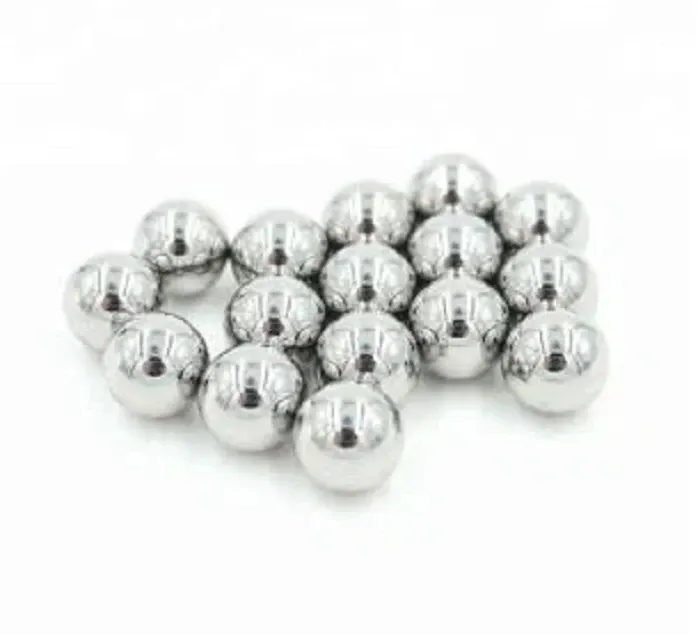

Our High - Quality Ball Bearing Balls
As a supplier of Ball Bearing Balls, we offer a wide range of products to meet different preload requirements. Our Din 5401 Steel Ball is made of high - quality steel, which has excellent hardness and wear resistance. These balls are precisely manufactured to ensure accurate dimensions and surface finish, making them suitable for applications with strict preload requirements.
Our Stainless Steel Ball is corrosion - resistant, making it ideal for use in harsh environments. The stainless steel material also has good mechanical properties, which can maintain the preload force even under challenging conditions.
In addition, our Metal Ball is available in various materials and sizes. We can customize the balls according to your specific preload requirements and application needs.
Importance of Correct Preload
Applying the correct preload to ball bearing balls is of utmost importance. If the preload is too low, the bearing may experience excessive internal clearance, leading to increased vibrations, noise, and premature wear. This can significantly reduce the lifespan of the bearing and affect the performance of the entire system.
On the other hand, if the preload is too high, it can cause excessive stress on the bearing components, leading to overheating, increased power consumption, and even damage to the bearing. Therefore, it is essential to determine the appropriate preload value based on the specific application requirements.
Contact Us for Your Ball Bearing Balls Needs
If you are looking for high - quality Ball Bearing Balls with the right preload for your application, we are here to help. Our team of experts has extensive knowledge and experience in bearing technology and can assist you in selecting the most suitable balls and determining the correct preload. We are committed to providing you with the best products and services to ensure the optimal performance of your equipment. Contact us today to start a discussion about your procurement needs and explore how our Ball Bearing Balls can meet your requirements.
References
- Harris, T. A., & Kotzalas, M. N. (2007). Rolling Bearing Analysis. Wiley.
- Zorzi, M., & Meli, P. (2014). Rolling Bearings: Fatigue Life, Tribology, and Design. Springer.