
Needle rollers are essential components in various mechanical applications, offering high load - carrying capacity and compact design. As a needle roller supplier, I've had the opportunity to work with needle rollers from different manufacturers and observe their performance differences. This blog post aims to delve into these differences to help you make informed decisions when choosing needle rollers for your specific needs.
1. Material Quality
The material used in needle rollers significantly impacts their performance. Different manufacturers may source materials from various suppliers or use different grades of the same material. High - quality steel is commonly used for needle rollers due to its excellent hardness, toughness, and wear resistance.
Some well - established manufacturers invest in advanced steel - making processes to ensure consistent material properties. For example, they may use vacuum - degassed steel, which has fewer impurities compared to standard steel. This results in needle rollers with better fatigue resistance and longer service life. On the other hand, some less - reputable manufacturers might cut costs by using lower - grade steel, which can lead to premature wear, cracking, and reduced load - carrying capacity.
2. Dimensional Accuracy
Precision in dimensions is crucial for needle rollers. Any deviation from the specified dimensions can cause uneven loading, increased friction, and premature failure of the roller and the associated bearing system.
Top - tier manufacturers have state - of - the - art machining equipment and strict quality control processes to ensure that their needle rollers meet the tightest dimensional tolerances. They can produce needle rollers with extremely accurate diameters, lengths, and roundness. In contrast, some manufacturers with less advanced technology may struggle to maintain consistent dimensional accuracy. This can lead to problems such as improper fit within the bearing housing, resulting in reduced performance and reliability.

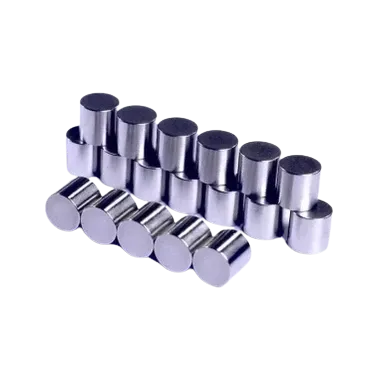
3. Surface Finish
The surface finish of needle rollers plays a vital role in their performance. A smooth surface finish reduces friction and wear, allowing the needle rollers to roll more freely.
Manufacturers with advanced grinding and polishing techniques can achieve a very fine surface finish on their needle rollers. This not only improves the efficiency of the bearing system but also enhances the lubrication film formation between the roller and the raceway. Some manufacturers may offer needle rollers with special surface treatments, such as coatings, to further improve their performance in specific environments. For instance, a coating can provide corrosion resistance in harsh chemical or wet environments. In contrast, needle rollers from manufacturers with inferior surface finishing processes may have rough surfaces, which can lead to increased friction, heat generation, and accelerated wear.
4. Load - Carrying Capacity
The load - carrying capacity of needle rollers is a critical performance parameter. It depends on factors such as the material, dimensions, and design of the needle rollers.
High - quality manufacturers design their needle rollers to withstand heavy loads. They use advanced engineering techniques to optimize the shape and internal structure of the rollers to distribute the load evenly. For example, some manufacturers may use a special crown design on the needle rollers to prevent edge loading, which can cause premature failure. In comparison, needle rollers from some manufacturers may have a lower load - carrying capacity due to inferior material quality or less - optimized design. This can limit their use in applications where high loads are involved.
5. Noise and Vibration
In many applications, especially those in precision machinery and automotive components, low noise and vibration levels are essential. The performance of needle rollers can have a significant impact on the noise and vibration characteristics of the bearing system.
Manufacturers that focus on quality and precision engineering produce needle rollers that run smoothly, resulting in lower noise and vibration levels. They achieve this through careful control of the manufacturing processes, including the material selection, dimensional accuracy, and surface finish. On the other hand, needle rollers from some manufacturers may generate more noise and vibration due to factors such as uneven surfaces, improper dimensions, or low - quality materials. This can be a major drawback in applications where quiet operation is required.
6. Compatibility with Lubricants
The compatibility of needle rollers with lubricants is another important aspect of their performance. Different lubricants have different properties, and the needle rollers need to be able to work effectively with the chosen lubricant.
Reputable manufacturers conduct extensive research and testing to ensure that their needle rollers are compatible with a wide range of lubricants. They may also provide guidelines on the best lubricants to use with their needle rollers for optimal performance. In contrast, some manufacturers may not pay enough attention to lubricant compatibility. This can lead to problems such as poor lubrication film formation, increased friction, and premature wear when using certain types of lubricants.
Comparison with Other Types of Rollers
When considering needle rollers, it's also useful to compare them with other types of rollers, such as Conical Rollers, Cylindrical Roller, and Spherical Roller.
Conical rollers are designed to handle both radial and axial loads. They have a tapered shape, which allows them to distribute the load more evenly over a larger area compared to needle rollers. However, they are generally larger in size and may not be suitable for applications where space is limited.
Cylindrical rollers are known for their high radial load - carrying capacity. They have a simple cylindrical shape, which makes them relatively easy to manufacture. However, they may not be as effective in handling axial loads as conical rollers. Needle rollers, on the other hand, offer a high load - carrying capacity in a compact design, making them ideal for applications with limited space.
Spherical rollers can accommodate misalignment between the shaft and the housing. They have a spherical outer surface, which allows them to self - align. This property makes them suitable for applications where there may be some degree of misalignment. Needle rollers, while not having the self - aligning feature, are more suitable for applications where high precision and compactness are required.
Conclusion
In conclusion, the performance differences between needle rollers from different manufacturers can be significant. When choosing needle rollers for your application, it's important to consider factors such as material quality, dimensional accuracy, surface finish, load - carrying capacity, noise and vibration levels, and compatibility with lubricants. As a needle roller supplier, I understand the importance of these factors and can help you select the most suitable needle rollers for your specific needs.
If you are in the market for high - quality needle rollers or have any questions about their performance and application, I encourage you to contact me for a detailed discussion. I am committed to providing you with the best products and services to meet your requirements.
References
- Harris, T. A., & Kotzalas, M. N. (2007). Rolling Bearing Analysis. Wiley.
- Bjurström, A. (2012). Rolling Bearing Technology. SKF.