
In the ever - evolving world of engineering and manufacturing, taper rollers are a critical component in numerous applications, ranging from automotive transmissions to industrial machinery. As a leading taper roller design supplier, I have witnessed firsthand the significant shifts in taper roller design trends over the years. This blog will delve into the latest trends that are shaping the future of taper roller design.
Enhanced Material Selection
One of the most prominent trends in taper roller design is the use of advanced materials. Traditional materials like high - carbon chromium steel have long been the standard for taper rollers. However, as industry demands become more challenging, new materials are being explored to enhance performance.
For instance, ceramic materials have gained traction in recent years. Ceramics offer several advantages over steel, such as higher hardness, lower density, and excellent corrosion resistance. Taper rollers made from ceramics can operate at higher temperatures and speeds, reducing the risk of fatigue and wear. They also have a lower coefficient of friction, which can lead to energy savings in applications where efficiency is crucial.
Another emerging material is advanced polymer composites. These materials can be tailored to have specific properties, such as self - lubrication, high damping capacity, and chemical resistance. Polymer - based taper rollers are ideal for applications where noise reduction, vibration damping, and corrosion protection are essential, such as in food processing machinery or medical equipment.
Precision Manufacturing Techniques
Precision is of utmost importance in taper roller design. Even the slightest deviation in dimensions can lead to significant performance issues, including reduced load - carrying capacity and premature failure. Modern precision manufacturing techniques are enabling manufacturers to produce taper rollers with unprecedented levels of accuracy.
Computer - Numerical - Control (CNC) machining has become the standard for taper roller production. CNC machines can precisely control the cutting tools, allowing for tight tolerances on the roller's surface finish, diameter, and taper angle. This high level of precision ensures proper contact between the roller and the raceway, distributing the load evenly and minimizing stress concentrations.
Grinding techniques have also advanced significantly. Superfinishing processes are now being used to achieve extremely smooth surface finishes on taper rollers. A smooth surface reduces friction and wear, and it can also improve the fatigue life of the roller. Additionally, these precision grinding processes can be used to optimize the surface profile of the roller, enhancing its performance under different operating conditions.
Innovative Geometric Designs
The geometry of taper rollers has undergone some innovative changes in recent years. Traditional taper roller designs have a simple conical shape. However, new geometric concepts are being introduced to enhance the performance of taper rollers in specific applications.
One such innovation is the Cross Roller design. Cross rollers are arranged perpendicular to each other in a cage, which allows for both radial and axial loads to be supported simultaneously. This design is particularly useful in applications where space is limited, and multi - directional load support is required, such as in robotics or aerospace equipment.
Another interesting geometric design is the Cylindrical Roller with a tapered end. This hybrid design combines the advantages of cylindrical rollers (high radial load - carrying capacity) and taper rollers (axial load - carrying capacity). The tapered end provides a better transition for the load, reducing stress concentrations and improving the overall performance of the roller.
The Gravity Taper Roller is also a novel concept. These rollers are designed to use gravity to their advantage. They are shaped in such a way that the load is naturally distributed along the length of the roller, which can reduce the risk of edge stress and improve the roller's ability to withstand high loads.
Integration of Smart Technologies
The era of Industry 4.0 has also influenced taper roller design. Smart technologies are being integrated into taper rollers to enable real - time monitoring and predictive maintenance.
Sensors can be embedded in the taper rollers to measure parameters such as temperature, vibration, and load. These sensors can transmit data wirelessly to a central monitoring system, allowing operators to detect early signs of wear or damage. By analyzing the data, maintenance schedules can be optimized, reducing downtime and preventing costly breakdowns.
In addition to sensors, wear - resistant coatings with self - diagnostic properties are being developed. These coatings can change color or emit signals when they reach a certain level of wear, providing a visual or electronic indication that the roller needs to be replaced.
Environmental Considerations
Sustainability is a growing concern in all industries, and taper roller design is no exception. Manufacturers are now focusing on designing taper rollers that are more environmentally friendly.
One aspect is the reduction of energy consumption. As mentioned earlier, advanced materials and smooth surface finishes can reduce friction, which in turn reduces the amount of energy required to operate machinery. This not only saves costs but also reduces the overall carbon footprint.
Another environmental consideration is the recyclability of taper rollers. Manufacturers are exploring ways to design taper rollers that can be easily disassembled and recycled at the end of their useful life. This reduces waste and conserves raw materials.
Design for Extreme Operating Conditions
With the demand for machinery that can operate in more extreme conditions, taper rollers are being designed to withstand high temperatures, corrosive environments, and heavy loads.
In high - temperature applications, such as in power generation or aerospace engines, taper rollers need to maintain their mechanical properties at elevated temperatures. Special heat - resistant materials and heat - treatment processes are being used to ensure that the rollers can operate reliably at temperatures well above 500 degrees Celsius.
For corrosive environments, such as in the marine or chemical industries, taper rollers are being coated with protective layers to prevent rust and corrosion. These coatings can be based on ceramics, polymers, or other corrosion - resistant materials, and they can significantly extend the service life of the rollers.
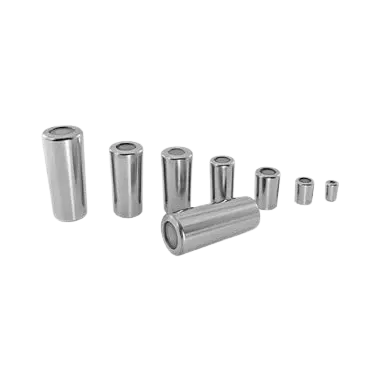

When it comes to heavy - load applications, such as in mining equipment or large - scale manufacturing machinery, the design of taper rollers is optimized to handle extremely high radial and axial loads. This may involve increasing the roller's diameter, length, or using a combination of advanced materials and innovative geometric designs.
Customization and Modularity
Customers are increasingly demanding taper rollers that are customized to their specific applications. As a taper roller design supplier, we understand the importance of providing tailored solutions. Modular design concepts are being used to create taper rollers that can be easily adapted to different requirements.
We can offer a range of standard components that can be combined in various ways to create a custom - made taper roller assembly. This not only reduces lead times but also allows for more cost - effective production. By working closely with our customers, we can understand their unique needs and design taper rollers that perfectly fit their applications.
Conclusion
The new trends in taper roller design are driven by the need for higher performance, increased efficiency, and environmental sustainability. As a taper roller design supplier, we are at the forefront of these trends, constantly innovating and developing new solutions to meet the evolving needs of our customers.
If you are in the market for high - quality taper rollers, I encourage you to contact us for a detailed discussion. We can help you identify the best taper roller design for your specific application and provide you with a competitive quote. Let's work together to find the optimal solution for your engineering challenges.
References
- Jost, H. O. (2012). Rolling Bearing Analysis. CRC Press.
- Harris, T. A., & Kotzalas, M. N. (2007). Rolling Bearing Analysis. John Wiley & Sons.
- Smith, W. F. (2015). Foundations of Materials Science and Engineering. McGraw - Hill Education.