
Cross rollers are a type of precision rolling element widely used in various industries due to their unique design and high load - carrying capacity. As a cross roller supplier, I am well - versed in the manufacturing processes that transform raw materials into these high - performance components. In this blog, I will delve into the step - by - step manufacturing processes of cross rollers.
Raw Material Selection
The first and perhaps most crucial step in manufacturing cross rollers is the selection of raw materials. High - quality steel is the most commonly used material for cross rollers. It offers excellent hardness, wear resistance, and toughness, which are essential for the long - term performance of the rollers. The steel should have a precise chemical composition, with a proper balance of carbon, chromium, and other alloying elements. For example, bearing steels such as AISI 52100 are often preferred because they can be heat - treated to achieve the desired hardness and mechanical properties.
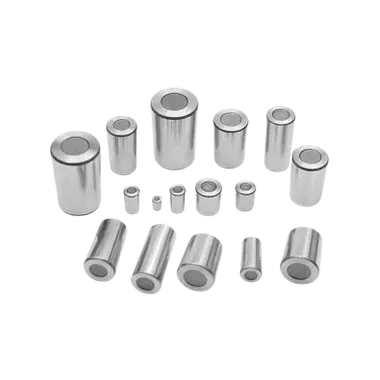
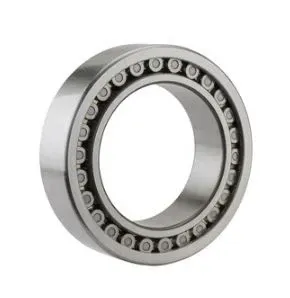
The raw material is usually sourced in the form of bars or rods. These bars are carefully inspected for any surface defects, such as cracks or inclusions, before they are sent for further processing. Any sub - standard raw materials are rejected at this stage to ensure the quality of the final product.
Cutting
Once the raw material is selected, the next step is cutting. The bars are cut into appropriate lengths using cutting machines, such as saws or shears. The cutting process must be precise to ensure that each roller blank has the correct length. This is important because the length of the cross roller affects its load - carrying capacity and compatibility with the application.
During cutting, the cutting speed, feed rate, and cutting tool selection are carefully controlled. A high - quality cutting tool is used to minimize the heat generated during the cutting process, which can cause thermal damage to the material and affect its properties. After cutting, the roller blanks are deburred to remove any sharp edges or burrs that may have been created during the cutting process.
Rough Machining
After cutting, the roller blanks undergo rough machining. This process involves removing a large amount of material from the blanks to shape them closer to the final dimensions of the cross rollers. Turning is a common rough - machining operation for cross rollers. In turning, the roller blank is rotated on a lathe, and a cutting tool is used to remove material from the outer surface of the blank.
The rough - machining process also includes operations such as drilling and boring if the cross rollers require internal features, such as holes for lubrication or mounting. During rough machining, the dimensional accuracy is not as critical as in the subsequent finishing operations. However, it is still important to ensure that the basic shape of the roller is correct and that there is enough material left for the finishing operations.
Heat Treatment
Heat treatment is a vital step in the manufacturing of cross rollers. It is used to enhance the mechanical properties of the rollers, such as hardness, toughness, and wear resistance. The most common heat - treatment process for cross rollers is quenching and tempering.
Quenching involves heating the roller blanks to a specific temperature, usually above the critical point of the steel, and then rapidly cooling them in a quenching medium, such as oil or water. This rapid cooling causes the formation of a hard martensitic structure in the steel. However, the martensitic structure is very brittle, so tempering is carried out immediately after quenching.
Tempering involves reheating the quenched rollers to a lower temperature and holding them at that temperature for a specific period of time. This process relieves the internal stresses created during quenching and improves the toughness of the rollers while maintaining a high level of hardness. The exact heat - treatment parameters, such as heating temperature, cooling rate, and tempering temperature, are carefully controlled based on the type of steel used and the required properties of the cross rollers.
Finishing Machining
After heat treatment, the cross rollers undergo finishing machining to achieve the final dimensions and surface finish. Grinding is the primary finishing operation for cross rollers. Grinding uses an abrasive wheel to remove a small amount of material from the surface of the rollers, resulting in a very smooth and precise surface.
There are different types of grinding operations used for cross rollers, such as cylindrical grinding and centerless grinding. Cylindrical grinding is used to grind the outer surface of the rollers to the required diameter and roundness. Centerless grinding is often used for high - volume production because it can achieve high precision and productivity.
In addition to grinding, other finishing operations may include lapping and honing. Lapping is a precision finishing process that uses a lapping plate and an abrasive slurry to further improve the surface finish and flatness of the rollers. Honing is used to improve the surface texture and dimensional accuracy of the internal features of the rollers, if any.
Surface Treatment
Surface treatment is an important step to enhance the corrosion resistance and wear resistance of cross rollers. One common surface - treatment method is nitriding. Nitriding involves introducing nitrogen into the surface of the rollers to form a hard and wear - resistant nitride layer. This layer can significantly improve the surface hardness and wear resistance of the rollers, especially in applications where there is high - speed sliding or rolling contact.
Another surface - treatment option is coating. Coatings such as titanium nitride (TiN) or diamond - like carbon (DLC) can be applied to the surface of the cross rollers. These coatings provide excellent wear resistance, low friction, and corrosion protection. The choice of surface treatment depends on the specific application requirements of the cross rollers.
Inspection and Quality Control
Throughout the manufacturing process, strict inspection and quality - control measures are implemented. After each major manufacturing step, the cross rollers are inspected for dimensional accuracy, surface finish, hardness, and other properties. Dimensional inspection is carried out using precision measuring instruments such as micrometers, calipers, and coordinate measuring machines (CMMs).
Hardness testing is performed using hardness testers, such as Rockwell or Vickers hardness testers, to ensure that the rollers have the correct hardness. Surface finish is inspected using surface profilometers to ensure that the surface roughness meets the required specifications. Any rollers that do not meet the quality standards are rejected and either re - worked or scrapped.
Comparison with Other Roller Types
Cross rollers have some unique advantages compared to other types of rollers, such as Cylindrical Roller and Taper Rollers. Cylindrical rollers have a simple design and are suitable for applications with mainly radial loads. However, cross rollers can handle both radial and axial loads simultaneously due to their crossed arrangement.
Taper Roller Disign is designed to handle both radial and axial loads as well, but cross rollers often offer a more compact design and higher load - carrying capacity per unit volume. This makes cross rollers a preferred choice in applications where space is limited and high load - capacity is required, such as in robotics, machine tools, and aerospace.
Conclusion
In conclusion, the manufacturing processes of cross rollers are complex and involve multiple steps, from raw material selection to final inspection. Each step is crucial to ensure the quality and performance of the cross rollers. As a cross roller supplier, I am committed to providing high - quality cross rollers that meet the diverse needs of our customers.
If you are in the market for cross rollers or have any questions about our products, I encourage you to reach out for a procurement discussion. We are ready to offer you the best solutions based on your specific application requirements.
References
- ASM Handbook Volume 4: Heat Treating. ASM International.
- Tribology Handbook. CRC Press.
- Manufacturing Engineering and Technology. McGraw - Hill Education.