
When it comes to the world of mechanical engineering and industrial applications, cylindrical rollers play a pivotal role. As a seasoned cylindrical roller supplier, I've witnessed firsthand the importance of making informed decisions when selecting these crucial components. In this blog post, I'll delve into the key parameters that you should consider when choosing cylindrical rollers, ensuring that you make the best choice for your specific needs.
Load Capacity
One of the most fundamental aspects to consider when selecting cylindrical rollers is their load - carrying capacity. The load capacity of a cylindrical roller is determined by several factors, including the material of the roller, its dimensions, and the internal design of the bearing in which it is used.
Cylindrical rollers are designed to handle both radial and axial loads. Radial loads act perpendicular to the axis of the shaft, while axial loads act parallel to the shaft. When evaluating load capacity, it's essential to understand the magnitude and direction of the loads that your application will experience. For heavy - duty applications with high radial loads, larger - diameter and longer cylindrical rollers are often the preferred choice. These rollers can distribute the load over a larger surface area, reducing the stress on individual components and increasing the overall lifespan of the bearing.
It's also important to consider the dynamic and static load ratings of the cylindrical rollers. The dynamic load rating refers to the maximum load that a bearing can withstand while in motion, while the static load rating is the maximum load that a bearing can withstand when stationary. Exceeding these ratings can lead to premature wear, deformation, and even failure of the rollers and the bearing assembly.
Speed Rating
Another critical parameter is the speed rating of the cylindrical rollers. The speed at which a roller can operate safely is influenced by factors such as the lubrication, the material of the roller and the bearing raceway, and the internal clearance of the bearing.
High - speed applications require cylindrical rollers that can maintain their integrity and performance under rapid rotation. Special materials and heat - treatment processes are often used to enhance the strength and hardness of the rollers, allowing them to withstand the centrifugal forces and frictional heat generated at high speeds. Additionally, proper lubrication is essential for high - speed operation. Lubricants reduce friction between the rollers and the raceways, dissipate heat, and prevent wear and corrosion.
When selecting cylindrical rollers for high - speed applications, it's important to consult the manufacturer's speed ratings and guidelines. These ratings are based on extensive testing and take into account factors such as the type of lubrication, the operating temperature, and the bearing design.
Tolerance and Precision
Tolerance and precision are crucial considerations, especially in applications where accurate positioning and smooth operation are required. The tolerance of a cylindrical roller refers to the allowable deviation from its nominal dimensions. Tighter tolerances result in more precise rollers, which can improve the performance and reliability of the bearing.
Precision - grade cylindrical rollers are manufactured to very strict dimensional tolerances, ensuring that they fit perfectly within the bearing and provide consistent performance. These rollers are often used in applications such as machine tools, aerospace equipment, and high - precision industrial machinery.
In addition to dimensional tolerances, surface finish is also an important aspect of precision. A smooth surface finish reduces friction and wear, improves the distribution of the load, and enhances the overall performance of the roller. High - quality cylindrical rollers are typically ground and polished to achieve a fine surface finish.
Material and Heat Treatment
The material used to manufacture cylindrical rollers has a significant impact on their performance and durability. Common materials for cylindrical rollers include chrome steel, stainless steel, and ceramic.

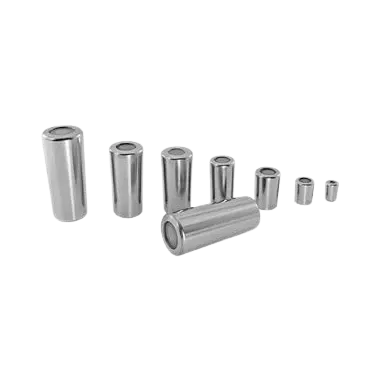
Chrome steel is a popular choice due to its high strength, hardness, and wear resistance. It is suitable for a wide range of applications, from general - purpose machinery to heavy - duty industrial equipment. Stainless steel is used in applications where corrosion resistance is required, such as in food processing, marine, and chemical industries. Ceramic rollers, on the other hand, offer several advantages, including high hardness, low density, and excellent thermal stability. They are often used in high - speed and high - temperature applications, such as in aerospace and semiconductor manufacturing.
Heat treatment is another important process that can enhance the properties of the roller material. Through processes such as quenching and tempering, the hardness, strength, and toughness of the rollers can be adjusted to meet the specific requirements of the application.
Lubrication and Sealing
Proper lubrication is essential for the smooth operation and long - term performance of cylindrical rollers. Lubricants reduce friction between the rollers and the raceways, prevent wear and corrosion, and dissipate heat. There are several types of lubricants available, including grease and oil.
Grease lubrication is commonly used in applications where simplicity and long - term maintenance are desired. Grease provides a thick, sticky film that adheres to the surfaces of the rollers and the raceways, providing continuous lubrication. Oil lubrication, on the other hand, is preferred in high - speed and high - temperature applications. Oil can provide better cooling and more efficient lubrication, but it requires a more complex lubrication system.
Sealing is also an important consideration, as it helps to keep the lubricant in and contaminants out. Seals can prevent dust, dirt, and moisture from entering the bearing, which can cause premature wear and failure. There are various types of seals available, including contact seals and non - contact seals, each with its own advantages and disadvantages.
Compatibility with Other Components
When selecting cylindrical rollers, it's important to consider their compatibility with other components in the bearing assembly, such as the inner and outer raceways, cages, and seals. The rollers must fit properly within the bearing and work in harmony with the other components to ensure optimal performance.
The cage, for example, plays a crucial role in separating the rollers and guiding them during operation. It must be designed to withstand the forces and speeds of the application and be compatible with the roller material. Similarly, the inner and outer raceways must be made of materials that are compatible with the rollers and have the appropriate hardness and surface finish.
Application - Specific Requirements
Finally, it's important to consider the specific requirements of your application. Different industries and applications have unique demands, and the cylindrical rollers must be selected accordingly.
For example, in automotive applications, cylindrical rollers are used in transmissions, wheel hubs, and engines. These applications require rollers that can withstand high loads, high speeds, and variable operating conditions. In the renewable energy sector, such as wind turbines, cylindrical rollers are used in the gearboxes and generators. These applications require rollers that can operate in harsh environments, including high - humidity and high - temperature conditions.
In conclusion, selecting the right cylindrical rollers requires a thorough understanding of the key parameters discussed above. By considering factors such as load capacity, speed rating, tolerance and precision, material and heat treatment, lubrication and sealing, compatibility with other components, and application - specific requirements, you can ensure that you choose the best cylindrical rollers for your needs.
If you are in the market for high - quality cylindrical rollers, we are here to help. As a leading [Cylindrical Roller] supplier, we offer a wide range of cylindrical rollers that meet the highest standards of quality and performance. Our team of experts can assist you in selecting the right rollers for your application and provide you with the technical support you need. [Contact us] to start a procurement discussion and find the perfect solution for your cylindrical roller needs.
References
- Harris, T. A., & Kotzalas, M. N. (2007). Rolling Bearing Analysis. John Wiley & Sons.
- Stachowiak, G. W., & Batchelor, A. W. (2005). Engineering Tribology. Butterworth - Heinemann.