
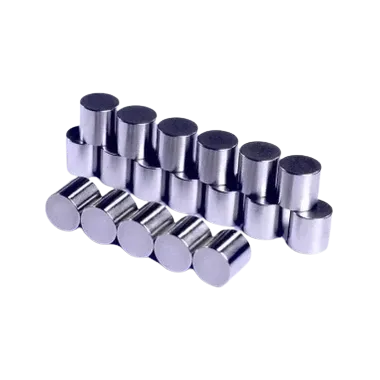
When it comes to mechanical components, cylindrical rollers are essential elements widely used in various industries. As a reliable cylindrical roller supplier, I've witnessed firsthand the importance of understanding their fatigue resistance properties. In this blog, we'll delve deep into what these properties are, how they're measured, and why they matter in real - world applications.
What is Fatigue Resistance in Cylindrical Rollers?
Fatigue resistance refers to the ability of a cylindrical roller to withstand repeated loading and unloading cycles without failing. In mechanical systems, cylindrical rollers are often subjected to cyclic stresses, such as in bearings where they support rotating shafts. Over time, these cyclic stresses can cause microscopic cracks to form on the surface or within the material of the roller. If the fatigue resistance is low, these cracks can propagate and eventually lead to the failure of the roller, which may disrupt the entire mechanical system.
Factors Affecting Fatigue Resistance
Material Quality
The material used to manufacture cylindrical rollers plays a crucial role in determining their fatigue resistance. High - quality bearing steels, such as chromium - molybdenum steels, are commonly used due to their excellent combination of hardness, toughness, and wear resistance. These steels can withstand high stresses and resist crack initiation and propagation. For example, a well - heat - treated chromium - molybdenum steel roller can have a much higher fatigue life compared to a roller made from a lower - grade steel.
Surface Finish
The surface finish of a cylindrical roller also impacts its fatigue resistance. A smooth surface reduces stress concentrations, which are potential sites for crack initiation. During the manufacturing process, precision grinding and polishing are employed to achieve a fine surface finish. Any surface irregularities, such as scratches or pits, can act as stress raisers and accelerate the fatigue process.
Heat Treatment
Proper heat treatment is essential for enhancing the fatigue resistance of cylindrical rollers. Heat treatment processes, such as quenching and tempering, can improve the mechanical properties of the material. Quenching hardens the surface of the roller, while tempering relieves internal stresses and improves toughness. By optimizing the heat treatment parameters, we can achieve the ideal balance between hardness and toughness, which is crucial for long - term fatigue performance.
Measuring Fatigue Resistance
Fatigue Testing
One of the most common methods to measure the fatigue resistance of cylindrical rollers is through fatigue testing. In a fatigue test, a roller is subjected to a controlled cyclic load under specific conditions. The number of cycles the roller can withstand before failure is recorded as its fatigue life. There are different types of fatigue tests, such as radial fatigue tests and axial fatigue tests, depending on the application requirements.
Statistical Analysis
Since fatigue life can vary from one roller to another, statistical analysis is often used to evaluate the fatigue resistance of a batch of rollers. By testing a sufficient number of samples, we can establish a probability distribution of fatigue life. This information is valuable for predicting the reliability of cylindrical rollers in real - world applications.
Real - World Applications and the Importance of Fatigue Resistance
Automotive Industry
In the automotive industry, cylindrical rollers are used in various components, such as wheel bearings and transmission systems. High fatigue resistance is crucial as these components are subjected to continuous vibrations and dynamic loads during vehicle operation. A failure of a roller in a wheel bearing can lead to dangerous situations, such as loss of vehicle control. Therefore, automotive manufacturers require cylindrical rollers with excellent fatigue resistance to ensure the safety and reliability of their vehicles.
Industrial Machinery
Industrial machinery, such as machine tools and conveyors, also rely on cylindrical rollers. In these applications, the rollers need to withstand heavy loads and high - speed rotations. Fatigue failure of a roller can cause downtime and costly repairs. By using rollers with high fatigue resistance, industrial operators can improve the efficiency and productivity of their machinery.
Comparison with Other Types of Rollers
It's interesting to compare the fatigue resistance properties of cylindrical rollers with other types of rollers, such as Conical Rollers and Cross Roller. Conical rollers are designed to handle both radial and axial loads, and their shape can distribute loads differently compared to cylindrical rollers. In some applications where high axial loads are present, conical rollers may be a better choice. However, in terms of pure radial load - carrying capacity and fatigue resistance under radial loads, cylindrical rollers often have an advantage due to their simple and uniform shape.
Cross rollers, on the other hand, have a unique cross - arrangement that allows them to handle high loads in multiple directions. While they offer excellent load - carrying capabilities, their complex design may make them more susceptible to fatigue in certain situations. Cylindrical rollers, with their straightforward design, generally have more predictable fatigue behavior.
Our 2022 New Product - Taper Roller With Hole in The Center
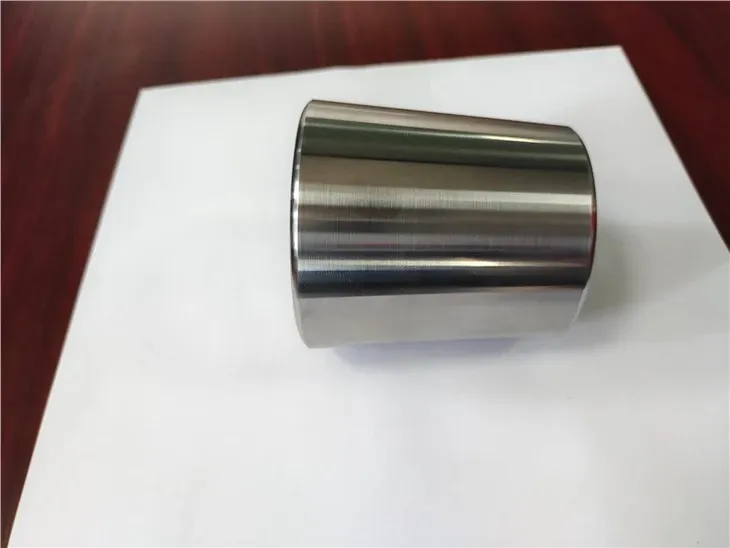
We're excited to introduce our 2022 New product Taper Roller With Hole in The Center. This innovative design offers several benefits in terms of fatigue resistance. The hole in the center can reduce the weight of the roller while still maintaining its structural integrity. This results in lower inertia and reduced stress during operation, which can enhance the fatigue life of the roller. Additionally, the unique shape of the taper roller allows it to handle a combination of radial and axial loads, making it suitable for a wide range of applications.
Conclusion
In conclusion, the fatigue resistance properties of cylindrical rollers are of utmost importance in various industries. Understanding the factors that affect fatigue resistance, such as material quality, surface finish, and heat treatment, can help us manufacture high - quality rollers. By using proper testing methods and statistical analysis, we can ensure the reliability of our products. Whether it's in the automotive industry or industrial machinery, cylindrical rollers with excellent fatigue resistance can improve safety, efficiency, and productivity.
If you're in the market for high - quality cylindrical rollers, we invite you to contact us for procurement and further discussions. Our team of experts is ready to assist you in finding the best solutions for your specific needs.
References
- "Rolling Bearing Analysis" by Tedric A. Harris.
- "Mechanical Behavior of Materials" by Norman E. Dowling.
- Industry reports on roller manufacturing and application in automotive and industrial sectors.