
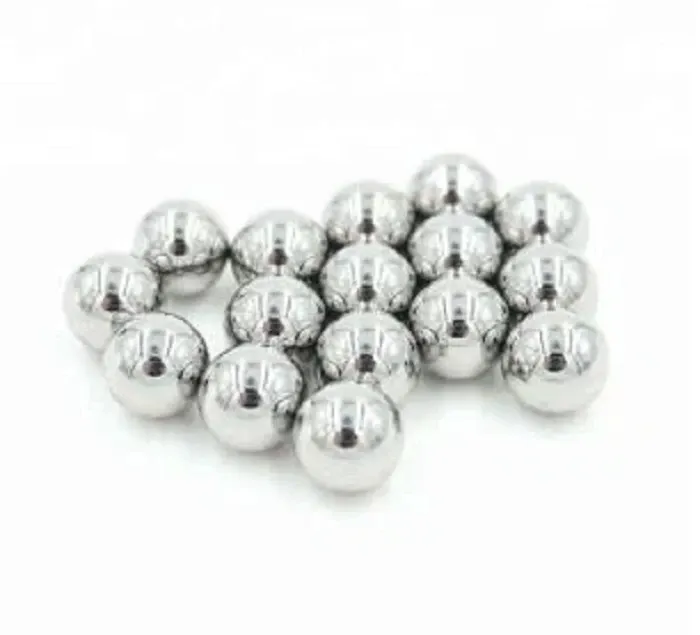
Carbon steel balls are widely used in various industries due to their relatively low cost and decent mechanical properties. As a carbon steel ball supplier, I have a deep understanding of their applications and characteristics. However, it's essential to be aware of their disadvantages to make informed decisions when choosing the right type of steel balls for specific applications.
1. Corrosion Susceptibility
One of the most significant drawbacks of carbon steel balls is their high susceptibility to corrosion. Carbon steel primarily consists of iron and carbon, and in the presence of moisture and oxygen, iron undergoes oxidation, leading to the formation of rust. Rust not only affects the appearance of the steel balls but also deteriorates their mechanical properties.
For instance, in marine environments or applications where the steel balls are exposed to humid conditions, the corrosion process can be accelerated. Once rust starts to form, it can spread quickly, causing pitting and surface roughness on the balls. This can lead to increased friction and wear when the balls are used in rolling or sliding applications. In precision machinery, even a small amount of corrosion can disrupt the smooth operation of components and reduce the overall performance and lifespan of the equipment.
Compared to Stainless Steel Ball, which contains chromium and other alloying elements that form a passive oxide layer on the surface, protecting it from corrosion, carbon steel balls require more maintenance to prevent rust. This may involve applying protective coatings, storing them in a dry environment, or using rust inhibitors, all of which add to the overall cost and complexity of using carbon steel balls.
2. Limited Hardness and Wear Resistance
While carbon steel balls can achieve a certain level of hardness through heat treatment, their hardness and wear resistance are generally limited compared to some other types of steel balls. For applications that require high wear resistance, such as in heavy - duty machinery, mining equipment, or high - speed bearings, carbon steel balls may not be the best choice.
The hardness of carbon steel is mainly determined by its carbon content and the heat treatment process. However, increasing the carbon content too much can make the steel brittle, reducing its toughness and impact resistance. In high - stress applications, carbon steel balls may experience excessive wear, deformation, or even cracking.
Chorme Steel Ball, on the other hand, contains chromium, which can significantly improve the hardness and wear resistance of the steel. Chromium forms hard carbides in the steel matrix, enhancing its ability to withstand abrasive wear. In applications where the steel balls are in constant contact with hard or abrasive materials, chrome steel balls can provide a longer service life and better performance.
3. Brittleness at Low Temperatures
Carbon steel balls can become brittle at low temperatures, which is a significant disadvantage in applications where the operating environment may experience cold conditions. This phenomenon is known as cold brittleness. At low temperatures, the ductility of carbon steel decreases, and the material becomes more prone to cracking and fracture under stress.
In industries such as refrigeration, cryogenic engineering, or outdoor equipment used in cold climates, the brittleness of carbon steel balls can pose a serious risk. For example, in a refrigeration system, if the steel balls in the compressor bearings become brittle due to low temperatures, they may break, leading to equipment failure and costly repairs.
To overcome this issue, special low - temperature steels or alloy steels are often required. These steels are designed to maintain their toughness and ductility at low temperatures, but they are usually more expensive than carbon steel.
4. Dimensional Stability Issues
Carbon steel balls may experience dimensional changes during heat treatment and in different operating conditions. Heat treatment is a common process used to improve the hardness and mechanical properties of carbon steel balls. However, the heating and cooling cycles involved in heat treatment can cause internal stresses in the steel, which may lead to distortion and dimensional instability.
In precision applications, such as in the aerospace or automotive industries, where tight tolerances are required, even a small dimensional change can affect the performance and functionality of the components. For example, in a ball bearing, if the carbon steel balls have inaccurate dimensions, it can lead to uneven loading, increased noise, and reduced bearing life.
Moreover, carbon steel has a relatively high coefficient of thermal expansion. This means that its dimensions will change significantly with temperature variations. In applications where the temperature fluctuates widely, such as in engines or industrial furnaces, the dimensional changes of carbon steel balls can cause problems, such as clearance changes in bearings or misalignment in mechanical systems.
5. Higher Noise and Vibration
Due to their surface roughness and less - than - ideal material properties, carbon steel balls may generate more noise and vibration compared to some high - quality steel balls. In applications where quiet operation is essential, such as in household appliances or precision instruments, the noise and vibration generated by carbon steel balls can be a major drawback.
The surface finish of carbon steel balls may not be as smooth as that of Din 5401 Steel Ball, which are manufactured to strict standards and often have a higher - quality surface finish. When the carbon steel balls roll or slide against other components, the uneven surface can cause irregular contact and friction, resulting in noise and vibration. This can not only be annoying but also indicate inefficient operation and potential premature wear of the components.
Conclusion
Although carbon steel balls have their advantages, such as low cost and ease of production, it's crucial to be aware of their disadvantages. Corrosion susceptibility, limited hardness and wear resistance, brittleness at low temperatures, dimensional stability issues, and higher noise and vibration are all factors that need to be considered when choosing steel balls for specific applications.
As a carbon steel ball supplier, I understand that every application has its unique requirements. If you are facing challenges related to the disadvantages of carbon steel balls or are looking for the most suitable steel balls for your project, I encourage you to contact me for a detailed discussion. We can explore alternative solutions, such as different types of steel balls or surface treatments, to meet your specific needs and ensure the optimal performance of your equipment.
References
- ASM Handbook Volume 1: Properties and Selection: Irons, Steels, and High - Performance Alloys.
- Metals Handbook Desk Edition, 2nd Edition.
- Various industry reports on the performance and applications of steel balls.