
Hey there! As a Cross Roller supplier, I often get asked about the dimensions of cross rollers. So, I thought I'd write this blog to shed some light on this topic.
First off, let's understand what cross rollers are. Cross rollers are a type of rolling element that's widely used in various industrial applications. They're designed to handle high loads and offer precise motion control. Unlike other types of rollers, cross rollers are arranged in a criss - cross pattern, which gives them unique load - bearing capabilities.
Basic Dimensions
When it comes to the dimensions of cross rollers, there are a few key aspects to consider. The most obvious ones are the diameter and the length.
The diameter of a cross roller can vary significantly depending on the application. For light - duty applications, you might find cross rollers with diameters as small as a few millimeters. These small - diameter cross rollers are often used in precision instruments or small - scale machinery where space is limited. On the other hand, for heavy - duty industrial applications like large - scale manufacturing equipment or construction machinery, cross rollers can have diameters of several centimeters or even more.
The length of the cross roller is another crucial dimension. A longer cross roller generally means more contact area with the raceways, which can increase the load - carrying capacity. However, it also means more space is required within the application. So, the length is carefully chosen based on the load requirements and the available space.
Tolerances
In addition to the basic diameter and length, tolerances play a vital role in the dimensions of cross rollers. Tolerances refer to the allowable variation in the dimensions of the roller. For example, if a cross roller is specified to have a diameter of 10 mm with a tolerance of ±0.01 mm, it means the actual diameter of the roller can be anywhere between 9.99 mm and 10.01 mm.
Tight tolerances are often required in high - precision applications. In these cases, even a small deviation from the specified dimension can lead to problems such as uneven load distribution, increased wear, and reduced performance. As a supplier, we use advanced manufacturing techniques and quality control processes to ensure that our cross rollers meet the required tolerances.
Custom Dimensions
One of the great things about being a cross roller supplier is that we can offer custom - sized cross rollers. Different applications have different requirements, and sometimes the standard dimensions just won't cut it. That's where our custom - manufacturing capabilities come in.
For instance, if a customer is working on a unique piece of machinery that has very specific space and load requirements, we can design and manufacture cross rollers with the exact dimensions they need. This involves close collaboration with the customer to understand their needs and then using our expertise and state - of - the - art equipment to produce the rollers.
Comparison with Other Rollers
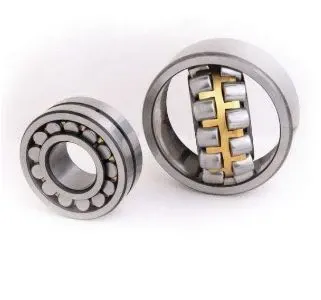
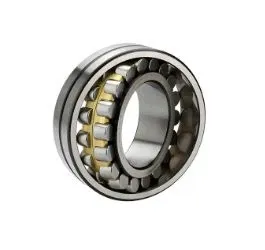
It's also interesting to compare the dimensions of cross rollers with other types of rollers. Take the Spherical Roller for example. Spherical rollers are designed to accommodate misalignment and have a spherical shape. Their dimensions are often optimized for this purpose. In general, spherical rollers tend to have a more rounded shape compared to the relatively straight cross rollers.
Another type is the Interroll Tapered Roller. Tapered rollers have a conical shape, which allows them to handle both radial and axial loads. The dimensions of tapered rollers are different from cross rollers, especially in terms of their shape and the way they interact with the raceways.
Factors Affecting Dimensions
There are several factors that can affect the dimensions of cross rollers. The material used to make the rollers is one of them. Different materials have different properties, such as hardness and thermal expansion coefficients. For example, if a cross roller is made of a material with a high thermal expansion coefficient, its dimensions might change more significantly with temperature variations.
The manufacturing process also has an impact on the dimensions. Processes like grinding, honing, and heat treatment can all influence the final size and shape of the cross roller. As a supplier, we have to carefully control these processes to ensure the rollers meet the desired dimensions.
Applications and Dimensions
The dimensions of cross rollers are closely related to their applications. In the aerospace industry, for example, where weight and precision are of utmost importance, cross rollers with small diameters and tight tolerances are often used. These rollers are used in various components such as actuators and control systems.
In the automotive industry, cross rollers are used in transmissions and steering systems. The dimensions here are chosen based on the load requirements and the space available within the vehicle.
In the manufacturing industry, large - scale machinery often requires cross rollers with larger diameters and lengths to handle heavy loads.
Importance of Accurate Dimensions
Accurate dimensions are crucial for the proper functioning of cross rollers. If the dimensions are off, it can lead to a host of problems. For example, if a cross roller is too large for its intended application, it might not fit properly, causing interference and damage to the surrounding components. On the other hand, if it's too small, it might not be able to carry the required load, leading to premature failure.
As a supplier, we understand the importance of accurate dimensions. That's why we invest a lot in quality control and testing. We use precision measuring instruments to check the dimensions of every cross roller we produce to ensure they meet the highest standards.
Conclusion
So, there you have it - a detailed look at the dimensions of cross rollers. As you can see, it's a complex topic with many factors to consider. Whether you're in the aerospace, automotive, or manufacturing industry, having the right - sized cross rollers is essential for the performance and reliability of your equipment.
If you're in the market for cross rollers and need help with choosing the right dimensions or have a custom - dimension requirement, don't hesitate to reach out to us. We're here to provide you with the best - quality cross rollers tailored to your specific needs. You can check out our Cross Roller product page to learn more about our offerings.
Let's start a conversation about your cross roller requirements today and see how we can work together to find the perfect solution for you.
References
- Rolling Element Handbook: A comprehensive guide on various types of rolling elements including cross rollers.
- Industrial Machinery Design Manual: Provides insights on the application of cross rollers in different industrial machinery.