
Hey there! As a steel ball supplier, I've seen all sorts of steel balls in different grades. Steel balls are used in a wide range of applications, from industrial machinery to consumer products. Understanding the different grades of steel balls is crucial for both suppliers and customers to ensure that the right product is chosen for the right job. So, let's dive into the world of steel ball grades!
1. Low - Carbon Steel Balls
Low - carbon steel balls are made from steel with a carbon content of less than 0.3%. These balls are relatively soft and have good ductility. They are easy to machine and form, which makes them a cost - effective option for many applications.
One of the main advantages of low - carbon steel balls is their weldability. They can be easily welded to other components, which is useful in some manufacturing processes. However, their low hardness means they are not suitable for applications that require high wear resistance.
Low - carbon steel balls are commonly used in applications such as drawer slides, casters, and some light - duty bearings. They are also used in some consumer products like toys and small appliances. If you're looking for a budget - friendly option for a non - high - stress application, low - carbon steel balls might be the way to go. Check out Carbon Steel Ball for more details on this type of steel ball.
2. Medium - Carbon Steel Balls
Medium - carbon steel balls have a carbon content ranging from 0.3% to 0.6%. These balls offer a good balance between hardness and ductility. They are harder than low - carbon steel balls, which means they have better wear resistance.
Medium - carbon steel balls can be heat - treated to further enhance their mechanical properties. Heat treatment can increase their hardness and strength, making them suitable for more demanding applications. They are often used in machinery parts that are subject to moderate loads and wear, such as gears, couplings, and some types of valves.
The versatility of medium - carbon steel balls makes them a popular choice in many industries. Whether you're in the automotive, manufacturing, or construction sector, medium - carbon steel balls can meet your needs. You can find more information about medium - carbon steel balls on Carbon Steel Ball.
3. High - Carbon Steel Balls
High - carbon steel balls have a carbon content of more than 0.6%. These balls are extremely hard and have excellent wear resistance. They are designed to withstand high loads and harsh operating conditions.
High - carbon steel balls are often used in high - performance bearings, where they need to roll smoothly and resist wear over a long period. They are also used in precision machinery, such as watches and medical devices, where accuracy and durability are of utmost importance.
However, high - carbon steel balls are more brittle than low - and medium - carbon steel balls. This means they are more likely to crack or break under sudden impact or stress. So, they need to be handled with care during installation and use. If you're in need of high - performance steel balls for a critical application, high - carbon steel balls are a top choice.
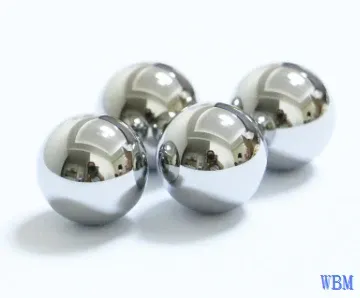

4. Stainless Steel Balls
Stainless steel balls are made from stainless steel, which contains chromium and other alloying elements. The chromium forms a thin, protective oxide layer on the surface of the ball, which gives it excellent corrosion resistance.
There are different grades of stainless steel balls, such as 304 and 316. Grade 304 stainless steel balls are the most common. They offer good corrosion resistance in most environments and are relatively inexpensive. Grade 316 stainless steel balls, on the other hand, contain molybdenum, which makes them more resistant to corrosion in harsh environments, such as marine or chemical applications.
Stainless steel balls are used in a wide range of applications, including food processing equipment, medical devices, and marine hardware. Their corrosion resistance makes them ideal for applications where cleanliness and durability are required. Check out Metal Ball for more information on stainless steel balls.
5. Chrome Steel Balls
Chrome steel balls are made from steel alloyed with chromium. Chromium improves the hardness, wear resistance, and fatigue life of the steel balls. These balls are commonly used in bearings, especially in high - speed and high - load applications.
Chrome steel balls have a high surface finish and roundness, which ensures smooth rolling and low noise. They can operate at high speeds without significant wear or deformation. They are also resistant to corrosion to some extent, although not as corrosion - resistant as stainless steel balls.
In the automotive and aerospace industries, chrome steel balls are widely used in engine components, transmissions, and landing gear systems. Their high performance and reliability make them an essential part of many critical applications.
6. Bearing Steel Balls
Bearing steel balls are specifically designed for use in bearings. They are made from high - quality steel and are manufactured to very strict tolerances. Bearing steel balls have excellent roundness, surface finish, and hardness.
These balls can withstand high radial and axial loads, and they can roll smoothly for a long time without significant wear. They are crucial for the proper functioning of bearings, which are used in almost every type of machinery, from small electric motors to large industrial equipment.
The quality of bearing steel balls directly affects the performance and lifespan of the bearings. So, when choosing bearing steel balls, it's important to select a reliable supplier who can provide high - quality products.
How to Choose the Right Grade of Steel Balls
When it comes to choosing the right grade of steel balls for your application, there are several factors to consider. First, think about the load and stress that the balls will be subjected to. If you have a high - load application, high - carbon steel, chrome steel, or bearing steel balls might be the best choice.
Next, consider the environment in which the balls will operate. If the environment is corrosive, stainless steel balls are a must. On the other hand, if cost is a major concern and the application is not too demanding, low - carbon or medium - carbon steel balls could be sufficient.
It's also important to consider the precision requirements of your application. For high - precision applications, such as in watches or medical devices, bearing steel balls or high - quality stainless steel balls are usually preferred.
As a steel ball supplier, I'm here to help you make the right choice. I have a wide range of steel balls in different grades, sizes, and qualities. Whether you need a small quantity for a prototype or a large order for mass production, I can meet your needs.
If you're interested in purchasing steel balls or have any questions about the different grades, feel free to reach out. We can discuss your specific requirements and find the best solution for you. Let's work together to ensure that you get the highest - quality steel balls for your application.
References
- "Metallurgy of Steel Balls" - A technical guide on the manufacturing and properties of steel balls.
- "Industrial Applications of Steel Balls" - A research paper on the various uses of steel balls in different industries.