
Hey there! As a supplier of Cold Heading Dies, I've seen firsthand the many challenges that come with manufacturing these crucial tools. Cold heading dies are used in the cold heading process, which is a metal forming technique that involves shaping metal parts at room temperature. This process is widely used in the production of bolts, screws, rivets, and other fasteners, as well as in the manufacturing of various automotive and industrial components.
In this blog post, I'm going to share some of the key challenges we face in cold heading die manufacturing and how we tackle them. So, let's dive right in!
Material Selection
One of the first and most critical challenges in cold heading die manufacturing is choosing the right materials. The materials used for cold heading dies need to have high hardness, wear resistance, and toughness to withstand the high pressures and repeated impacts during the cold heading process.
Carbide is a popular choice for cold heading dies due to its excellent hardness and wear resistance. However, carbide is also brittle and can be prone to cracking if not properly handled. We need to carefully select the grade of carbide based on the specific application and the type of metal being formed. For example, a harder carbide grade might be used for forming high-strength steels, while a more ductile grade could be suitable for softer metals.
Another option is tool steel, which offers good toughness and can be heat-treated to achieve the desired hardness. Tool steel is often used for less demanding applications or when cost is a major factor. But it may not have the same level of wear resistance as carbide, so it may require more frequent replacement.
Precision Machining
Cold heading dies need to be machined to extremely tight tolerances to ensure accurate and consistent part production. Even a small deviation in the die dimensions can lead to defective parts or premature die failure.
CNC machining is commonly used in cold heading die manufacturing to achieve the required precision. However, machining carbide can be particularly challenging due to its hardness. Specialized cutting tools and techniques are needed to machine carbide without causing damage or cracking. We use high-speed steel or diamond-coated cutting tools and carefully control the cutting parameters such as feed rate, spindle speed, and depth of cut.
In addition to machining the die cavities, we also need to ensure that the die surfaces are smooth and free of any defects. Any roughness or irregularities on the die surface can cause the metal to stick during the forming process, leading to poor part quality and increased die wear. So, we often use processes like grinding and polishing to achieve a smooth finish on the die surfaces.
Heat Treatment
Heat treatment is an essential step in cold heading die manufacturing to enhance the hardness and wear resistance of the materials. However, it can also be a source of challenges.
The heat treatment process needs to be carefully controlled to avoid issues such as distortion, cracking, or uneven hardness. Different materials have different heat treatment requirements, and we need to follow specific heat treatment schedules to achieve the desired properties. For example, carbide dies typically require a specialized sintering process to bond the carbide particles together and achieve the right hardness.
After heat treatment, the dies may need to be stress-relieved to remove any internal stresses that could cause cracking or premature failure. This involves heating the dies to a specific temperature and holding them there for a certain period of time before slowly cooling them down.
Coating and Surface Treatment
To further improve the performance and lifespan of cold heading dies, we often apply coatings and surface treatments. Coatings can provide additional wear resistance, reduce friction, and prevent the metal from sticking to the die surface.
One common coating is titanium nitride (TiN), which offers good hardness and wear resistance. TiN coatings can be applied using physical vapor deposition (PVD) techniques, which involve depositing a thin layer of the coating material onto the die surface in a vacuum chamber. Other coatings, such as titanium carbonitride (TiCN) and aluminum titanium nitride (AlTiN), may also be used depending on the specific application.
Surface treatments like nitriding can also be used to improve the surface hardness and wear resistance of the dies. Nitriding involves introducing nitrogen into the surface layer of the die to form a hard nitride layer. This process can enhance the die's resistance to abrasion and galling.
However, applying coatings and surface treatments also has its challenges. The coating needs to adhere well to the die surface without delaminating or peeling off during the forming process. We need to ensure that the die surface is properly cleaned and prepared before coating to achieve good adhesion. Additionally, the coating thickness and uniformity need to be carefully controlled to ensure consistent performance.
Quality Control
Quality control is crucial in cold heading die manufacturing to ensure that the dies meet the required specifications and performance standards. We have a comprehensive quality control system in place to inspect and test the dies at every stage of the manufacturing process.
Visual inspection is the first step, where we check for any visible defects such as cracks, scratches, or surface imperfections. We also use measuring instruments like micrometers, calipers, and coordinate measuring machines (CMMs) to verify the die dimensions and ensure they are within the specified tolerances.
In addition to dimensional inspection, we also test the die's hardness using hardness testers. This helps us ensure that the heat treatment process has been successful and that the die has the appropriate hardness for its intended use.
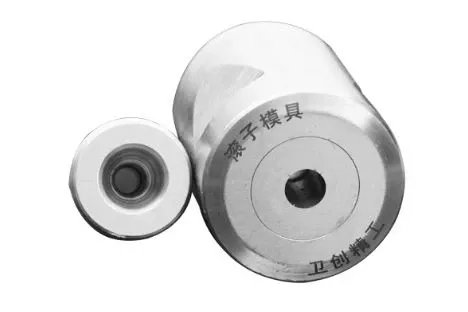
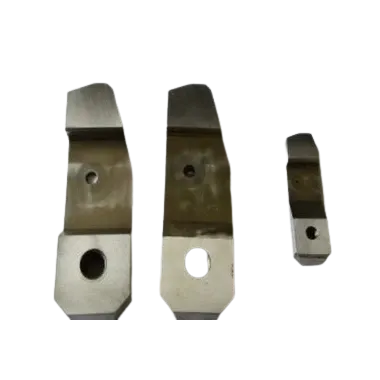
We also conduct functional testing of the dies by using them in actual cold heading operations. This allows us to evaluate the die's performance in terms of part quality, wear resistance, and overall durability. If any issues are detected during the functional testing, we make the necessary adjustments or repairs to the die.
Cost Management
Cost is always a consideration in cold heading die manufacturing. The materials, machining, heat treatment, coating, and quality control all contribute to the overall cost of the dies.
As a supplier, we need to find a balance between providing high-quality dies and keeping the costs competitive. We work closely with our customers to understand their specific requirements and budget constraints. By carefully selecting the materials and manufacturing processes, we can optimize the cost without sacrificing the die's performance.
For example, we may recommend using a less expensive material or a more cost-effective coating option for applications where the performance requirements are not extremely high. We also look for ways to improve our manufacturing efficiency, such as reducing machining time and minimizing waste, to lower the production costs.
Meeting Customer Requirements
Every customer has unique requirements when it comes to cold heading dies. They may need dies for different types of metals, part geometries, and production volumes. Meeting these diverse requirements can be a challenge.
We need to have a deep understanding of the customer's application and the cold heading process to design and manufacture the right dies. This often involves close communication with the customer to gather detailed information about their needs. We may also provide technical support and advice to help the customer choose the most suitable die materials, coatings, and designs.
In addition, we need to be able to deliver the dies within the customer's required lead time. This requires efficient production planning and scheduling to ensure that the manufacturing process runs smoothly and on time.
Keeping Up with Technological Advancements
The cold heading industry is constantly evolving, and new technologies and materials are being developed all the time. As a supplier, we need to stay up-to-date with these advancements to remain competitive.
We invest in research and development to explore new manufacturing techniques, coatings, and materials that can improve the performance and quality of our cold heading dies. For example, there are new types of carbide materials with enhanced properties being introduced, and we are constantly evaluating their suitability for our products.
We also keep an eye on emerging technologies such as additive manufacturing, which could potentially revolutionize the way cold heading dies are made. While additive manufacturing is still in its early stages for die production, it has the potential to offer greater design flexibility and reduced lead times.
Conclusion
In conclusion, cold heading die manufacturing is a complex and challenging process. From material selection and precision machining to heat treatment, coating, and quality control, there are many factors that need to be carefully considered to produce high-quality dies.
As a Cold Heading Dies supplier, we are constantly working to overcome these challenges and provide our customers with the best possible products. We understand the importance of meeting our customers' needs in terms of quality, cost, and lead time, and we are committed to continuous improvement.
If you're in the market for Quill COD, Carbide Cut Off Blade COB, or Cold Heading Punches, we'd love to hear from you. Whether you have a specific requirement or just want to discuss your cold heading die needs, feel free to reach out to us. We're here to help you find the right solutions for your manufacturing processes.
References
- "Cold Heading Technology Handbook"
- "Advanced Materials for Cold Forming Dies"
- Industry reports on cold heading die manufacturing trends