
Hey there! As a supplier of Ball Bearing Balls, I've been getting a lot of questions lately about the acoustic properties of these little guys. So, I thought I'd take some time to break it down for you.
First off, let's talk about what acoustic properties even are. In simple terms, acoustic properties refer to how a material behaves when it comes to sound. This includes things like how well it absorbs sound, how it reflects sound, and how it transmits sound. When it comes to ball bearing balls, these properties can have a big impact on their performance in various applications.
One of the key acoustic properties of ball bearing balls is their ability to reduce noise. In many industrial applications, noise can be a major problem. It can not only be annoying but also a safety hazard. Ball bearing balls are designed to minimize noise by reducing friction and vibration. When the balls roll smoothly within the bearing, there is less noise generated. This is especially important in high - speed applications where excessive noise can indicate a problem with the bearing or the machinery it's a part of.
The material of the ball bearing balls plays a huge role in their acoustic properties. For example, High Chrome Steel Balls are known for their excellent hardness and wear resistance. These properties also contribute to their acoustic performance. The high - quality surface finish of high chrome steel balls allows for smooth rolling, which in turn reduces the likelihood of generating noise. They can withstand high - speed rotations without significant deformation, maintaining a consistent and quiet operation.
On the other hand, Carbon Steel Ball has its own unique acoustic characteristics. Carbon steel is generally more ductile compared to high chrome steel. This means that it can absorb a certain amount of shock and vibration, which can help in reducing noise. However, carbon steel balls may not be as hard as high chrome steel balls, so they might not be suitable for extremely high - load or high - speed applications where noise reduction is critical.
Another important aspect is the size of the ball bearing balls. Smaller balls tend to generate less noise compared to larger ones. This is because smaller balls have less mass, and thus, there is less energy involved in their movement. When they roll within the bearing, there is less impact and vibration, resulting in a quieter operation. However, smaller balls may not be able to handle as much load as larger ones, so it's a trade - off that needs to be considered depending on the specific application.
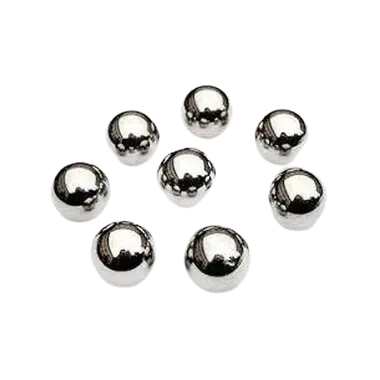
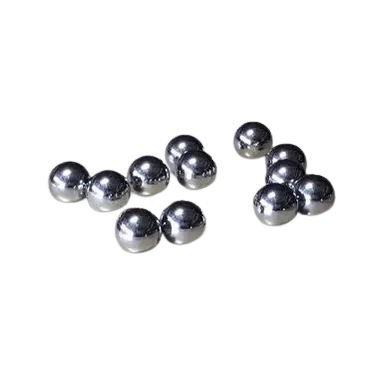
The shape of the ball bearing balls also affects their acoustic properties. Ideally, the balls should be perfectly spherical. Any deviation from a perfect sphere can cause uneven rolling, which leads to increased noise. During the manufacturing process, strict quality control measures are in place to ensure that the balls meet the required roundness standards. Even a slight imperfection can have a significant impact on the noise level during operation.
In addition to noise reduction, the acoustic properties of ball bearing balls also relate to their ability to transmit vibrations. In some applications, it's important to be able to detect vibrations accurately. For example, in machinery monitoring systems, the vibrations transmitted through the ball bearing balls can provide valuable information about the health of the machinery. If there is an abnormal vibration pattern, it could indicate a problem such as wear, misalignment, or a damaged component.
Now, let's talk about how these acoustic properties translate into real - world applications. In automotive engines, ball bearing balls are used in various components such as the crankshaft and the camshaft. The quiet operation of these bearings is crucial for a smooth - running engine. Excessive noise from the bearings could be a sign of wear or a problem with the engine's lubrication system. By using high - quality ball bearing balls with good acoustic properties, automotive manufacturers can ensure a quieter and more reliable engine.
In the aerospace industry, the acoustic properties of ball bearing balls are even more critical. Aircraft engines and other components operate under extreme conditions, including high speeds and high temperatures. Any noise or vibration from the bearings can not only affect the performance of the aircraft but also pose a safety risk. That's why aerospace engineers demand the highest - quality ball bearing balls with excellent acoustic performance.
In the consumer electronics industry, such as in hard disk drives, ball bearing balls are used to ensure smooth rotation of the disks. The quiet operation of these bearings is essential to prevent any interference with the data - reading and - writing processes. Even a small amount of noise or vibration can cause errors in data transfer, leading to potential data loss.
As a supplier of Ball Bearing Balls, I understand the importance of these acoustic properties. We offer a wide range of ball bearing balls made from different materials and in various sizes to meet the diverse needs of our customers. Whether you're in the automotive, aerospace, or consumer electronics industry, we have the right solution for you.
If you're interested in learning more about our ball bearing balls or have specific requirements for your application, don't hesitate to get in touch. We're always happy to discuss your needs and provide you with the best possible solutions. Our team of experts is ready to assist you in choosing the right ball bearing balls based on their acoustic properties and other performance factors. So, let's start a conversation and see how we can help you improve the performance of your machinery or products.
References
- "Handbook of Bearings and Seals"
- "Mechanical Design and Manufacturing"
- "Materials Science and Engineering: An Introduction"