
Hey there! As a supplier of weldable steel balls, I often get asked about how to test the weldability of these little guys. Weldable steel balls are used in a ton of different industries, from automotive to construction, and ensuring their weldability is crucial for the success of any project. So, let's dive into the nitty - gritty of testing the weldability of weldable steel balls.
Understanding Weldability
First off, what do we mean by weldability? Simply put, weldability refers to how easily a material can be welded to form a strong, reliable joint. For weldable steel balls, good weldability means that when they're welded to other components, the joint can withstand the stresses and conditions it'll be exposed to in its intended application.
There are a bunch of factors that can affect the weldability of steel balls. The chemical composition of the steel is a big one. Elements like carbon, manganese, sulfur, and phosphorus can all have an impact. For example, high carbon content can make the steel harder but also more brittle, which can lead to cracking during welding.
Visual Inspection
The first step in testing weldability is a simple visual inspection. Before you even think about welding, take a close look at the steel balls. Look for any signs of surface defects like cracks, pits, or inclusions. These defects can not only affect the appearance of the weld but also its strength.
If you spot any obvious defects, it's a good idea to set those balls aside. You don't want to waste time trying to weld a ball that's already flawed. A magnifying glass can be really helpful here. It allows you to see the surface of the ball in more detail and catch any tiny defects that might be hard to spot with the naked eye.
Chemical Analysis
Chemical analysis is another important part of the process. Knowing the exact chemical composition of the steel balls can give you a good idea of how they'll behave during welding. There are a few different methods for chemical analysis.

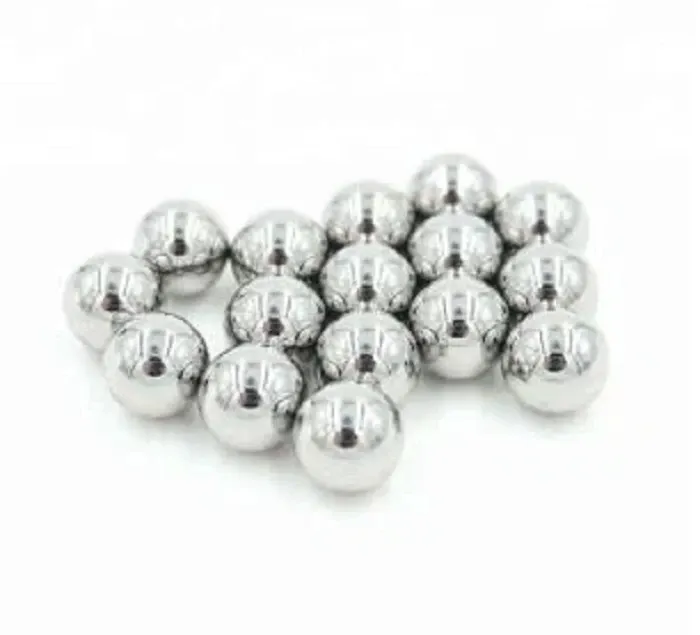
One common method is spectroscopy. This involves using a spectrometer to analyze the light emitted or absorbed by the steel. The spectrometer can identify the different elements in the steel and measure their concentrations. You can send your steel balls to a professional laboratory for this analysis. They have the equipment and expertise to get accurate results.
Another method is wet chemical analysis. This involves dissolving a small sample of the steel in a chemical solution and then analyzing the solution to determine the element concentrations. It's a bit more time - consuming than spectroscopy but can also be very accurate.
Welding Tests
Once you've done the visual inspection and chemical analysis, it's time to actually start welding. There are several types of welding tests you can perform.
Bead - on - Plate Welding
Bead - on - plate welding is a simple test where you weld a bead of the steel ball material onto a flat plate. This allows you to see how the steel behaves during the welding process. Look at the shape and appearance of the bead. A good bead should be smooth, with no signs of cracks or porosity.
If the bead has a lot of spatter or is uneven, it could be a sign that the steel has poor weldability. You can also check the hardness of the bead and the heat - affected zone (HAZ) around it. Using a hardness tester, you can measure the hardness at different points. If the hardness in the HAZ is too high, it could indicate that the steel is prone to cracking.
Fillet Weld Tests
Fillet weld tests are a bit more complex. In this test, you weld the steel ball to another component at a right angle to form a fillet weld. This simulates a real - world welding situation more closely.
After the weld is complete, you can perform a non - destructive test like ultrasonic testing or X - ray testing. These tests can detect any internal defects in the weld, such as cracks or lack of fusion. If any defects are found, you may need to adjust your welding parameters or consider using a different type of steel ball.
Post - Weld Testing
Once the welding is done, there are still more tests to be done. Post - weld testing helps ensure that the weld is strong and reliable.
Tensile Testing
Tensile testing involves pulling the welded joint until it breaks. This allows you to measure the strength of the weld. You can use a tensile testing machine to apply a controlled force to the joint. The machine will record the maximum force the joint can withstand before breaking.
If the weld fails at a lower force than expected, it could be a sign of poor weldability. You may need to review your welding process and make some changes.
Bend Testing
Bend testing is another important post - weld test. In this test, you bend the welded joint to see how it behaves under stress. A good weld should be able to withstand a certain amount of bending without cracking.
There are different types of bend tests, such as the root bend test and the face bend test. The root bend test focuses on the root of the weld, while the face bend test looks at the face of the weld. If the weld cracks during bending, it indicates that there are issues with the weld quality.
Types of Weldable Steel Balls
There are several types of weldable steel balls that you might come across.
- Stainless Steel Ball: Stainless steel balls are known for their corrosion resistance. They contain chromium, which forms a protective oxide layer on the surface of the ball. This makes them a popular choice for applications where the balls will be exposed to moisture or chemicals. However, the high chromium content can also affect their weldability. Special welding techniques may be required to ensure a good weld.
- Chorme Steel Ball: Chrome steel balls are hard and durable. They are often used in high - stress applications, such as bearings. The chrome content gives them good wear resistance. When welding chrome steel balls, it's important to control the heat input to avoid over - hardening the HAZ.
- Carbon Steel Ball: Carbon steel balls are the most common type of steel balls. They are relatively inexpensive and easy to weld. However, the carbon content can affect their weldability. High - carbon steel balls may require pre - heating before welding to prevent cracking.
Conclusion
Testing the weldability of weldable steel balls is a multi - step process that involves visual inspection, chemical analysis, welding tests, and post - weld testing. By following these steps, you can ensure that the steel balls you're using will form strong, reliable welds.
If you're in the market for high - quality weldable steel balls, I'd love to talk to you. Whether you need stainless steel balls, chrome steel balls, or carbon steel balls, I can provide you with the best products at competitive prices. Don't hesitate to reach out for a quote or to discuss your specific requirements.
References
- "Welding Metallurgy" by John C. Lippold and David K. Miller
- "Steel Welding Handbook" by The James F. Lincoln Arc Welding Foundation