
Hey there! As a spherical roller supplier, I've had my fair share of experiences dealing with the ins and outs of these crucial components. One of the most important aspects of our business is ensuring the quality of the spherical rollers we offer. So, today, I'm gonna walk you through how to test the quality of spherical rollers.
1. Visual Inspection
First things first, a good old - fashioned visual inspection can tell you a lot. When you get a batch of spherical rollers, take a close look at them. Check for any obvious surface defects like cracks, scratches, or pits. These can be a big red flag. A crack, for example, can weaken the roller and lead to premature failure.
The surface finish should be smooth and consistent. Any rough patches or uneven areas can cause problems during operation. If you see a roller with a chipped edge, it's likely not going to perform well. This simple visual check can help you weed out the obvious duds right away.
2. Dimensional Accuracy
Next up, dimensional accuracy is super important. Spherical rollers need to have the right size and shape to fit properly in the bearing assembly. We use precision measuring tools like calipers and micrometers to check the diameter, width, and curvature of the rollers.
The diameter needs to be within a very tight tolerance. Even a slight deviation can affect how the roller interacts with the raceways. The width also matters because it determines how well the roller can distribute the load. And the curvature has to match the design specifications so that the roller can roll smoothly without any binding.
If you're using some advanced machinery, you might even have optical measuring systems that can provide highly accurate dimensional data. This helps us ensure that every roller meets the required standards.
3. Hardness Testing
Hardness is another key factor in the quality of spherical rollers. A roller that's too soft won't be able to withstand the high loads and stresses it'll encounter in operation. On the other hand, a roller that's too hard can be brittle and prone to cracking.
We usually use a hardness tester to measure the hardness of the rollers. There are different types of hardness tests, like the Rockwell and Brinell tests. The Rockwell test is quick and can give us a good indication of the roller's hardness. We make a small indentation on the surface of the roller and measure the depth of the indentation to determine the hardness value.
If the hardness is not within the specified range, it means there could be an issue with the heat treatment process during manufacturing. And that's a major concern because it can significantly impact the performance and lifespan of the roller.
4. Material Analysis
Knowing what the roller is made of is crucial. We perform material analysis to ensure that the rollers are made from the right type of steel and that the chemical composition is correct. There are various methods for material analysis, such as spectroscopy.
Spectroscopy can identify the different elements present in the material and their proportions. For example, the amount of carbon in the steel affects its hardness and strength. If there's too much or too little carbon, it can lead to problems. We also look for other elements like chromium, nickel, and molybdenum, which can enhance the properties of the steel.
By ensuring the correct material composition, we can be confident that the rollers will have the desired mechanical properties and corrosion resistance.
5. Roundness and Cylindricity Testing
Roundness and cylindricity are important for the smooth rolling of the spherical rollers. A roller that's not perfectly round or cylindrical can cause vibrations and uneven wear.
We use roundness and cylindricity measuring machines to check these properties. These machines rotate the roller and measure the variation in the radius or the straightness of the axis. If the roundness or cylindricity is off, it can lead to problems like noise, reduced efficiency, and shorter bearing life.
6. Surface Roughness Testing
The surface roughness of the spherical rollers also plays a role in their performance. A rough surface can increase friction and wear, while a too - smooth surface might not hold lubricant properly.
We use surface roughness testers to measure the roughness of the roller surface. The tester moves a stylus across the surface of the roller and measures the peaks and valleys. The results are used to determine the surface roughness value, which should be within a specific range. This helps ensure that the rollers can operate smoothly and efficiently with the right amount of lubrication.
7. Load and Fatigue Testing
To really put the rollers to the test, we perform load and fatigue testing. We simulate the real - world operating conditions by applying a load to the rollers and making them rotate for a certain number of cycles.
This testing helps us determine how well the rollers can withstand the long - term stresses and loads. If a roller fails during the load and fatigue test, it means there's a problem with its quality. We can then analyze the failure mode to figure out what went wrong and make improvements to the manufacturing process.
Comparing with Other Rolling Elements
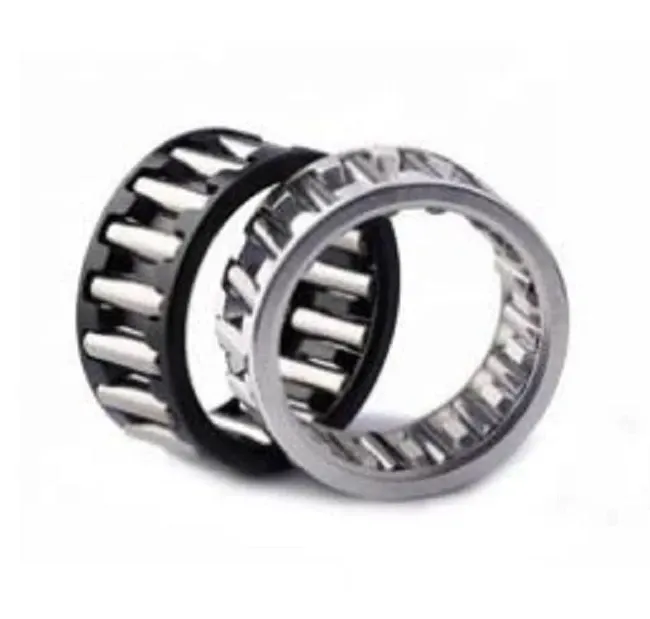
It's also worth comparing spherical rollers with other types of rolling elements like Taper Rollers and Needle Roller or Needle Roller. Each type has its own unique characteristics and applications.
Taper rollers are designed to handle both radial and axial loads, while needle rollers are used in applications where space is limited. Spherical rollers, on the other hand, are great at handling misalignment and heavy radial loads. Understanding these differences can help customers choose the right type of rolling element for their specific needs.
Conclusion
Testing the quality of spherical rollers is a multi - step process that involves a variety of techniques and tools. By performing these tests, we can ensure that the rollers we supply are of the highest quality and will perform well in the bearing assemblies.
If you're in the market for high - quality spherical rollers, we'd love to have a chat with you. Whether you're an engineer looking for the perfect solution for your machinery or a procurement manager sourcing components, we're here to help. Get in touch with us to start a procurement discussion and find out how our spherical rollers can meet your requirements.
References
- "Bearing Design and Application Handbook"
- "Materials Science and Engineering: An Introduction"