
As a supplier of weldable steel balls, I understand the critical importance of optimizing the welding process. Weldable steel balls are widely used in various industries, such as automotive, aerospace, and machinery manufacturing. A well - optimized welding process can ensure high - quality welds, which in turn enhance the performance and reliability of the final products. In this blog, I will share some key strategies and techniques to optimize the welding process for weldable steel balls.
Understanding the Properties of Weldable Steel Balls
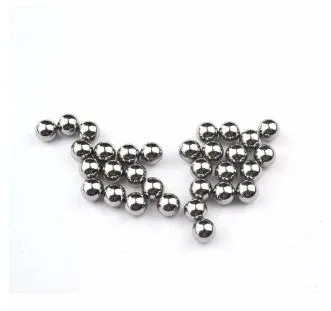
Before delving into the optimization of the welding process, it is essential to have a clear understanding of the properties of weldable steel balls. Different types of steel balls, such as 316 Stainless Steel Balls, Stainless Steel Ball, and Inch Steel Ball, have distinct chemical compositions and physical properties.
Stainless steel balls, for example, offer excellent corrosion resistance, which is crucial in applications where the balls are exposed to harsh environments. The chemical composition of stainless steel, including elements like chromium and nickel, affects its weldability. High - chromium stainless steels may require special welding techniques to prevent the formation of chromium carbides, which can reduce the corrosion resistance of the weld.
Inch steel balls are often used in applications where precise dimensions are required. Their mechanical properties, such as hardness and toughness, need to be maintained during the welding process. Any changes in these properties can lead to premature failure of the welded components.
Selecting the Right Welding Method
The choice of welding method plays a vital role in optimizing the welding process for weldable steel balls. There are several welding methods available, each with its own advantages and limitations.
Tungsten Inert Gas (TIG) Welding
TIG welding is a popular choice for welding steel balls, especially when high - quality welds are required. This method uses a non - consumable tungsten electrode to create an arc between the electrode and the workpiece. The weld area is protected by an inert gas, such as argon, which prevents oxidation and contamination.
One of the main advantages of TIG welding is its precise control over the heat input. This allows for accurate welding of small - diameter steel balls without causing excessive distortion. The ability to control the heat also helps in maintaining the mechanical properties of the steel balls. However, TIG welding is a relatively slow process, which may not be suitable for high - volume production.
Metal Inert Gas (MIG) Welding
MIG welding uses a consumable wire electrode that is fed continuously into the weld pool. The weld area is protected by an inert gas or a mixture of gases. MIG welding is faster than TIG welding, making it suitable for high - volume production.
The high deposition rate of MIG welding allows for quick joining of steel balls. However, it requires more skill to control the heat input compared to TIG welding. Improper heat input can lead to porosity, lack of fusion, and other welding defects.
Resistance Welding
Resistance welding is another option for welding steel balls. This method uses the heat generated by the resistance to electric current flow through the contact points between the steel balls and the electrodes. Resistance welding is a fast and efficient process, suitable for mass production.
It offers good control over the welding parameters, such as current, time, and pressure. However, resistance welding requires specialized equipment and may not be suitable for all types of steel balls. The surface condition of the steel balls can also affect the quality of the weld in resistance welding.
Pre - Welding Preparation
Proper pre - welding preparation is essential for optimizing the welding process. This includes cleaning the steel balls, preheating (if necessary), and proper fit - up.
Cleaning the Steel Balls
The surface of the steel balls must be clean and free from contaminants, such as oil, grease, rust, and dirt. Contaminants can cause porosity, lack of fusion, and other welding defects. Cleaning methods can include mechanical cleaning, such as grinding or sandblasting, and chemical cleaning, such as using solvents or pickling solutions.
Preheating
Preheating the steel balls before welding can help reduce the cooling rate of the weld, which is important in preventing the formation of hard and brittle microstructures. The preheating temperature depends on the type of steel and the thickness of the balls. For example, high - carbon steels may require higher preheating temperatures compared to low - carbon steels.
Fit - up
Proper fit - up of the steel balls is crucial for achieving a good weld. The balls should be aligned accurately, and the gap between the balls should be within the acceptable range. A large gap can lead to insufficient fusion, while a small gap can cause excessive heat concentration and distortion.
Welding Parameter Optimization
Optimizing the welding parameters is key to achieving high - quality welds. The main welding parameters include current, voltage, welding speed, and gas flow rate.
Current
The welding current determines the heat input into the weld. A higher current will result in more heat being generated, which can lead to deeper penetration. However, too high a current can cause excessive melting of the steel balls and distortion. On the other hand, a low current may result in insufficient fusion.
Voltage
The voltage affects the arc length and the stability of the arc. A proper voltage setting is required to maintain a stable arc and ensure good weld quality. Incorrect voltage can lead to spatter, porosity, and uneven weld beads.
Welding Speed
The welding speed determines the amount of time the heat is applied to the steel balls. A slow welding speed can cause overheating and distortion, while a fast welding speed may result in insufficient fusion. The optimal welding speed depends on the type of welding method, the size of the steel balls, and the welding current.
Gas Flow Rate
In welding methods that use shielding gas, such as TIG and MIG welding, the gas flow rate is an important parameter. The gas flow rate should be sufficient to protect the weld area from oxidation and contamination. Too low a gas flow rate can lead to oxidation, while too high a gas flow rate can cause turbulence and instability in the weld pool.
Post - Welding Treatment
After welding, post - welding treatment is necessary to improve the quality and performance of the welded steel balls.
Heat Treatment
Heat treatment can be used to relieve residual stresses in the welded steel balls. Residual stresses can cause distortion and cracking over time. Annealing is a common heat - treatment process that involves heating the welded balls to a specific temperature and then cooling them slowly. This helps in reducing the residual stresses and improving the ductility of the weld.
Surface Finishing
Surface finishing can enhance the appearance and corrosion resistance of the welded steel balls. Methods such as grinding, polishing, and coating can be used to achieve the desired surface finish. A smooth surface finish can also reduce friction and wear in applications where the steel balls are in contact with other components.
Quality Control
Quality control is an integral part of optimizing the welding process for weldable steel balls. Non - destructive testing methods, such as ultrasonic testing and X - ray testing, can be used to detect internal defects in the welds. Visual inspection can also be used to check for surface defects, such as cracks, porosity, and lack of fusion.
Regular quality control checks during the welding process can help identify any issues early and allow for timely adjustments to the welding parameters. This ensures that the welded steel balls meet the required quality standards.
Conclusion
Optimizing the welding process for weldable steel balls requires a comprehensive approach that takes into account the properties of the steel balls, the choice of welding method, pre - welding preparation, welding parameter optimization, post - welding treatment, and quality control. By following these strategies and techniques, we can ensure high - quality welds that meet the demanding requirements of various industries.
If you are interested in purchasing weldable steel balls or have any questions about the welding process, please feel free to contact us. We are committed to providing high - quality products and professional technical support.
References
- "Welding Metallurgy and Weldability of Stainless Steels" by John C. Lippold and David J. Kotecki
- "Welding Handbook" by American Welding Society
- "Fundamentals of Welding" by George E. Totten and Samir A. Shehata