
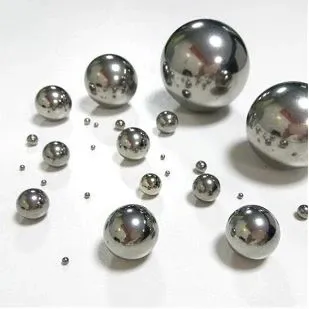
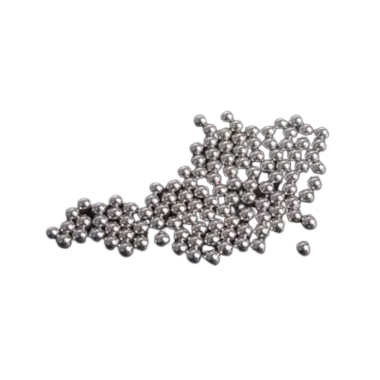
As a supplier of carbon steel balls, I've witnessed firsthand the diverse applications and the importance of optimizing their use across various industries. Carbon steel balls are renowned for their durability, strength, and cost - effectiveness, making them a staple in manufacturing, automotive, and many other sectors. In this blog, I'll share some valuable insights on how to optimize the use of carbon steel balls.
Understanding the Properties of Carbon Steel Balls
Before delving into optimization strategies, it's crucial to understand the properties of carbon steel balls. Carbon steel is an alloy of iron and carbon, with the carbon content typically ranging from 0.05% to 2.1%. The amount of carbon significantly influences the ball's hardness, strength, and ductility.
Higher carbon content generally results in harder and stronger balls, which are suitable for applications requiring high wear resistance, such as in ball bearings or grinding media. On the other hand, lower carbon content balls are more ductile and easier to machine, making them ideal for applications where formability is key.
Selecting the Right Grade of Carbon Steel Balls
The first step in optimizing the use of carbon steel balls is selecting the right grade. Different applications demand different grades of carbon steel. For instance, in the automotive industry, where precision and reliability are paramount, high - quality, low - carbon steel balls are often preferred for use in steering systems and transmissions. These balls need to have excellent surface finish and dimensional accuracy to ensure smooth operation.
In the mining and construction industries, where the balls are subjected to heavy impact and abrasion, high - carbon steel balls are more appropriate. They can withstand the harsh conditions and maintain their shape and performance over time. As a supplier, I always work closely with my customers to understand their specific requirements and recommend the most suitable grade of carbon steel balls.
Proper Storage and Handling
Proper storage and handling of carbon steel balls are essential to maintain their quality and performance. Carbon steel is prone to rusting, especially in humid environments. Therefore, it's crucial to store the balls in a dry, clean place. They should be kept in sealed containers or packages to prevent exposure to moisture and contaminants.
When handling the balls, care should be taken to avoid scratches or dents. Even minor surface damage can affect the ball's performance, especially in applications where precision is critical. Using appropriate handling equipment, such as magnetic pick - up tools or soft - lined containers, can help minimize the risk of damage.
Lubrication and Maintenance
Lubrication plays a vital role in optimizing the use of carbon steel balls, especially in applications where they are in constant motion, such as in bearings. A good lubricant can reduce friction, wear, and heat generation, thereby extending the ball's service life. The type of lubricant used depends on the application and the operating conditions.
For high - speed applications, a low - viscosity lubricant is often preferred to ensure smooth operation. In high - temperature or heavy - load applications, a high - viscosity lubricant with good thermal stability is more suitable. Regular maintenance, including lubricant replacement and inspection of the balls for wear and damage, is also necessary to keep them in optimal condition.
Application - Specific Optimization
Ball Bearings
In ball bearings, the performance of carbon steel balls can be optimized by ensuring proper pre - loading. Pre - loading is the process of applying an initial load to the bearing to eliminate internal clearance and improve stiffness. This can enhance the bearing's accuracy, reduce vibration, and increase its load - carrying capacity.
Another important factor is the matching of the balls with the bearing raceways. The surface finish and hardness of the balls and raceways should be carefully selected to ensure a good fit and minimize wear. As a supplier, I offer a wide range of Metric Steel Ball options with different surface finishes and hardness levels to meet the specific requirements of ball bearing manufacturers.
Grinding Media
In grinding applications, such as in ball mills, the size, shape, and material of the carbon steel balls can significantly affect the grinding efficiency. The size of the balls should be selected based on the particle size of the material to be ground. Larger balls are more suitable for coarse grinding, while smaller balls are better for fine grinding.
The shape of the balls also matters. Spherical balls are the most common, but in some cases, non - spherical balls may be more effective. For example, ellipsoidal balls can provide a different grinding action and improve the grinding efficiency. Additionally, using high - quality Metal Ball with consistent quality and hardness can ensure uniform grinding results.
Shot Peening
In shot peening applications, carbon steel balls are used to improve the surface properties of metal components. The process involves bombarding the component's surface with high - velocity balls to induce compressive stresses, which can enhance the component's fatigue resistance and strength.
To optimize the shot - peening process, the size, hardness, and velocity of the balls need to be carefully controlled. The size of the balls determines the depth and intensity of the compressive stresses, while the hardness affects the peening efficiency. By using the right Metal Ball and adjusting the process parameters, manufacturers can achieve the desired surface properties for their components.
Collaboration with Suppliers
Collaborating with a reliable supplier is crucial for optimizing the use of carbon steel balls. A good supplier can provide not only high - quality products but also technical support and advice. As a supplier, I'm committed to building long - term partnerships with my customers. I offer customized solutions based on their specific needs, and I'm always available to answer their questions and provide assistance.
If you're looking for high - quality carbon steel balls or need advice on optimizing their use in your applications, I encourage you to reach out to me. I'm confident that I can help you find the best solutions for your business. Whether you're in the automotive, mining, or any other industry, I have the expertise and resources to meet your requirements. Contact me today to start a discussion about your carbon steel ball needs and explore the possibilities of collaboration.
References
- ASM Handbook Committee. (2000). ASM Handbook Volume 1: Properties and Selection: Irons, Steels, and High - Performance Alloys. ASM International.
- Schubert, H. (1996). Size Reduction. Wiley - VCH.
- Harris, T. A., & Kotzalas, M. N. (2007). Rolling Bearing Analysis. Wiley.