
Hey there! As a supplier of Cold Heading Punches, I've been getting a lot of questions lately about how to measure the accuracy of these essential tools. In this blog post, I'm gonna break it down for you, sharing some practical methods and insights that I've gathered over the years in the industry.
First off, let's talk about why measuring the accuracy of Cold Heading Punches is so important. Cold Heading Punches are used in the cold heading process, which is a high - speed forging operation that shapes metal into various parts like bolts, screws, and rivets. If the punches aren't accurate, it can lead to a whole bunch of problems. You might end up with parts that don't meet the required specifications, have poor surface finish, or even cause premature wear and tear on your cold heading machines.
One of the most basic ways to measure the accuracy of Cold Heading Punches is by checking their dimensional accuracy. This involves using precision measuring tools like micrometers, calipers, and gauge blocks. For instance, you can measure the diameter of the punch tip. A slight deviation in the diameter can have a big impact on the final shape and size of the cold - headed part. If the diameter is too large, the part might be oversized; if it's too small, the part might not be fully formed.
Another crucial dimension to measure is the length of the punch. The length affects the depth of the indentation or the shape that the punch creates in the metal. You want to make sure that the length is within the tolerance range specified for your particular application. To measure the length accurately, you can use a height gauge or a coordinate measuring machine (CMM). A CMM is a really advanced tool that can measure the dimensions of the punch in multiple axes with high precision. It can detect even the tiniest deviations from the ideal shape and size.
Surface finish is also an important aspect of punch accuracy. A rough surface finish on the punch can cause problems like sticking of the metal during the cold heading process, which can lead to defects in the final part. To measure the surface finish, you can use a surface roughness tester. This device measures the microscopic irregularities on the surface of the punch. A smooth surface finish is generally preferred as it reduces friction and allows for better metal flow during the cold heading process.
The straightness of the Cold Heading Punches is yet another factor to consider. A punch that isn't straight can cause uneven pressure distribution during the cold heading process, leading to parts that are misshapen or have inconsistent dimensions. You can use a straight edge or a laser alignment tool to check the straightness of the punch. If the punch is bent, it needs to be corrected or replaced to ensure accurate cold heading operations.
Now, let's talk about some more advanced methods for measuring punch accuracy. One such method is using non - destructive testing (NDT) techniques. For example, ultrasonic testing can be used to detect internal defects in the punch, such as cracks or voids. These internal defects can weaken the punch and affect its performance and accuracy. Eddy current testing is another NDT method that can be used to detect surface and near - surface defects in the punch.
In addition to these measurement methods, it's also important to have a proper quality control system in place. This includes regular inspection and calibration of the measuring tools. If your micrometers or calipers aren't calibrated correctly, the measurements you get won't be accurate, and you might end up making wrong decisions about the quality of the punches.
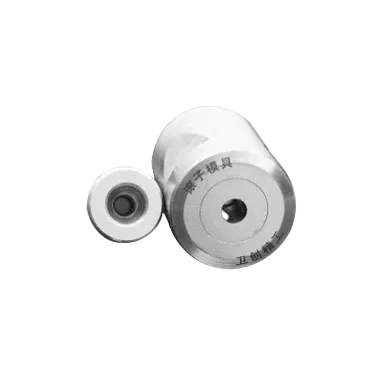
As a Cold Heading Punches supplier, I know that having accurate punches is crucial for your cold heading operations. That's why we at our company take extra care in manufacturing and testing our Cold Heading Punches. We use state - of - the - art manufacturing processes and the latest measuring equipment to ensure that our punches meet the highest standards of accuracy.
But it's not just about the punches themselves. We also offer a range of related tools and products that can enhance your cold heading operations. For example, our Carbidecut Off Die COD is designed to work seamlessly with our Cold Heading Punches. It helps in cutting off the cold - headed parts accurately, ensuring a clean and precise cut.
And if you're looking for a reliable Feed Roll, we've got you covered. The feed roll is an important component in the cold heading process as it feeds the metal wire or rod into the cold heading machine at a consistent rate. Our feed rolls are designed for high precision and durability, which helps in maintaining the accuracy of the overall cold heading process.
If you're in the market for high - quality Cold Heading Punches or related tools, I encourage you to get in touch with us. We're always happy to have a chat about your specific requirements and how we can help you improve the accuracy and efficiency of your cold heading operations. Whether you're a small - scale manufacturer or a large - scale industrial operation, we have the products and expertise to meet your needs.
In conclusion, measuring the accuracy of Cold Heading Punches involves a combination of basic and advanced measurement techniques. By paying attention to dimensions, surface finish, straightness, and using non - destructive testing methods, you can ensure that your punches are accurate and perform well in your cold heading operations. And as your trusted Cold Heading Punches supplier, we're here to support you every step of the way.
References:
- "Cold Heading Technology Handbook"
- Industry standards for cold heading tools and equipment