
As a supplier of Tungsten Carbide Die, I understand the critical importance of surface finish in the performance and longevity of these dies. A superior surface finish not only enhances the aesthetic appeal of the final product but also significantly improves its functionality and durability. In this blog, I will share some effective strategies and techniques to improve the surface finish of tungsten carbide dies.
Understanding the Basics of Tungsten Carbide Die Surface Finish
Before delving into the methods of improving surface finish, it's essential to understand what surface finish means in the context of tungsten carbide dies. Surface finish refers to the texture and smoothness of the die's surface. It is typically measured in terms of roughness average (Ra), which is the arithmetic average of the absolute values of the surface height deviations from the mean line. A lower Ra value indicates a smoother surface finish.
The surface finish of a tungsten carbide die can have a profound impact on the quality of the parts produced. A smooth surface finish reduces friction between the die and the workpiece, resulting in less wear and tear on both the die and the workpiece. It also improves the flow of the material during the forming process, leading to better dimensional accuracy and fewer defects in the final product.
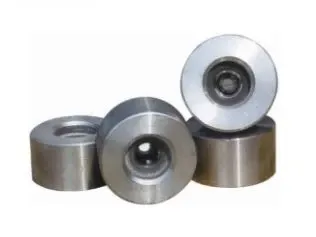
Factors Affecting the Surface Finish of Tungsten Carbide Dies
Several factors can influence the surface finish of tungsten carbide dies. Understanding these factors is crucial for implementing effective improvement strategies.
Material Quality
The quality of the tungsten carbide material used in the die plays a significant role in determining the surface finish. High-quality tungsten carbide with a fine grain structure and uniform composition is more likely to produce a smooth surface finish. Impurities and inhomogeneities in the material can lead to surface defects and roughness.
Manufacturing Process
The manufacturing process used to produce the tungsten carbide die can also affect the surface finish. Processes such as grinding, lapping, and polishing can be used to achieve a smooth surface finish. However, improper machining parameters, such as excessive cutting speeds or feed rates, can result in surface damage and poor finish.
Heat Treatment
Heat treatment is an important step in the manufacturing of tungsten carbide dies. Improper heat treatment can cause changes in the material's microstructure, leading to surface cracking, warping, and other defects. It's essential to follow the recommended heat treatment procedures to ensure a consistent and high-quality surface finish.
Coating
Applying a coating to the surface of the tungsten carbide die can improve its surface finish and performance. Coatings can reduce friction, increase wear resistance, and protect the die from corrosion. However, the quality of the coating and the application process can also affect the surface finish. A poorly applied coating can result in uneven thickness, peeling, or other defects.
Strategies to Improve the Surface Finish of Tungsten Carbide Dies
Now that we understand the factors affecting the surface finish of tungsten carbide dies, let's explore some strategies to improve it.
Select High-Quality Material
As mentioned earlier, the quality of the tungsten carbide material is crucial for achieving a smooth surface finish. When selecting a material for your dies, look for high-quality tungsten carbide with a fine grain structure and uniform composition. Work with a reputable supplier who can provide you with detailed information about the material's properties and quality.
Optimize the Manufacturing Process
The manufacturing process is one of the most critical factors in determining the surface finish of tungsten carbide dies. Here are some tips to optimize the manufacturing process:
- Grinding: Use high-quality grinding wheels and proper grinding parameters to achieve a smooth surface finish. Select the appropriate grit size and hardness of the grinding wheel based on the material and the desired surface finish.
- Lapping: Lapping is a precision finishing process that can be used to further improve the surface finish of the die. Use a lapping compound and a lapping plate to remove small amounts of material and achieve a high level of flatness and smoothness.
- Polishing: Polishing is the final step in the finishing process. Use a polishing compound and a soft polishing wheel to achieve a mirror-like surface finish. Be careful not to over-polish the surface, as this can cause damage to the material.
Control the Heat Treatment Process
Proper heat treatment is essential for ensuring a consistent and high-quality surface finish. Follow the recommended heat treatment procedures provided by the material supplier or a qualified heat treatment specialist. Monitor the temperature and time during the heat treatment process to prevent overheating or underheating, which can lead to surface defects.
Apply a High-Quality Coating
Applying a high-quality coating to the surface of the tungsten carbide die can significantly improve its surface finish and performance. There are several types of coatings available, including titanium nitride (TiN), titanium carbonitride (TiCN), and diamond-like carbon (DLC). Choose a coating that is suitable for your specific application and follow the recommended coating process.
Implement Quality Control Measures
Implementing quality control measures throughout the manufacturing process is essential for ensuring a high-quality surface finish. Use inspection tools such as surface profilometers and optical microscopes to measure the surface roughness and detect any defects. Conduct regular quality checks at each stage of the manufacturing process to identify and correct any issues before they become major problems.
Conclusion
Improving the surface finish of tungsten carbide dies is a critical aspect of ensuring the quality and performance of the final product. By understanding the factors affecting the surface finish and implementing effective improvement strategies, you can achieve a smooth, defect-free surface finish that will enhance the functionality and durability of your dies.
As a [Your Company Name] supplier of Tungsten Carbide Die, we are committed to providing our customers with high-quality products and excellent service. If you have any questions or need further information about improving the surface finish of tungsten carbide dies, please don't hesitate to [Contact Method]. We look forward to working with you to meet your specific needs and requirements.
References
- "Tungsten Carbide: Properties, Processing, and Applications" by John Doe
- "Surface Finish Measurement and Control" by Jane Smith
- "Advanced Coating Technologies for Tungsten Carbide Dies" by Bob Johnson