
Hey there! I'm a supplier in the Taper Roller Design business, and today I'm gonna share some insights on how to design taper rollers for mining equipment.
Mining equipment operates in some of the toughest conditions out there. It has to deal with heavy loads, high speeds, and a lot of dirt and debris. That's why designing the right taper rollers is crucial.
First off, let's talk about the basics of taper rollers. Taper rollers are shaped like a cone, and they're used in bearings to handle both radial and axial loads. In mining equipment, these loads can be extremely high, so the design has to be spot - on.
Material Selection
The material of the taper rollers is super important. We usually go for high - quality bearing steels. These steels have excellent hardness, toughness, and wear resistance. For example, some of the common grades are AISI 52100. This steel can withstand the high stresses and impacts that are typical in mining operations.
Another option could be carburized steels. They offer a hard outer layer for wear resistance and a tough core to handle the loads. When choosing the material, we also have to consider the cost. Sometimes, a more expensive material might be worth it in the long run because it can extend the lifespan of the taper rollers and reduce maintenance costs.
Geometry Design
The geometry of the taper rollers plays a huge role in their performance. The taper angle is one of the key factors. A proper taper angle ensures that the load is distributed evenly across the roller surface. If the angle is too small or too large, it can lead to uneven wear and premature failure.
We also need to pay attention to the length and diameter of the rollers. In mining equipment, larger rollers are often preferred because they can handle higher loads. But we have to balance this with the available space in the bearing housing.
The crown of the taper roller is another important aspect. A crowned roller helps to reduce edge stress, which can cause cracking and failure. By carefully designing the crown shape, we can improve the contact between the roller and the raceway, leading to better performance.
Lubrication Considerations
Lubrication is essential for the smooth operation of taper rollers in mining equipment. In such harsh environments, the lubricant has to be able to withstand high temperatures, resist contamination, and provide good anti - wear protection.
We usually recommend using high - quality greases or oils. Greases are often preferred because they can stay in place better and provide a barrier against dirt and debris. But we have to make sure that the grease has the right consistency and additives for the specific application.
The lubrication system also needs to be designed properly. It should be able to deliver the lubricant to the right places at the right time. In some cases, we might use a centralized lubrication system to ensure that all the taper rollers in the equipment are well - lubricated.
Comparison with Other Roller Types
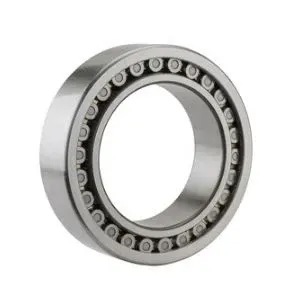
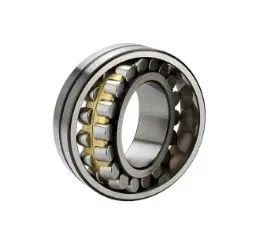
It's also a good idea to compare taper rollers with other types of rollers, like Cross Roller, Cylindrical Roller, and Spherical Roller.
Cross rollers are great for applications where high radial and axial stiffness is required. They can handle complex load conditions, but they might be more expensive and require more precise installation.
Cylindrical rollers are mainly used for handling radial loads. They have a simple design and are relatively easy to manufacture. However, they're not as good at handling axial loads as taper rollers.
Spherical rollers can accommodate misalignment, which is useful in some mining equipment where there might be some movement or vibration. But they might not be as efficient as taper rollers in handling high - speed loads.
Quality Control
Quality control is a must - have in the design and manufacturing of taper rollers for mining equipment. We use a variety of inspection methods, such as dimensional measurement, hardness testing, and surface finish inspection.
Before the taper rollers are shipped out, they go through a series of tests to make sure they meet the required standards. This includes running them on test rigs to simulate the actual operating conditions in mining equipment.
Cost - Effectiveness
When designing taper rollers for mining equipment, we also have to think about cost - effectiveness. We want to provide a product that offers good performance at a reasonable price. This means optimizing the design, choosing the right materials, and streamlining the manufacturing process.
By reducing waste and improving efficiency, we can keep the costs down without sacrificing the quality of the taper rollers.
Conclusion
Designing taper rollers for mining equipment is a complex but rewarding process. It requires a good understanding of the operating conditions, the properties of different materials, and the principles of roller design.
If you're in the mining industry and looking for high - quality taper rollers, I'd love to have a chat with you. Whether you need help with the design, want to know more about our products, or are ready to place an order, don't hesitate to reach out. We're here to provide you with the best solutions for your mining equipment needs.
References
- "Rolling Bearing Analysis" by Tedric A. Harris
- "Handbook of Lubrication and Tribology, Volume II: Application and Maintenance" by Bhushan Bharat