
Hey there! I'm from a Taper Roller Design Taper Roller Disign supplier, and today I wanna chat about how to design taper rollers for marine applications.
Marine applications are no joke. They're tough on equipment, with harsh environments, heavy loads, and constant motion. Taper rollers play a crucial role in many marine systems, like in the propulsion systems, steering mechanisms, and various auxiliary equipment. So, getting their design right is super important.
Understanding the Marine Environment
First things first, we gotta understand the unique challenges of the marine environment. Saltwater is a major culprit. It's highly corrosive, which means the taper rollers need to be made from materials that can resist this corrosion. Stainless steel is a popular choice here. It has good corrosion resistance properties and can withstand the constant exposure to saltwater.
Another aspect is the vibrations and shocks. In a marine setting, ships are constantly moving, and there are waves, engine vibrations, and all sorts of mechanical shocks. Taper rollers need to be designed to handle these vibrations without losing their performance or getting damaged. This means we need to consider factors like the roller's shape, size, and the material's stiffness.
The loads in marine applications can also be quite high. For example, in the propulsion system, the taper rollers have to support the weight of the propeller shaft and the forces generated during operation. So, we need to calculate the load capacity accurately and design the rollers accordingly.
Designing the Shape
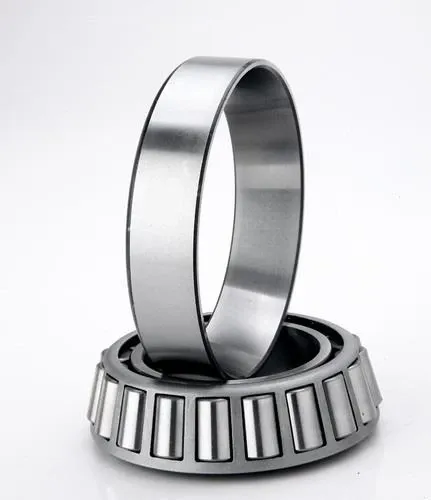
The shape of the taper roller is a key factor. Taper rollers are conical in shape, which allows them to handle both radial and axial loads simultaneously. Conical Rollers are designed in such a way that the contact between the roller and the raceway is optimized.
When designing the shape, we need to consider the angle of the cone. A steeper cone angle can handle higher axial loads, but it may also increase the stress on the roller and the raceway. On the other hand, a shallower cone angle is better for radial loads but may not be as effective for axial loads. So, we need to find the right balance based on the specific requirements of the marine application.
The length and diameter of the roller also matter. A longer roller can distribute the load over a larger area, reducing the stress on the roller and the raceway. However, a longer roller may also be more prone to bending under load. The diameter of the roller affects its load - carrying capacity and its ability to handle high - speed applications.
Material Selection
As I mentioned earlier, corrosion resistance is a top priority in marine applications. Stainless steel is a great option, but there are also other materials that can be considered. For example, some ceramic materials have excellent corrosion resistance and high hardness. They can also reduce friction, which is beneficial for energy efficiency.
However, ceramic materials can be brittle, so we need to be careful when using them. We may need to design the rollers in a way that minimizes the risk of cracking or chipping. Another option is to use coated materials. We can apply a corrosion - resistant coating to a base material to improve its performance in the marine environment.
The material's hardness is also important. A harder material can withstand higher loads and wear better. But we also need to consider the material's ductility. A material that is too hard and not ductile enough may be prone to cracking under impact or vibration.
Lubrication
Proper lubrication is essential for the performance and longevity of taper rollers in marine applications. Lubrication reduces friction between the roller and the raceway, which helps to prevent wear and overheating. In a marine environment, the lubricant also needs to have good corrosion - prevention properties.
There are different types of lubricants available, such as mineral oils, synthetic oils, and greases. The choice of lubricant depends on factors like the operating temperature, speed, and load of the application. For high - speed applications, synthetic oils may be a better choice because they have better viscosity - temperature characteristics.
We also need to consider the lubrication method. In some marine applications, a splash - lubrication system may be sufficient, where the lubricant is splashed onto the rollers by the rotating parts. In other cases, a forced - lubrication system may be required, where the lubricant is pumped directly to the rollers.
Manufacturing Processes
The manufacturing process can have a significant impact on the quality of the taper rollers. Precision machining is crucial to ensure that the rollers have the correct shape and dimensions. Any deviation in the shape or size can affect the roller's performance and its ability to handle loads.
Heat treatment is another important step. Heat treatment can improve the material's hardness, strength, and toughness. We need to carefully control the heat - treatment process to ensure that the material properties are consistent throughout the roller.
Surface finishing is also important. A smooth surface finish can reduce friction and wear. We can use processes like grinding and polishing to achieve a high - quality surface finish on the rollers.
Testing and Validation
Once the taper rollers are designed and manufactured, we need to test and validate them. We can use various testing methods, such as load - testing, vibration - testing, and corrosion - testing.
Load - testing involves applying a known load to the rollers and measuring their performance. This helps us to verify that the rollers can handle the expected loads in the marine application. Vibration - testing can simulate the vibrations that the rollers will experience in operation and check for any signs of damage or performance degradation.
Corrosion - testing is done by exposing the rollers to a salt - water environment for a certain period of time and then checking for signs of corrosion. This helps us to ensure that the material and the surface finish are effective in preventing corrosion.
Cost Considerations
Of course, cost is always a factor in any design process. We need to find a balance between the performance requirements and the cost of the taper rollers. Using high - end materials and advanced manufacturing processes can improve the performance of the rollers, but it also increases the cost.
We can look for ways to optimize the design to reduce the cost without sacrificing too much on performance. For example, we can use a more cost - effective material and then improve its performance through surface treatment or heat treatment.
Contact for Purchase and Collaboration
If you're in the marine industry and looking for high - quality taper rollers, we'd love to have a chat with you. We've got the expertise and experience to design and manufacture taper rollers that meet your specific requirements. Whether you need rollers for a small auxiliary system or a large - scale propulsion system, we can help. Just reach out to us, and let's start the conversation about how we can work together to get the best taper rollers for your marine applications.
References
- Smith, J. "Design Principles for Rolling Elements in Harsh Environments." Journal of Mechanical Design, 2018.
- Johnson, M. "Corrosion Resistance of Materials in Marine Applications." Marine Engineering Review, 2019.
- Brown, K. "Lubrication Strategies for High - Performance Taper Rollers." Tribology International, 2020.