
Hey there! As a supplier specializing in taper roller design, I'm stoked to share some insights on how to design taper rollers for heavy - duty applications. It's a field that's both challenging and super rewarding, and I've got a ton of experience to draw from.
Understanding Heavy - Duty Requirements
First things first, when we're talking about heavy - duty applications, we're dealing with some pretty extreme conditions. These could include high loads, intense vibrations, and sometimes even harsh environments. For example, in the mining industry, taper rollers need to withstand the massive weight of equipment and the constant jolting from the rough terrain. In construction machinery, they have to work under high - pressure situations while maintaining precision.
So, the design process starts with a deep understanding of these requirements. We need to know the maximum load the roller will face, the speed at which it'll operate, and the environmental factors like temperature, humidity, and the presence of contaminants. This information is crucial because it forms the foundation for all the subsequent design decisions.
Material Selection
One of the most critical aspects of designing taper rollers for heavy - duty applications is choosing the right material. You can't just pick any old metal and expect it to hold up under the stress. We usually go for high - quality alloy steels, which offer excellent strength and durability. These steels can be heat - treated to enhance their hardness and toughness, making them better able to resist wear and deformation.
For instance, some of the advanced alloy steels we use have a special composition that gives them high fatigue resistance. This is super important because in heavy - duty applications, the rollers are constantly under cyclic loading, and fatigue failure is a real concern. By using the right material, we can significantly extend the lifespan of the taper rollers.
Geometric Design
The shape and size of the taper roller play a huge role in its performance. The taper angle, for example, needs to be carefully calculated. A proper taper angle ensures that the load is evenly distributed across the roller surface, reducing stress concentrations. If the taper angle is off, it can lead to uneven wear and premature failure.
We also need to pay attention to the diameter and length of the roller. In heavy - duty applications, larger rollers are often preferred because they can handle more load. However, we have to balance this with the available space and the overall design of the bearing assembly. Sometimes, we might use a combination of different sized rollers to optimize the performance of the system.
Lubrication and Sealing
Lubrication is like the lifeblood of a taper roller in heavy - duty applications. Without proper lubrication, the friction between the roller and the raceway can generate a ton of heat, which can damage the roller and reduce its efficiency. We use high - quality lubricants that are specifically formulated for heavy - duty use. These lubricants have excellent viscosity and anti - wear properties, which help to reduce friction and protect the roller surface.
In addition to lubrication, sealing is also crucial. Seals prevent contaminants like dirt, dust, and moisture from entering the bearing assembly. In heavy - duty environments, these contaminants can cause serious damage to the rollers. We design our taper rollers with effective sealing mechanisms to keep the internal components clean and well - lubricated.
Quality Control
Once the taper rollers are designed and manufactured, we don't just send them out the door. We have a rigorous quality control process in place. We use advanced inspection techniques to check the dimensional accuracy, surface finish, and hardness of the rollers. Any rollers that don't meet our strict quality standards are rejected.
This ensures that only the best - quality taper rollers make it to our customers. In heavy - duty applications, there's no room for error, and we take our responsibility to provide reliable products very seriously.
Some Related Products
If you're interested in exploring other types of rollers, we also offer some great alternatives. For example, the Cross Roller has a unique design that makes it suitable for applications where high radial and axial loads need to be supported simultaneously. It's a great option for some heavy - duty industrial machinery.
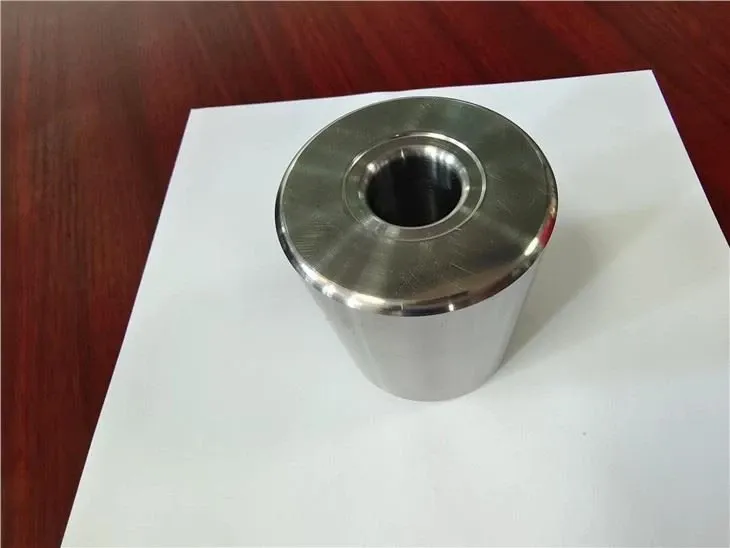
We also have the 2022 New product Taper Roller With Hole in The Center. This innovative design has some advantages in terms of weight reduction and improved lubrication flow, which can be beneficial in certain heavy - duty scenarios.
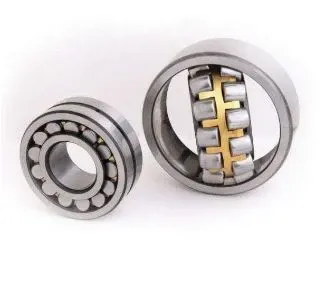
Another option is the Spherical Roller. These rollers are designed to accommodate misalignment, which is often a challenge in heavy - duty equipment. They can self - align to some extent, ensuring smooth operation even when the bearing housing is not perfectly aligned.
Conclusion
Designing taper rollers for heavy - duty applications is a complex but fascinating process. It requires a deep understanding of the requirements, careful material selection, precise geometric design, proper lubrication and sealing, and strict quality control. By following these principles, we can create taper rollers that are reliable, durable, and perform well under the toughest conditions.
If you're in the market for high - quality taper rollers for your heavy - duty applications, don't hesitate to reach out. We're here to help you find the perfect solution for your needs. Whether you need custom - designed rollers or standard products, we've got you covered. Let's start a conversation and see how we can work together to improve your equipment's performance.
References
- Machinery's Handbook, 31st Edition
- Tribology Handbook, Second Edition