
Hey there! I'm a supplier in the business of Taper Roller Design. Today, I'm gonna share with you how to design taper rollers for amusement park rides. It's a pretty cool topic, especially when you think about all the fun and excitement those rides bring.
Understanding the Basics of Taper Rollers
First things first, let's talk about what taper rollers are. Taper rollers are a type of rolling element that have a conical shape. This shape allows them to handle both radial and axial loads, which is super important for amusement park rides. These rides are constantly moving, turning, and going through all sorts of forces, so the taper rollers need to be able to withstand a lot.
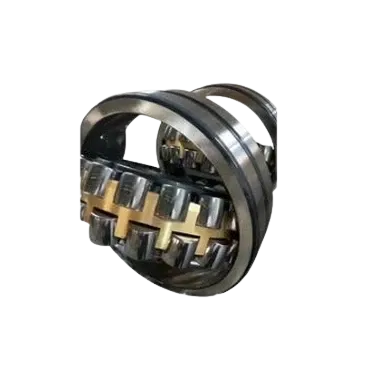
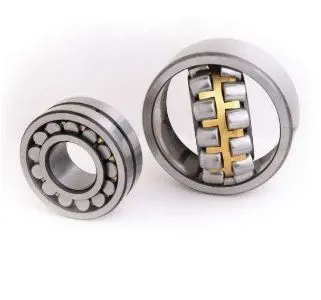
Compared to other types of rollers like Spherical Roller and Cylindrical Roller, taper rollers have unique advantages. Spherical rollers are great for applications where there's misalignment, but they might not be as efficient in handling the specific loads of amusement park rides. Cylindrical rollers, on the other hand, are mainly good for radial loads, and amusement park rides often have a combination of radial and axial loads.
Factors to Consider in Designing Taper Rollers for Amusement Park Rides
Load Requirements
One of the most crucial factors is the load that the taper rollers will need to support. Amusement park rides come in all shapes and sizes, from gentle carousels to high - speed roller coasters. Each ride has different load requirements. For example, a roller coaster might have high dynamic loads as it goes through loops and twists at high speeds. We need to calculate the maximum radial and axial loads that the taper rollers will experience during the operation of the ride. This involves looking at the weight of the ride vehicles, the number of passengers, and the acceleration forces.
Speed and Rotation
The speed at which the taper rollers will rotate is also very important. High - speed rides require taper rollers that can handle the centrifugal forces and the heat generated by the rapid rotation. We need to choose the right materials and lubrication to ensure that the rollers can operate smoothly at high speeds without excessive wear and tear. For instance, if a ride has a section where the vehicles reach speeds of over 100 miles per hour, the taper rollers need to be designed to handle the extreme conditions.
Durability and Safety
Safety is always the top priority in amusement park rides. Taper rollers need to be extremely durable to prevent any failures that could lead to accidents. We use high - quality materials and advanced manufacturing processes to ensure the longevity of the rollers. Regular maintenance and inspection are also essential. We can design the rollers in a way that makes them easy to access and replace if needed. For example, we can use a modular design where individual rollers can be swapped out without having to disassemble the entire ride mechanism.
Noise and Vibration
No one wants to hear a lot of noise or feel excessive vibrations on an amusement park ride. Taper rollers need to be designed to minimize noise and vibration. This can be achieved through proper surface finishing and precision manufacturing. We can also use damping materials or special designs to absorb and reduce the vibrations. A quiet and smooth - running ride not only provides a better experience for the passengers but also indicates a well - designed and reliable system.
The Design Process
Conceptualization
The first step in the design process is to come up with a concept. We work closely with the ride designers and engineers to understand the requirements of the ride. We look at the overall layout, the expected loads, and the operating conditions. Based on this information, we start to sketch out the basic design of the taper rollers. We consider factors like the size, shape, and number of rollers needed.
Material Selection
Choosing the right material is crucial. We typically use high - strength steels that can withstand the loads and the harsh operating conditions. The material also needs to have good wear resistance and corrosion resistance. Sometimes, we might use special alloys or coatings to enhance the performance of the rollers. For example, a nitride coating can improve the surface hardness and wear resistance of the rollers.
Computer - Aided Design (CAD)
Once we have a basic concept and the material selected, we use CAD software to create a detailed 3D model of the taper rollers. This allows us to visualize the design and make any necessary adjustments. We can analyze the stress distribution, the contact areas, and the kinematics of the rollers. CAD also helps us to communicate the design to the manufacturing team and other stakeholders.
Prototyping and Testing
After the CAD design is finalized, we create prototypes of the taper rollers. These prototypes are then tested under simulated operating conditions. We measure the performance in terms of load capacity, speed, durability, and noise levels. If any issues are found during the testing, we go back to the design stage and make the necessary modifications. This iterative process ensures that the final design meets all the requirements.
Manufacturing and Quality Control
Once the design is approved, we move on to the manufacturing stage. We use state - of - the - art manufacturing equipment to produce the taper rollers with high precision. Quality control is carried out at every step of the manufacturing process. We measure the dimensions, the surface finish, and the hardness of the rollers to ensure that they meet the specifications. Only after passing all the quality control tests are the rollers ready to be installed in the amusement park rides.
Conclusion
Designing taper rollers for amusement park rides is a complex but rewarding process. It requires a deep understanding of the loads, speeds, and safety requirements of the rides. By considering all the factors and following a systematic design process, we can create taper rollers that are reliable, efficient, and safe.
If you're in the business of amusement park ride design or maintenance and are looking for high - quality taper rollers, we'd love to have a chat with you. We can discuss your specific needs and come up with the best design solutions for your rides. Contact us to start the procurement and design process.
References
- "Rolling Bearing Analysis" by Tedric A. Harris
- "Engineering Design for Manufacturing and the Life Cycle" by Stuart P. Corbett
- Various industry reports on amusement park ride safety and design.