
Hey there! If you're in the market for precision steel balls, you've come to the right place. As a precision steel balls supplier, I've seen it all when it comes to choosing the right ball for different applications. In this blog, I'll share some tips on how to pick the perfect precision steel balls for your specific needs.
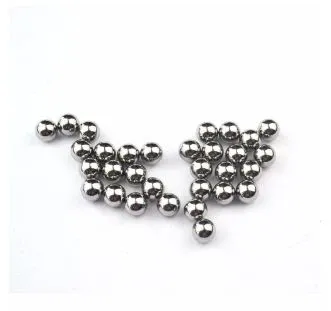

Understand Your Application
The first step in choosing the right precision steel balls is to have a clear understanding of your application. The requirements can vary widely depending on what you're using the balls for. For example, if you're working on a high - speed bearing application, you'll need balls that can handle the rotational speed and have excellent roundness and surface finish. On the other hand, if you're using the balls in a valve application, corrosion resistance and hardness might be your top priorities.
Think about the environment in which the balls will operate. Will they be exposed to high temperatures, corrosive chemicals, or abrasive materials? If so, you'll need to choose a steel grade that can withstand these conditions. For instance, stainless steel balls are a great choice for applications where corrosion resistance is crucial, like in the food and beverage industry or in marine environments.
Consider the Size
The size of the precision steel balls is another critical factor. You need to make sure the balls fit perfectly within your equipment. If the balls are too large, they won't fit properly, and if they're too small, they may not provide the necessary support or performance.
Measurements can be in either metric or imperial units. For those who prefer the metric system, we have a wide range of sizes available. And if you're more accustomed to the imperial system, our Inch Steel Ball options will be right up your alley. Make sure to double - check your measurements and choose the size that matches your application requirements precisely.
Evaluate the Grade
The grade of a precision steel ball indicates its quality and accuracy. The lower the grade number, the higher the quality. For example, a Grade 10 ball is of a higher quality than a Grade 100 ball. Higher - grade balls have better roundness, surface finish, and size tolerance.
In applications where precision is of utmost importance, such as in aerospace or high - end medical devices, you'll want to go for a lower - grade ball. However, if your application doesn't require the highest level of precision, a higher - grade ball can still do the job, and it may be more cost - effective.
Look at the Material
The material of the steel balls can have a huge impact on their performance. There are different types of steel used in manufacturing precision steel balls, and each has its own set of properties.
- Chrome steel: This is one of the most commonly used materials for precision steel balls. It offers high hardness, good wear resistance, and is suitable for a wide range of applications, including bearings and automotive components.
- Stainless steel: As mentioned earlier, stainless steel balls are highly resistant to corrosion. They're often used in applications where exposure to moisture or chemicals is a concern. You can check out our Metal Ball options, which include stainless steel varieties.
- Carbon steel: Carbon steel balls are relatively inexpensive and have decent hardness. They're commonly used in less demanding applications where cost is a major factor.
Check the Surface Finish
The surface finish of the precision steel balls can affect their performance in several ways. A smooth surface finish reduces friction, which is important in applications where the balls are in contact with other components. It also helps to prevent wear and tear, increasing the lifespan of the balls.
In some applications, a specific surface finish may be required. For example, in optical or electronic applications, a very smooth and clean surface finish is essential. Make sure to discuss your surface finish requirements with your supplier to ensure you get the right product.
Consider the Tolerance
Tolerance refers to the allowable deviation from the specified size, shape, or other characteristics of the precision steel balls. Tighter tolerances mean the balls are more accurate and consistent in their dimensions.
If your application requires high precision, you'll need to choose balls with tight tolerances. However, keep in mind that tighter tolerances usually come at a higher cost. Balance your precision needs with your budget when making a decision.
Compatibility with Other Components
Your precision steel balls need to be compatible with other components in your system. Consider the material and surface properties of the other parts that the balls will interact with. For example, if the balls are used in a bearing with a specific type of raceway material, make sure the balls and the raceway are compatible to avoid issues like excessive wear or damage.
International Standards
There are international standards for precision steel balls, such as the Din 5401 Steel Ball standard. Adhering to these standards ensures the quality and performance of the balls. When choosing precision steel balls, look for products that meet relevant international standards, as this gives you an added level of confidence in the product's quality.
Cost - Benefit Analysis
Last but not least, you need to perform a cost - benefit analysis. While it may be tempting to go for the cheapest option, remember that quality often comes at a price. Cheaper balls may require more frequent replacement, which can end up costing you more in the long run.
On the other hand, if you go for the highest - end, most expensive balls when your application doesn't really require it, you're over - spending. Find the right balance between cost and performance to get the best value for your money.
Get in Touch
Choosing the right precision steel balls for your application might seem like a daunting task, but with the right information and guidance, it doesn't have to be. As a precision steel balls supplier, I'm here to help you every step of the way. Whether you have questions about sizing, material, grade, or anything else related to precision steel balls, feel free to reach out. We'll work together to find the perfect solution for your application.
References
- "Precision Steel Balls: Properties and Applications", Industrial Metalworking Handbook.
- International Standards for Steel Balls, ISO Publications.
- Material Science of Steel Balls, Journal of Metallurgy and Materials Engineering.