
Hey there! As a supplier of Carbon Steel Balls, I've seen my fair share of both good and bad products. One of the most important things in our business is being able to check if a carbon steel ball is defective. In this blog, I'm gonna share some tips and tricks on how to do just that.
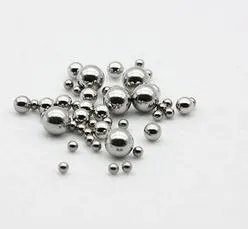
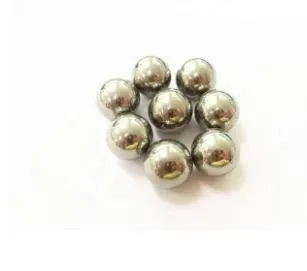
First off, let's talk about what a carbon steel ball is. Carbon steel balls are super versatile and are used in a wide range of applications, from industrial machinery to sports equipment. They're made from carbon steel, which is a type of steel that contains carbon as the main alloying element. You can find out more about them on our Carbon Steel Ball page.
Visual Inspection
The first step in checking for defects is a simple visual inspection. This is something you can do right off the bat. Just take a good look at the ball. You're looking for any obvious signs of damage, like cracks, chips, or dents. Cracks are a big no - no. They can weaken the ball and cause it to fail prematurely. Even a small crack can grow over time, especially if the ball is under stress.
Chips are also a problem. They can affect the ball's surface finish and its performance. For example, if the ball is used in a precision machinery, a chip can cause uneven wear and tear on other components. Dents can also be an issue, as they can change the ball's shape and affect its rolling characteristics.
Another thing to look for is the surface finish. A good carbon steel ball should have a smooth, even surface. If the surface looks rough or has pits, it could be a sign of poor manufacturing quality. Pits can trap dirt and debris, which can lead to corrosion and other problems down the line.
Dimensional Inspection
After the visual inspection, it's time to move on to dimensional inspection. The size and shape of the carbon steel ball are crucial, especially in applications where precision is key. You'll need some measuring tools, like calipers or micrometers, to check the ball's diameter.
The diameter of the ball should be within the specified tolerance. If it's too big or too small, it might not fit properly in the equipment it's intended for. For example, in a ball bearing, an incorrect diameter can cause excessive friction, noise, and even failure of the bearing.
In addition to the diameter, you also need to check the roundness of the ball. A perfectly round ball is essential for smooth rolling. You can use a roundness tester to measure this. If the ball is out of round, it can cause vibrations and uneven wear in the machinery.
Hardness Testing
Hardness is another important factor to consider when checking for defects. The hardness of a carbon steel ball affects its wear resistance and its ability to withstand stress. There are several methods to test the hardness of a ball.
One common method is the Rockwell hardness test. This test involves pressing a hard indenter into the surface of the ball with a specific load and measuring the depth of the indentation. The hardness value is then determined based on the depth of the indentation.
Another method is the Brinell hardness test. In this test, a hard ball is pressed into the surface of the carbon steel ball under a specific load, and the diameter of the indentation is measured. The Brinell hardness number is calculated based on the load and the diameter of the indentation.
If the hardness of the ball is too low, it will wear out quickly. On the other hand, if it's too high, the ball can become brittle and more prone to cracking.
Material Analysis
Sometimes, the defect might not be visible on the surface or detectable through dimensional or hardness testing. In such cases, material analysis can be very helpful. This involves analyzing the chemical composition of the carbon steel ball.
You can use techniques like spectroscopy to determine the amount of carbon and other elements in the ball. The correct chemical composition is crucial for the ball's properties. For example, if the carbon content is too high, the ball can be too hard and brittle. If it's too low, the ball might not have enough strength.
Magnetic Inspection
Carbon steel is magnetic, and this property can be used to check for defects. A magnetic inspection can help detect internal cracks or other hidden flaws. You can use a magnetic particle inspection method. In this method, a magnetic field is applied to the ball, and magnetic particles are sprinkled on the surface. If there are any cracks or flaws, the magnetic particles will be attracted to them, making them visible.
Other Types of Carbon Steel Balls
We also offer Weldable Steel Balls and Din 5401 Steel Ball. The same inspection methods apply to these types of balls as well. However, for weldable steel balls, you might also want to check the weldability of the material. This can involve testing the ball's ability to form a strong, reliable weld without cracking or other defects.
For Din 5401 steel balls, which are made according to a specific standard, you need to make sure that they meet all the requirements of that standard. This includes dimensional accuracy, surface finish, and material properties.
Why Defect Inspection Matters
Checking for defects in carbon steel balls is not just about quality control. It's also about safety and cost - effectiveness. A defective ball can cause equipment failure, which can lead to costly repairs and downtime. In some cases, it can even pose a safety risk to the operators.
By ensuring that all the carbon steel balls we supply are defect - free, we can provide our customers with reliable products that will perform well and last a long time. This is why we take defect inspection so seriously.
Conclusion
So, there you have it! These are some of the key ways to check if a carbon steel ball is defective. From visual inspection to material analysis, each step plays an important role in ensuring the quality of the balls.
If you're in the market for high - quality carbon steel balls, whether it's Carbon Steel Ball, Weldable Steel Balls, or Din 5401 Steel Ball, feel free to reach out to us for more information and to discuss your procurement needs. We're always here to help you find the right product for your application.
References
- ASM Handbook Volume 1: Properties and Selection: Irons, Steels, and High - Performance Alloys
- Machinery's Handbook, 31st Edition