
Hey there! As a Cross Roller supplier, I often get asked about how to calculate the load on cross rollers. It's a crucial topic, especially for those in industries where precision and reliability are key. So, let's dive right in and break it down step by step.
First off, let's understand what cross rollers are. Cross rollers are a type of rolling element that consists of cylindrical rollers arranged in a cross pattern. They're commonly used in applications where high load capacity, high precision, and compact design are required, such as in robotics, machine tools, and semiconductor manufacturing equipment.
Now, when it comes to calculating the load on cross rollers, there are several factors we need to consider. One of the most important factors is the type of load. There are generally three types of loads: radial load, axial load, and moment load.
Radial Load
Radial load is the load that acts perpendicular to the axis of the roller. To calculate the radial load on cross rollers, we need to know the weight of the object being supported and the distribution of that weight. For example, if we have a machine that has a weight of 1000 kg evenly distributed over a set of cross rollers, the radial load on each roller can be calculated by dividing the total weight by the number of rollers.
Let's say we have 10 cross rollers supporting the machine. The radial load on each roller would be 1000 kg / 10 = 100 kg. However, in real - world applications, the load distribution might not be so even. We might have to take into account factors like the center of gravity of the object and any dynamic forces acting on it.
Axial Load
Axial load is the load that acts parallel to the axis of the roller. This type of load can be caused by things like thrust forces in a machine or the weight of an object that has a component acting along the axis. Calculating the axial load is a bit more complex than calculating the radial load. We need to consider the direction and magnitude of the forces acting along the axis.
For example, if we have a conveyor belt system where there is a pulling force of 500 N acting along the axis of the cross rollers, this would be the axial load. Sometimes, the axial load and the radial load can act simultaneously. In such cases, we need to use vector addition to find the resultant load on the cross rollers.
Moment Load
Moment load is a rotational force that can cause the cross rollers to tilt or rotate. This type of load is often caused by uneven loading or external forces that create a torque. To calculate the moment load, we need to know the distance from the point of application of the force to the axis of the roller and the magnitude of the force.
The formula for moment load is M = F × d, where M is the moment load, F is the force, and d is the distance. For instance, if we have a force of 200 N acting at a distance of 0.5 m from the axis of the cross roller, the moment load would be M = 200 N × 0.5 m = 100 Nm.
Once we've determined the types of loads and their magnitudes, we need to check if the cross rollers can handle these loads. This is where the concept of load capacity comes in.
The load capacity of cross rollers is determined by their design, material, and manufacturing process. Different manufacturers might have different load - capacity ratings for their cross rollers. As a supplier, I always recommend checking the load - capacity charts provided by the manufacturer.
When calculating the load on cross rollers, we also need to consider the dynamic and static load ratings. The static load rating is the maximum load that a cross roller can withstand when it's not in motion. The dynamic load rating is the maximum load that a cross roller can withstand when it's in motion.
We usually use the following formula to calculate the equivalent dynamic load (P) when both radial (Fr) and axial (Fa) loads are present:
P = XFr+YFa
where X and Y are factors that depend on the ratio of the axial load to the radial load and the type of roller. These factors can be found in the load - capacity tables provided by the manufacturer.
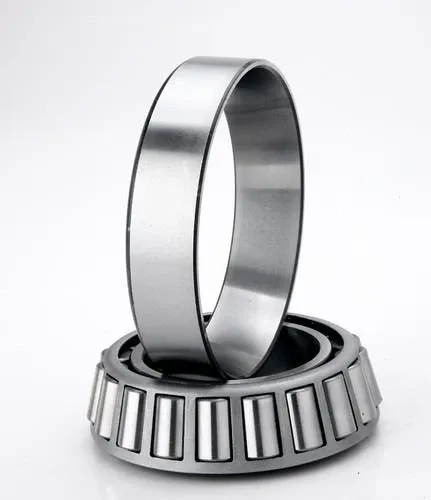
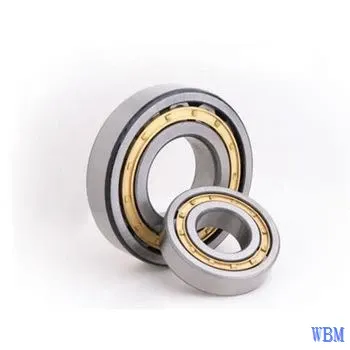
Now, let's talk about some resources that can help you further understand different types of rollers. If you're interested in Cylindrical Roller, you can click on the link to learn more about their design and applications. Also, for those who want to know about Taper Roller Disign, the link provides detailed information. And if you're curious about Interroll Tapered Roller, clicking on the link will give you a better understanding of its features.
In addition to the basic calculations, we also need to consider the operating conditions. Factors like temperature, speed, and lubrication can have a significant impact on the performance and load - carrying capacity of cross rollers. High temperatures can reduce the hardness of the roller material, which in turn can decrease the load capacity. High speeds can cause increased friction and wear, also affecting the load - handling ability.
Proper lubrication is essential for reducing friction and wear between the rollers and the raceways. It can also help dissipate heat, which is crucial for maintaining the load - carrying capacity of the cross rollers.
As a Cross Roller supplier, I know that getting the load calculations right is crucial for the long - term performance and reliability of the equipment. If the load on the cross rollers is too high, it can lead to premature failure, which can be costly in terms of both repairs and downtime.
So, if you're in the process of designing a machine or system that uses cross rollers, I highly recommend consulting with an expert or doing thorough research. And if you're looking for high - quality cross rollers, I'm here to help. Whether you need help with load calculations or just want to discuss your specific requirements, don't hesitate to reach out. We can have a detailed discussion about your project and find the best cross rollers for your needs.
In conclusion, calculating the load on cross rollers involves considering multiple factors such as the type of load (radial, axial, and moment), load capacity (static and dynamic), and operating conditions. By taking all these factors into account, we can ensure that the cross rollers we use are well - suited for the application, leading to better performance and longer service life.
If you're interested in purchasing cross rollers or have any questions about load calculations, feel free to contact me for a detailed discussion. We can work together to find the best solutions for your project.
References:
- Machinery's Handbook, 31st Edition
- Roller Bearing Design and Application Guide by SKF