
Bending a metal ball might seem like an impossible feat at first glance, especially considering the inherent strength and rigidity of metals. As a Metal Ball supplier, I've encountered numerous inquiries about the possibility and the process of bending metal balls. In this blog, I'll delve into the science behind metal bending, the factors that influence it, and the methods that can be employed to bend a metal ball.
Understanding the Nature of Metals
Before we discuss how to bend a metal ball, it's crucial to understand the basic properties of metals. Metals are crystalline solids composed of atoms arranged in a regular pattern. They have high electrical and thermal conductivity, are malleable, and ductile. Malleability refers to the ability of a metal to be deformed under compression without cracking or breaking, while ductility is the ability to be stretched into a wire.
The atomic structure of metals plays a significant role in their behavior under stress. When a force is applied to a metal, the atoms within the crystal lattice can move and rearrange themselves. This movement is facilitated by the presence of dislocations, which are defects in the crystal structure. Dislocations allow the atoms to slide past each other, enabling the metal to deform.
Factors Affecting the Bendability of Metal Balls
Several factors influence the ease with which a metal ball can be bent. These include the type of metal, its composition, the heat treatment it has undergone, and the size and shape of the ball.
Type of Metal
Different metals have different levels of malleability and ductility. For example, metals like gold and silver are highly malleable and can be easily deformed, even at room temperature. On the other hand, metals like tungsten and chromium are extremely hard and difficult to bend.
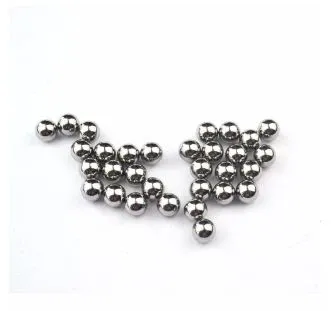
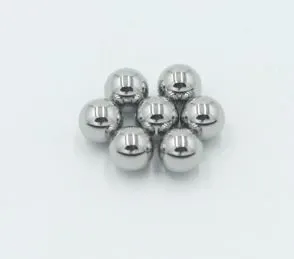
As a Metal Ball supplier, I offer a wide range of metal balls, including Inch Steel Ball and Precision Steel Balls. Steel is a popular choice for metal balls due to its strength, durability, and relatively good formability. However, the specific type of steel, such as carbon steel or stainless steel, can also affect its bendability.
Composition
The composition of a metal alloy can significantly impact its mechanical properties. Alloying elements are added to metals to enhance certain characteristics, such as strength, hardness, or corrosion resistance. However, these elements can also reduce the malleability and ductility of the metal.
For instance, adding carbon to iron to form steel increases its strength but decreases its ductility. High-carbon steels are harder and more brittle than low-carbon steels, making them more difficult to bend. As a supplier, I can provide detailed information about the composition of the metal balls I offer to help customers choose the most suitable option for their needs.
Heat Treatment
Heat treatment is a process used to alter the microstructure of a metal and improve its mechanical properties. Common heat treatment methods include annealing, quenching, and tempering.
Annealing involves heating the metal to a specific temperature and then cooling it slowly. This process relieves internal stresses, softens the metal, and increases its ductility, making it easier to bend. Quenching, on the other hand, involves rapid cooling of the metal, which hardens it but reduces its ductility. Tempering is often performed after quenching to reduce the brittleness and improve the toughness of the metal.
When supplying metal balls, I can offer options that have been heat-treated to achieve the desired properties. Customers can choose balls that are pre-annealed for easier bending or balls that have been hardened for increased strength.
Size and Shape of the Ball
The size and shape of the metal ball also play a role in its bendability. Smaller balls are generally easier to bend than larger ones because they require less force to deform. Additionally, the shape of the ball can affect the distribution of stress during bending. A ball with a uniform shape and smooth surface is more likely to bend evenly than a ball with irregularities or defects.
Methods of Bending a Metal Ball
There are several methods that can be used to bend a metal ball, depending on the specific requirements and the available equipment. Here are some common techniques:
Cold Bending
Cold bending involves applying force to the metal ball at room temperature. This method is suitable for metals with high malleability and ductility, such as aluminum and copper. Cold bending can be performed using simple tools, such as a vice and a hammer.
To cold bend a metal ball, first, secure the ball in a vice. Then, use a hammer to apply pressure to the ball at the desired location. Gradually increase the force until the ball begins to deform. It's important to apply the force evenly to avoid cracking or breaking the ball.
Cold bending is a relatively simple and cost-effective method, but it has limitations. It may not be suitable for metals that are too hard or brittle, and it can cause work hardening, which reduces the ductility of the metal.
Hot Bending
Hot bending involves heating the metal ball to a high temperature before applying force. Heating the metal reduces its strength and increases its ductility, making it easier to bend. Hot bending is commonly used for metals that are difficult to bend at room temperature, such as steel and titanium.
To hot bend a metal ball, first, heat the ball to the appropriate temperature using a furnace or a torch. The temperature required depends on the type of metal and its composition. Once the ball is heated, remove it from the heat source and place it on a bending jig. Use a press or a hydraulic ram to apply force to the ball and bend it to the desired shape.
Hot bending requires specialized equipment and careful control of the heating and cooling processes. It can also be more expensive than cold bending due to the cost of the equipment and the energy required for heating.
Induction Bending
Induction bending is a more advanced method that uses electromagnetic induction to heat the metal ball locally. This method allows for precise control of the heating process and can be used to bend complex shapes.
In induction bending, an induction coil is placed around the metal ball. An alternating current is passed through the coil, creating a magnetic field that induces eddy currents in the ball. These eddy currents generate heat, which softens the metal at the desired location. Once the metal is heated, a bending force is applied to the ball using a bending machine.
Induction bending is a highly efficient and accurate method, but it requires specialized equipment and expertise. It is commonly used in industries such as aerospace and automotive, where high precision and quality are required.
Safety Considerations
Bending a metal ball can be a dangerous process, especially when using high temperatures or powerful equipment. It's important to take appropriate safety precautions to avoid accidents and injuries.
When using hot bending or induction bending methods, wear protective clothing, such as heat-resistant gloves and goggles, to protect yourself from the high temperatures. Make sure to work in a well-ventilated area to avoid inhaling harmful fumes.
When using tools such as hammers and vices, follow the manufacturer's instructions carefully and use them only for their intended purpose. Keep your hands and fingers away from the area where the force is being applied to prevent crushing or pinching injuries.
Conclusion
Bending a metal ball is a challenging but achievable task. By understanding the properties of metals, the factors that influence bendability, and the available bending methods, you can successfully bend a metal ball to meet your specific requirements.
As a Metal Ball supplier, I'm committed to providing high-quality metal balls and expert advice to help you with your bending projects. Whether you need Inch Steel Ball, Precision Steel Balls, or any other type of metal ball, I can offer a wide range of options to suit your needs.
If you're interested in purchasing metal balls or have any questions about bending them, please don't hesitate to contact me. I'll be happy to assist you with your procurement and provide you with all the information you need to make an informed decision.
References
- Callister, W. D., & Rethwisch, D. G. (2017). Materials Science and Engineering: An Introduction. Wiley.
- ASM Handbook Committee. (2008). ASM Handbook Volume 14A: Metalworking: Bulk Forming. ASM International.
- Dieter, G. E. (1988). Mechanical Metallurgy. McGraw-Hill.