
Hey there! I'm a supplier of weldable steel balls, and today I want to share some tips on how to adjust the welding parameters for these bad boys. Weldable steel balls are used in a wide range of applications, from industrial machinery to automotive parts, so getting the welding right is crucial for ensuring the quality and durability of the final product.
First off, let's talk about why adjusting the welding parameters is so important. When you're welding steel balls, you need to make sure that the heat input is just right. Too much heat can cause the steel to warp or melt, while too little heat won't create a strong enough bond. Additionally, the welding speed, electrode type, and shielding gas all play a role in the quality of the weld.
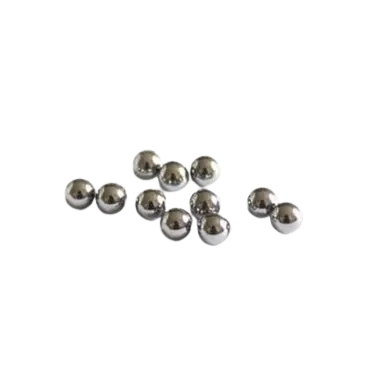

So, how do you go about adjusting these parameters? Well, it all starts with understanding the properties of the steel balls you're working with. Different types of steel have different melting points and thermal conductivities, which means that the welding parameters will need to be adjusted accordingly. For example, Chorme Steel Ball have different characteristics compared to 316 Stainless Steel Balls.
1. Selecting the Right Electrode
The electrode you choose is one of the most important factors in the welding process. There are several types of electrodes available, each with its own unique properties. For weldable steel balls, you'll typically want to use an electrode that is designed for welding steel. Some common types of electrodes for steel welding include E6010, E6011, E6013, and E7018.
- E6010 and E6011: These electrodes are known for their deep penetration and are great for welding thick steel. They're also suitable for welding in all positions, which makes them versatile for different welding applications.
- E6013: This electrode is easy to use and provides a smooth, clean weld. It's a good choice for beginners or for welding thinner steel.
- E7018: This is a high - strength electrode that produces a strong, ductile weld. It's often used for critical applications where the weld needs to withstand high stress.
2. Adjusting the Welding Current
The welding current is another crucial parameter. It determines the amount of heat that is generated during the welding process. The right current depends on the thickness of the steel balls and the type of electrode you're using.
- For thinner steel balls, you'll generally need a lower welding current. This helps prevent overheating and distortion. A good rule of thumb is to start with a lower current and gradually increase it until you get a good weld bead.
- For thicker steel balls, a higher current is required to ensure proper penetration. However, be careful not to set the current too high, as this can lead to excessive spatter and a poor - quality weld.
3. Controlling the Welding Speed
The welding speed affects the heat input and the shape of the weld bead. If you weld too slowly, you'll deposit too much metal, which can cause the weld to be bulky and may lead to distortion. On the other hand, if you weld too fast, the weld may not have enough penetration and the bond may be weak.
- You should aim for a consistent welding speed. This can take some practice, but with experience, you'll be able to find the sweet spot. Watch the weld pool as you're welding. If it's too fluid and running ahead of the electrode, you're probably going too slow. If the weld bead looks uneven or has gaps, you may be going too fast.
4. Choosing the Right Shielding Gas
Shielding gas is used to protect the weld from atmospheric contamination. For welding steel balls, argon - carbon dioxide mixtures are commonly used.
- A mixture of 75% argon and 25% carbon dioxide is a popular choice. This mixture provides good arc stability and helps produce a clean, strong weld. It also reduces spatter compared to using 100% carbon dioxide.
- The flow rate of the shielding gas is also important. A typical flow rate for welding steel balls is between 15 - 25 cubic feet per hour (CFH). You can adjust this based on the size of the weld and the welding environment.
5. Pre - heating and Post - heating
In some cases, pre - heating the steel balls before welding can be beneficial. Pre - heating helps reduce the cooling rate of the weld, which can prevent cracking and improve the toughness of the weld. This is especially important for thicker steel balls or for high - strength steels.
- Post - heating is also sometimes necessary to relieve stress in the weld. After welding, you can heat the welded area to a specific temperature and then let it cool slowly. This helps reduce the internal stress in the weld and can improve its long - term performance.
6. Testing and Quality Control
Once you've adjusted the welding parameters and made a test weld, it's important to perform some quality control checks. You can use non - destructive testing methods such as visual inspection, ultrasonic testing, or magnetic particle testing to check for any defects in the weld.
- Visual inspection is the simplest method. Look for any signs of cracks, porosity, or unevenness in the weld bead. If you find any issues, you may need to adjust the welding parameters and try again.
As a supplier of Weldable Steel Balls, I've seen firsthand how important it is to get the welding parameters right. Whether you're using these steel balls for small - scale projects or large - scale industrial applications, proper welding ensures that the final product meets the highest standards of quality and performance.
If you're in the market for high - quality weldable steel balls, I'd love to have a chat with you. We offer a wide range of sizes and grades to suit your specific needs. Whether you need Chorme Steel Ball, 316 Stainless Steel Balls, or other types of Metal Ball, we've got you covered. Reach out to us for more information and let's start a conversation about your procurement needs.
References
- AWS Welding Handbook, American Welding Society
- Welding Metallurgy and Weldability of Stainless Steels, John C. Lippold and David J. Kotecki
- Steel Welding Guide, Lincoln Electric