
Hey there! As a supplier of gravity taper rollers, I've seen firsthand how these nifty little components have changed over the years. Let's take a stroll down memory lane and explore the evolution of gravity taper rollers.
Back in the day, the concept of rollers wasn't new. People had been using simple cylindrical logs to move heavy objects for ages. But the idea of a tapered roller, specifically a gravity - based one, was a game - changer. The early versions of gravity taper rollers were pretty basic. They were mainly used in simple mechanical systems where there was a need to transfer motion or reduce friction between two surfaces.
In those early days, the materials used to make these rollers were limited. Most were made from basic metals like iron. Iron was readily available and relatively easy to shape. However, it had its drawbacks. Iron was prone to rusting, which meant that the rollers had a relatively short lifespan, especially in environments where they were exposed to moisture. Also, the precision of these early rollers was far from perfect. Manufacturing techniques were primitive, and it was difficult to achieve a consistent taper and smooth surface finish.
As time went on, the industrial revolution hit, and everything changed. With the development of new manufacturing processes, the production of gravity taper rollers became more refined. The use of steel became more widespread. Steel offered better strength and durability compared to iron. It was less likely to rust if properly treated, and it could withstand higher loads. This made gravity taper rollers suitable for more heavy - duty applications, such as in large machinery and automotive engines.

During this period, engineers also started to understand the importance of the taper angle. The taper angle of a roller affects its performance in various ways. A well - designed taper angle can improve the distribution of load across the roller, reducing stress concentrations and increasing the overall efficiency of the system. So, manufacturers began to experiment with different taper angles to optimize the performance of gravity taper rollers.
In the mid - 20th century, there was a significant leap in technology. The introduction of precision machining techniques allowed for much more accurate production of gravity taper rollers. Computer - controlled machining (CNC) became a game - changer. With CNC, manufacturers could produce rollers with extremely tight tolerances. This meant that the rollers fit more precisely into their applications, reducing noise, vibration, and wear.
Another major development was the improvement in surface treatments. Coatings were applied to the rollers to enhance their performance. For example, some rollers were coated with materials that reduced friction, such as Teflon - based coatings. Others were coated with hard - wearing materials to increase their resistance to abrasion. These surface treatments not only improved the performance of the rollers but also extended their service life.
As industries became more specialized, the demand for different types of gravity taper rollers grew. This led to the development of various sub - types. For instance, the Cylindrical Roller is a type that has some unique characteristics. It can handle higher radial loads compared to some other types of rollers, making it suitable for applications where there is a large amount of radial force, like in conveyor systems.
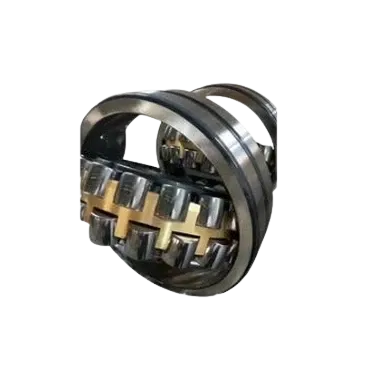
The Spherical Roller is another interesting development. Its spherical shape allows it to accommodate misalignment between the shaft and the housing. This is extremely useful in applications where there might be some slight misalignment due to manufacturing tolerances or thermal expansion.
Then there's the Needle Roller. Needle rollers are much smaller in diameter compared to other types of rollers. They are ideal for applications where space is limited, such as in small - sized engines or precision instruments.
In recent years, with the rise of the digital age, the design and production of gravity taper rollers have entered a new era. Simulation software is now used to model the performance of rollers under different conditions. This allows engineers to optimize the design of the rollers before they are even manufactured. They can predict how the rollers will behave under various loads, temperatures, and speeds, and make adjustments to the design accordingly.
Additive manufacturing, or 3D printing, is also starting to make its mark in the production of gravity taper rollers. 3D printing offers the possibility of creating complex geometries that were previously impossible or very difficult to achieve using traditional manufacturing methods. This could lead to the development of even more efficient and high - performance gravity taper rollers in the future.
So, what does all this mean for you, the potential customer? Well, as a supplier, I can offer you a wide range of gravity taper rollers that have benefited from all these years of evolution. Whether you need a simple roller for a basic application or a highly specialized one for a complex system, I've got you covered.
The evolution of gravity taper rollers has been a long and exciting journey. From the humble beginnings of iron - made rollers to the high - tech, precision - engineered components of today, these rollers have come a long way. And the future looks even more promising, with new technologies on the horizon.
If you're in the market for gravity taper rollers, don't hesitate to reach out. I'd love to have a chat with you about your specific needs and see how I can help you find the perfect rollers for your application. Whether it's a large - scale industrial project or a small - scale DIY job, I'm here to assist. Let's start a conversation and see how we can work together to get you the best gravity taper rollers out there.
References
- "Rolling Element Bearings: Design, Analysis, and Applications" by Peter J. McFadden and Howard A. Spikes
- "Handbook of Mechanical Engineering" edited by Robert A. Kosowski
- Various industry reports on the development of manufacturing technologies for rollers.