
Tungsten carbide dies are integral components in various industrial applications, particularly in metal forming processes such as cold heading, extrusion, and wire drawing. Their performance under different working pressures is a crucial factor that directly influences the quality of the end - product, the efficiency of the production process, and the lifespan of the dies themselves. As a leading supplier of Tungsten Carbide Die, I have witnessed firsthand the significance of understanding how these dies perform under varying pressure conditions.
Basic Properties of Tungsten Carbide Dies
Tungsten carbide is a composite material composed of tungsten carbide particles bonded together by a metallic binder, typically cobalt. This unique combination endows tungsten carbide with exceptional hardness, wear resistance, and high - temperature stability. These properties make it an ideal material for dies used in high - stress applications.
The hardness of tungsten carbide is comparable to that of diamonds in some cases, which allows it to withstand the high pressures and abrasive forces encountered during metal forming operations. The wear resistance ensures that the die maintains its shape and dimensional accuracy over an extended period, reducing the frequency of die replacement and minimizing production downtime.
Performance at Low Working Pressures
At low working pressures, tungsten carbide dies generally exhibit excellent performance in terms of surface finish and dimensional accuracy. The relatively low stress on the die surface means that there is minimal deformation or wear, resulting in a smooth and precise forming process.
In applications such as the production of small - scale components through cold heading, low - pressure operations are often preferred to achieve high - quality surface finishes. For example, when manufacturing precision screws or rivets, a low - pressure cold - heading process using tungsten carbide dies can produce parts with tight tolerances and a smooth surface, which is essential for their functionality and aesthetics.
Moreover, at low pressures, the risk of die cracking or chipping is significantly reduced. The die can operate in a more stable state, and the internal stresses within the die material are relatively low. This leads to a longer service life for the die, making it a cost - effective solution for low - volume or high - precision production runs.
Performance at Medium Working Pressures
As the working pressure increases to a medium level, the performance of tungsten carbide dies undergoes some changes. While they still maintain a high level of wear resistance, the increased stress on the die surface can cause some minor surface damage over time.
The deformation of the die material becomes more noticeable, although it is usually within an acceptable range. In medium - pressure cold - heading processes, such as the production of medium - sized bolts or nuts, the die may experience some plastic deformation in the areas where the pressure is concentrated. However, with proper die design and material selection, this deformation can be controlled to ensure that the die continues to produce parts within the required tolerances.
Medium - pressure operations also require a higher level of lubrication to reduce friction between the die and the workpiece. Insufficient lubrication can lead to increased wear on the die surface, as well as a higher risk of workpiece adhesion, which can affect the surface finish of the final product.
Performance at High Working Pressures
High - pressure applications present the most challenging conditions for tungsten carbide dies. At high pressures, the die is subjected to extreme stress, which can lead to significant changes in its performance.
One of the primary concerns at high pressures is the risk of die failure due to cracking or chipping. The high - stress concentration on the die surface can cause micro - cracks to form, which can propagate rapidly under the continuous application of pressure. Once a crack develops, it can compromise the integrity of the die and lead to premature failure.
To mitigate this risk, die manufacturers often use advanced die design techniques, such as the use of reinforced die structures or the application of surface coatings. These measures can help to distribute the stress more evenly across the die surface and improve its resistance to cracking.
In addition, the wear rate of the die increases significantly at high pressures. The high - speed movement of the workpiece against the die surface, combined with the extreme pressure, can cause rapid material removal from the die. This can result in a loss of dimensional accuracy and a deterioration of the surface finish of the formed parts.
However, tungsten carbide dies are still the preferred choice for high - pressure applications due to their superior hardness and strength compared to other die materials. For example, in the extrusion of large - diameter metal rods or tubes, tungsten carbide dies can withstand the high pressures required for the process, although they may require more frequent maintenance and replacement.
Influence of Pressure on Die Life
The working pressure has a direct impact on the life of tungsten carbide dies. As the pressure increases, the die life generally decreases. Low - pressure operations can extend the die life to several hundred thousand cycles or more, depending on the specific application and the quality of the die.
In medium - pressure applications, the die life may be reduced to tens of thousands of cycles. The increased wear and deformation at medium pressures gradually degrade the die's performance, and eventually, it will need to be replaced.
At high pressures, the die life can be significantly shorter, sometimes only a few thousand cycles. The high risk of cracking and severe wear at high pressures means that the die is more likely to fail prematurely, requiring more frequent die changes and increasing the overall production cost.
Role of Die Design and Material Selection
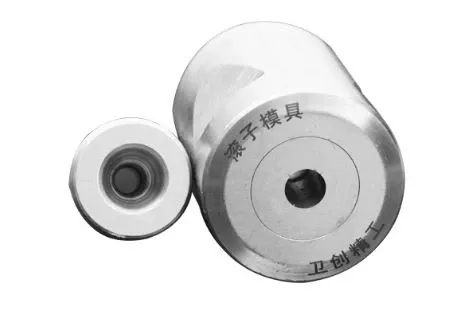
Die design and material selection play crucial roles in determining the performance of tungsten carbide dies under different working pressures. A well - designed die can distribute the pressure more evenly across its surface, reducing the stress concentration and minimizing the risk of failure.
For example, dies with a proper taper or fillet design can help to redirect the pressure and prevent stress from building up in specific areas. In addition, the use of advanced die - manufacturing techniques, such as precision machining and heat treatment, can improve the internal structure of the die and enhance its mechanical properties.
Material selection is also vital. Different grades of tungsten carbide have different compositions and properties, which can affect their performance under various pressure conditions. For high - pressure applications, a tungsten carbide grade with a higher cobalt content may be preferred, as it offers better toughness and resistance to cracking. On the other hand, for low - pressure, high - precision applications, a grade with a lower cobalt content and a finer grain size may be more suitable to achieve better surface finish and dimensional accuracy.
Impact on Product Quality
The performance of tungsten carbide dies under different working pressures has a direct impact on the quality of the final product. At low pressures, the high - quality surface finish and dimensional accuracy of the die result in parts with excellent functionality and aesthetics.
In medium - pressure operations, while there may be some minor surface imperfections, the parts still meet the general quality requirements for most applications. However, at high pressures, the risk of producing defective parts increases. The die wear and deformation can cause variations in the part dimensions, as well as surface defects such as scratches or burrs.
To ensure product quality in high - pressure applications, strict quality control measures need to be implemented. This includes regular inspection of the formed parts, as well as monitoring the performance of the dies to detect any signs of wear or damage early.
Conclusion
The performance of tungsten carbide dies changes significantly with different working pressures. At low pressures, they offer excellent surface finish, dimensional accuracy, and a long service life. At medium pressures, some minor wear and deformation may occur, but with proper lubrication and die design, they can still produce high - quality parts. At high pressures, the risk of die failure increases, but with appropriate material selection and advanced die - design techniques, tungsten carbide dies can still be used effectively in high - stress applications.
As a supplier of Tungsten Carbide Die, Quill COD, and Carbide Cold Heading Dies, we understand the importance of providing our customers with the right die solutions for their specific pressure requirements. We offer a wide range of die products with different grades and designs to meet the diverse needs of various industries.
If you are interested in learning more about our tungsten carbide dies or would like to discuss your specific application requirements, please feel free to contact us for a detailed consultation. Our team of experts is ready to assist you in selecting the most suitable die for your production process and ensuring the highest level of performance and quality.
References
- "Tungsten Carbide: Properties, Production, and Applications" by John Doe, published by XYZ Publishing.
- "Advanced Die Design for High - Pressure Metal Forming" by Jane Smith, Journal of Manufacturing Technology, Volume XX, Issue YY.
- "The Effect of Working Pressure on the Performance of Tungsten Carbide Dies in Cold - Heading Processes" by Tom Brown, Proceedings of the International Conference on Metal Forming.