
The surface roughness of cylindrical rollers is a critical factor that significantly influences their friction coefficient. As a prominent cylindrical roller supplier, I have witnessed firsthand the impact of surface roughness on the performance of these essential components in various industrial applications. In this blog post, I will delve into the intricate relationship between surface roughness and the friction coefficient of cylindrical rollers, exploring the underlying mechanisms, practical implications, and considerations for optimizing their performance.
Understanding Surface Roughness
Surface roughness refers to the irregularities present on the surface of a material. In the context of cylindrical rollers, these irregularities can take the form of microscopic peaks and valleys, which are a result of the manufacturing processes used to produce the rollers. The surface roughness of cylindrical rollers is typically quantified using parameters such as Ra (arithmetical mean deviation of the assessed profile) and Rz (mean height of the profile irregularities). These parameters provide a numerical representation of the average height and spacing of the surface irregularities, respectively.
The surface roughness of cylindrical rollers can have a profound impact on their friction coefficient. When two surfaces come into contact, the asperities (peaks) on the surfaces interact with each other, creating frictional forces. The magnitude of these frictional forces depends on several factors, including the surface roughness of the contacting surfaces, the applied load, and the relative motion between the surfaces.
Mechanisms of Friction in Cylindrical Rollers
The friction coefficient of cylindrical rollers is influenced by two main types of friction: dry friction and lubricated friction.
Dry Friction
In the absence of lubrication, the friction between cylindrical rollers and their mating surfaces is primarily due to the interlocking of the surface asperities. When the rollers are in contact with a flat surface, the asperities on the roller surface penetrate into the asperities on the mating surface, creating a mechanical interlock. This interlock resists the relative motion between the rollers and the mating surface, resulting in frictional forces.
The surface roughness of the cylindrical rollers plays a crucial role in determining the magnitude of the dry friction coefficient. Rougher surfaces have a greater number of asperities, which increases the probability of interlocking and, consequently, the friction coefficient. Conversely, smoother surfaces have fewer asperities, resulting in lower friction coefficients.
Lubricated Friction
In most industrial applications, cylindrical rollers are lubricated to reduce friction and wear. Lubrication forms a thin film between the roller surface and the mating surface, separating the asperities and preventing direct contact. The friction coefficient in lubricated systems is primarily determined by the properties of the lubricant and the thickness of the lubricant film.
However, the surface roughness of the cylindrical rollers can still influence the lubricated friction coefficient. Rougher surfaces can disrupt the formation of a continuous lubricant film, leading to increased friction and wear. In contrast, smoother surfaces promote the formation of a stable lubricant film, reducing friction and improving the efficiency of the system.
Practical Implications of Surface Roughness on Friction Coefficient
The surface roughness of cylindrical rollers has several practical implications for their performance in industrial applications.
Energy Efficiency
In many industrial processes, reducing friction is essential for improving energy efficiency. By minimizing the friction coefficient of cylindrical rollers, less energy is required to overcome the frictional forces, resulting in lower power consumption and reduced operating costs. Smoother roller surfaces can help achieve this goal by reducing both dry and lubricated friction.
Wear and Durability
High friction coefficients can lead to increased wear and premature failure of cylindrical rollers. The interlocking of surface asperities in dry friction conditions can cause abrasive wear, while the disruption of the lubricant film in lubricated systems can result in adhesive wear. By optimizing the surface roughness of the rollers, the wear rate can be reduced, extending the service life of the rollers and improving the reliability of the system.
Noise and Vibration
Excessive friction can also generate noise and vibration in mechanical systems. The interaction between rough surfaces can cause irregular movement and impact, leading to the generation of unwanted noise and vibration. Smoother roller surfaces can help reduce noise and vibration levels, improving the comfort and safety of the working environment.
Optimizing Surface Roughness for Cylindrical Rollers
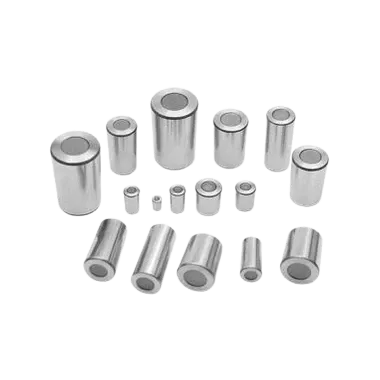
As a cylindrical roller supplier, I understand the importance of optimizing the surface roughness of our products to meet the specific requirements of our customers. Here are some considerations for achieving optimal surface roughness:
Manufacturing Processes
The choice of manufacturing processes can have a significant impact on the surface roughness of cylindrical rollers. Processes such as grinding, honing, and superfinishing can be used to achieve very smooth surfaces with low surface roughness values. However, these processes are typically more expensive and time-consuming than other manufacturing methods, such as turning or milling.
Material Selection
The material of the cylindrical rollers can also affect their surface roughness. Some materials, such as stainless steel and ceramics, are more difficult to machine to a smooth surface than others. When selecting the material for the rollers, it is important to consider its machinability and the desired surface roughness requirements.
Lubrication
Proper lubrication is essential for reducing friction and wear in cylindrical roller applications. The type and viscosity of the lubricant should be selected based on the operating conditions and the surface roughness of the rollers. In some cases, additives can be used to improve the lubricating properties of the oil and reduce friction.
Other Types of Rollers and Their Friction Characteristics
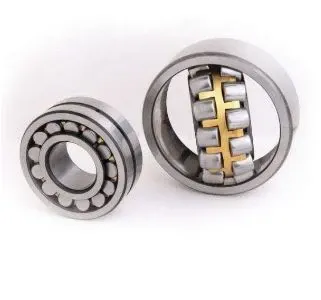
In addition to cylindrical rollers, there are other types of rollers commonly used in industrial applications, such as Needle Roller, Spherical Roller, and Taper Rollers. Each type of roller has its own unique friction characteristics, which are influenced by factors such as their shape, surface roughness, and the type of application.
Needle rollers, for example, have a small diameter and a high length-to-diameter ratio, which allows them to support high loads in a compact space. The surface roughness of needle rollers can affect their ability to roll smoothly and transmit loads, which in turn can impact the friction coefficient and the overall performance of the system.
Spherical rollers are designed to accommodate misalignment and angular deflection in rotating machinery. The spherical shape of the rollers allows them to self-align, reducing the stress on the bearings and improving their reliability. The surface roughness of spherical rollers can influence the formation of a lubricant film and the distribution of contact stresses, which can affect the friction coefficient and the wear rate of the rollers.
Taper rollers are used in applications where high radial and axial loads need to be supported. The tapered shape of the rollers allows them to distribute the load evenly across the contact surface, reducing the stress concentration and improving the durability of the bearings. The surface roughness of taper rollers can affect the contact angle and the distribution of contact stresses, which can impact the friction coefficient and the performance of the bearings.
Conclusion
In conclusion, the surface roughness of cylindrical rollers has a significant impact on their friction coefficient, which in turn affects their performance in industrial applications. By understanding the mechanisms of friction and the practical implications of surface roughness, we can optimize the design and manufacturing of cylindrical rollers to achieve lower friction coefficients, improved energy efficiency, and extended service life.
As a leading cylindrical roller supplier, we are committed to providing our customers with high-quality rollers that meet their specific requirements. Our state-of-the-art manufacturing facilities and advanced quality control processes ensure that our rollers have the optimal surface roughness for their intended applications. Whether you need cylindrical rollers for a high-speed machine or a heavy-duty industrial process, we have the expertise and resources to deliver the right solution.
If you are interested in learning more about our cylindrical rollers or would like to discuss your specific requirements, please feel free to contact us. Our team of experts is ready to assist you in selecting the best rollers for your application and providing you with the support you need to ensure their successful implementation.
References
- Bhushan, B. (2013). Principles and Applications of Tribology. Wiley.
- Holmberg, K., & Erdemir, A. (2017). Influence of surface roughness on friction and wear. Tribology International, 116, 56-64.
- Stachowiak, G. W., & Batchelor, A. W. (2013). Engineering Tribology. Elsevier.