
The surface finish of needle rollers plays a pivotal role in determining their performance across a wide range of applications. As a leading supplier of [Needle Roller], I've witnessed firsthand how even the slightest variation in surface finish can have far - reaching implications for the efficiency, durability, and overall functionality of these essential components. In this blog, we'll delve into the science behind surface finish and explore its impact on needle roller performance.
Understanding Surface Finish
Surface finish refers to the texture of a surface, which is determined by a combination of roughness, waviness, and lay. Roughness is the fine irregularities on the surface, typically measured in micro - inches or micrometers. Waviness, on the other hand, represents larger, more widely spaced deviations from the ideal surface, often caused by machine vibrations or tool wear. Lay describes the direction of the predominant surface pattern, which can be influenced by the manufacturing process.
For needle rollers, the surface finish is carefully controlled during the manufacturing process to meet specific application requirements. Common methods for achieving the desired surface finish include grinding, honing, and superfinishing. Each method offers unique advantages in terms of surface quality, precision, and cost - effectiveness.
Impact on Friction and Wear
One of the most significant ways in which surface finish affects needle roller performance is through its influence on friction and wear. A smooth surface finish reduces the contact area between the needle roller and its mating surfaces, resulting in lower frictional forces. This, in turn, leads to less energy loss and heat generation during operation, improving the overall efficiency of the system.
In addition to reducing friction, a smooth surface finish also helps to minimize wear. Rough surfaces can cause abrasion and damage to the mating components, leading to premature failure. By contrast, a well - finished surface provides a more uniform contact pressure distribution, reducing the risk of localized wear and extending the service life of the needle roller.
For example, in high - speed applications such as automotive engines and machine tools, a smooth surface finish is essential to prevent excessive heat buildup and wear. Needle rollers with a high - quality surface finish can operate at higher speeds and loads, providing reliable performance over an extended period.
Noise and Vibration
Another important aspect of needle roller performance is noise and vibration. A rough surface finish can cause irregularities in the motion of the needle roller, leading to increased noise and vibration levels. This can be particularly problematic in applications where quiet operation is required, such as in precision instruments and medical devices.
By improving the surface finish, we can reduce the noise and vibration generated by the needle roller. A smooth surface allows for a more consistent and stable motion, minimizing the transmission of vibrations to the surrounding components. This not only enhances the user experience but also helps to protect the integrity of the system by reducing the risk of damage caused by excessive vibration.
For instance, in household appliances and office equipment, a smooth surface finish on needle rollers can significantly reduce the noise level, making the products more comfortable to use.
Lubrication Efficiency
Surface finish also has a direct impact on lubrication efficiency. A smooth surface provides better lubricant retention, allowing for a more effective lubricating film to form between the needle roller and its mating surfaces. This lubricating film acts as a barrier, reducing friction and wear by separating the two surfaces and preventing direct metal - to - metal contact.
On the other hand, a rough surface can disrupt the lubricating film, leading to poor lubrication and increased friction. The irregularities on the surface can cause the lubricant to be squeezed out, resulting in a breakdown of the protective film. This can lead to accelerated wear and potential failure of the needle roller.
In applications where lubrication is critical, such as in heavy - duty machinery and industrial equipment, a smooth surface finish is essential to ensure proper lubrication and reliable performance. Needle rollers with a well - finished surface can maintain a stable lubricating film even under extreme conditions, providing long - term protection against wear and corrosion.
Fatigue Resistance
The surface finish of a needle roller can also affect its fatigue resistance. Fatigue failure occurs when a component is subjected to repeated loading over time, leading to the formation and propagation of cracks. A rough surface finish can act as stress concentrators, increasing the likelihood of crack initiation and reducing the fatigue life of the needle roller.
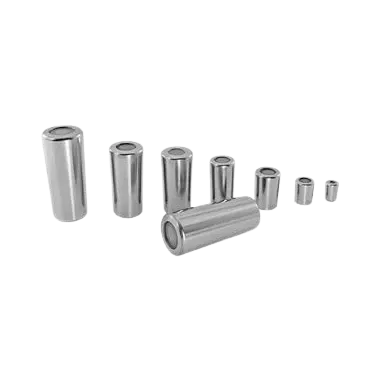

By improving the surface finish, we can reduce the stress concentrations and enhance the fatigue resistance of the needle roller. A smooth surface distributes the stress more evenly, preventing the formation of cracks and extending the component's service life.
In applications where cyclic loading is common, such as in aerospace and marine industries, a high - quality surface finish is crucial to ensure the safety and reliability of the needle roller. Needle rollers with excellent fatigue resistance can withstand the repeated stresses of operation, providing long - term performance and durability.
Comparison with Other Rolling Elements
When considering the performance of needle rollers, it's also useful to compare them with other types of rolling elements, such as Gravity Taper Roller and Cross Roller. While each type of rolling element has its own unique characteristics, needle rollers offer several advantages in terms of surface finish and performance.
Needle rollers typically have a smaller diameter and a higher length - to - diameter ratio compared to other rolling elements. This allows for a larger contact area and a more uniform load distribution, making them well - suited for applications where high radial loads and limited space are involved. Additionally, the surface finish of needle rollers can be more precisely controlled during the manufacturing process, resulting in better performance and reliability.
In contrast, gravity taper rollers are designed to handle both radial and axial loads, but they may require a more complex surface finish to ensure proper alignment and performance. Cross rollers, on the other hand, are often used in applications where high stiffness and precision are required, but they may have different surface finish requirements depending on the specific design and application.
Conclusion
In conclusion, the surface finish of needle rollers has a profound impact on their performance in terms of friction, wear, noise, vibration, lubrication efficiency, and fatigue resistance. As a supplier of Needle Roller, we understand the importance of providing high - quality products with the optimal surface finish to meet the diverse needs of our customers.
Whether you're in the automotive, aerospace, industrial, or medical industry, choosing the right needle roller with the appropriate surface finish is essential for achieving reliable and efficient performance. If you're interested in learning more about our needle roller products or have specific requirements for your application, we invite you to contact us for a consultation. Our team of experts is ready to assist you in selecting the best solution for your needs and ensuring a successful partnership.
References
- Dooner, M. K., & Lewis, R. W. (2004). The influence of surface roughness on elastohydrodynamic lubrication. Tribology International, 37(6), 517 - 524.
- Hutchings, I. M. (1992). Tribology: friction and wear of engineering materials. CRC press.
- Stachowiak, G. W., & Batchelor, A. W. (2005). Engineering tribology. Elsevier.