
In the field of mechanical engineering, ball bearings are indispensable components whose performance directly impacts the efficiency and reliability of various machinery. As a leading supplier of ball bearing balls, I've witnessed firsthand how the sphericity of these balls can significantly affect their performance. In this blog post, I'll delve into the relationship between sphericity and the performance of ball bearing balls, exploring the implications for different applications and industries.
Understanding Sphericity
Sphericity is a measure of how closely a particle or object resembles a perfect sphere. In the context of ball bearing balls, it refers to the degree to which the ball's surface conforms to an ideal spherical shape. A perfectly spherical ball has a uniform radius at all points on its surface, ensuring consistent contact and load distribution within the bearing.
The sphericity of ball bearing balls is typically quantified using precision measurement techniques, such as roundness testing. These tests involve rotating the ball on a precision spindle and measuring the variation in its radius at multiple points around its circumference. The results are then used to calculate a roundness error, which provides an indication of how far the ball deviates from a perfect sphere.
Impact on Load Distribution
One of the primary ways in which sphericity affects the performance of ball bearing balls is through its influence on load distribution. In a ball bearing, the balls are responsible for transmitting the load between the inner and outer races. A perfectly spherical ball distributes the load evenly across its contact surface, minimizing stress concentrations and reducing the risk of premature wear and failure.
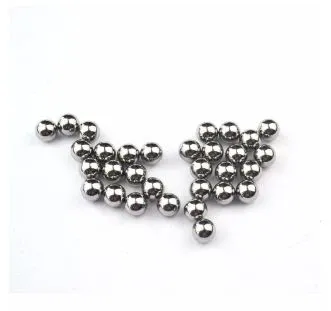
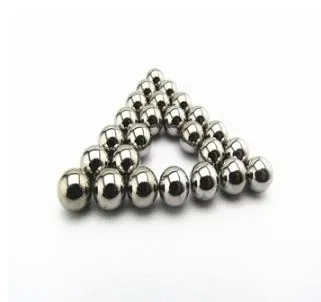
Conversely, a ball with poor sphericity will have uneven contact with the races, leading to localized stress concentrations. These stress concentrations can cause excessive wear, deformation, and even cracking of the ball and the races. Over time, this can lead to a significant reduction in the bearing's lifespan and performance.
For example, in high-speed applications such as electric motors and machine tools, even a small deviation from perfect sphericity can have a profound impact on the bearing's performance. The high rotational speeds generate significant centrifugal forces, which can exacerbate the effects of uneven load distribution. As a result, bearings with balls of poor sphericity are more likely to experience vibration, noise, and premature failure in these applications.
Effect on Friction and Efficiency
Another important aspect of ball bearing performance is friction. Friction in a ball bearing can lead to energy losses, heat generation, and increased wear. The sphericity of the balls plays a crucial role in determining the level of friction within the bearing.
A perfectly spherical ball has a smooth and uniform contact surface, which minimizes friction between the ball and the races. This allows the bearing to operate more efficiently, reducing energy consumption and extending the lifespan of the bearing. In contrast, a ball with poor sphericity will have a rough and uneven contact surface, which increases friction and energy losses.
In addition to reducing efficiency, high friction can also cause the bearing to overheat. Excessive heat can lead to thermal expansion of the bearing components, which can further increase friction and wear. In extreme cases, overheating can even cause the bearing to seize, resulting in catastrophic failure of the machinery.
Influence on Noise and Vibration
Noise and vibration are common issues in ball bearings, especially in high-speed and high-precision applications. The sphericity of the balls can have a significant impact on the level of noise and vibration generated by the bearing.
A perfectly spherical ball rotates smoothly within the bearing, minimizing the generation of noise and vibration. In contrast, a ball with poor sphericity will have an irregular motion, which can cause the bearing to vibrate and produce noise. This can be particularly problematic in applications where quiet operation is essential, such as in medical equipment and precision instruments.
In addition to the direct effects of poor sphericity on noise and vibration, it can also lead to secondary issues such as resonance. Resonance occurs when the natural frequency of the bearing or the machinery coincides with the frequency of the vibration generated by the bearing. This can amplify the vibration and noise, leading to further problems and potentially damaging the machinery.
Applications and Considerations
The importance of sphericity varies depending on the specific application and requirements of the ball bearing. In some applications, such as low-speed and low-load applications, a certain degree of deviation from perfect sphericity may be acceptable. However, in high-speed, high-precision, and high-load applications, even a small deviation can have a significant impact on the performance and reliability of the bearing.
For example, in automotive applications, ball bearings are used in a variety of components, including engines, transmissions, and wheel hubs. In these applications, the sphericity of the balls is critical for ensuring smooth operation, reducing noise and vibration, and extending the lifespan of the bearings. Similarly, in aerospace applications, where reliability and performance are of utmost importance, the sphericity of the balls is carefully controlled to meet the strict requirements of the industry.
As a supplier of ball bearing balls, we understand the importance of sphericity in different applications. That's why we offer a wide range of high-quality ball bearing balls with excellent sphericity. Our Solid Steel Balls, Carbon Steel Ball, and Inch Steel Ball are manufactured using advanced production techniques and strict quality control measures to ensure the highest level of sphericity and performance.
Conclusion
In conclusion, the sphericity of ball bearing balls has a profound impact on their performance, including load distribution, friction, efficiency, noise, and vibration. A perfectly spherical ball ensures even load distribution, minimizes friction, and reduces noise and vibration, resulting in improved performance and reliability of the bearing.
As a supplier of ball bearing balls, we are committed to providing our customers with high-quality products that meet their specific requirements. Whether you need Solid Steel Balls, Carbon Steel Ball, or Inch Steel Ball, we have the expertise and resources to deliver the right solution for your application.
If you're interested in learning more about our ball bearing balls or would like to discuss your specific requirements, please don't hesitate to contact us. We look forward to the opportunity to work with you and help you improve the performance and reliability of your machinery.
References
- Harris, T. A., & Kotzalas, M. N. (2007). Rolling Bearing Analysis. Wiley.
- Gupta, P. K. (2002). Ball and Roller Bearing Engineering. CRC Press.
- ISO 12100:2010, Safety of machinery - General principles for design - Risk assessment and risk reduction.