
Tungsten carbide dies are essential components in various industrial processes, known for their exceptional hardness, wear resistance, and high-temperature stability. The shape of these dies plays a crucial role in determining their applications and performance. As a trusted tungsten carbide die supplier, we understand the significance of die shape and its impact on different manufacturing scenarios.
Understanding the Basics of Tungsten Carbide Dies
Tungsten carbide is a composite material made up of tungsten carbide particles bound together by a metallic binder, usually cobalt. This combination results in a material that is extremely hard, second only to diamond, while also maintaining a certain degree of toughness. These properties make tungsten carbide dies ideal for a wide range of applications, including metal forming, cutting, and extrusion.
Impact of Die Shape on Cutting Applications
In cutting applications, the shape of the tungsten carbide die is designed to optimize the cutting process. For example, the Carbidecut Off Die COD is specifically shaped to provide a clean and precise cut. The die's shape determines the cutting edge geometry, which in turn affects the cutting force, chip formation, and surface finish of the cut material.
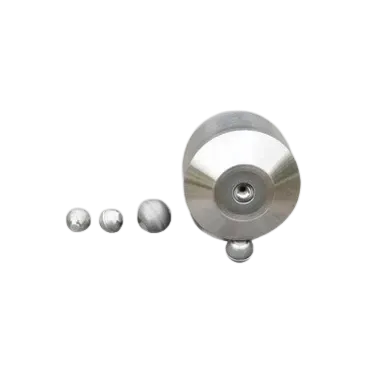
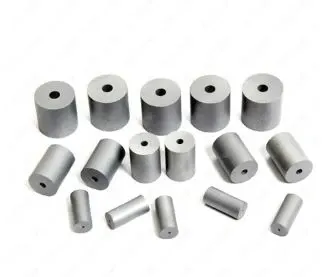
A well-designed cutting die will have a sharp cutting edge that minimizes the cutting force required. This not only reduces energy consumption but also extends the tool life by minimizing wear on the die. Additionally, the shape of the die can influence the way chips are formed and removed from the cutting zone. A die with a proper chip breaker shape can prevent chip clogging, which can lead to poor surface finish and even damage to the die.
Influence of Die Shape in Cold Forming and Forging
Cold forming and forging are processes that involve shaping metal at room temperature or slightly elevated temperatures. The shape of the tungsten carbide die in these applications is critical for achieving the desired part geometry and mechanical properties. Cold Forming/forging Tools are designed to withstand high pressures and forces while maintaining dimensional accuracy.
In cold heading, for instance, the die shape determines the shape of the head of the fastener being produced. The die must be precisely shaped to ensure that the head has the correct dimensions, including the diameter, height, and angle. A poorly shaped die can result in defective parts with inconsistent dimensions, which can lead to assembly problems and reduced product quality.
Moreover, the die shape can also affect the material flow during the cold forming process. A die with a smooth and well-designed cavity can promote uniform material flow, reducing the likelihood of defects such as cracks and voids in the formed part. This is particularly important in applications where high strength and reliability are required, such as in the automotive and aerospace industries.
Role of Die Shape in Extrusion Processes
Extrusion is a process in which a material is forced through a die to create a continuous profile with a specific cross-section. The shape of the tungsten carbide die in extrusion plays a key role in determining the final shape and quality of the extruded product. Carbide Cold Heading Dies used in extrusion are designed to have a precise internal shape that matches the desired cross-section of the extruded material.
The die shape affects the flow of the material through the die, which in turn influences the surface finish, dimensional accuracy, and mechanical properties of the extruded product. A die with a smooth and properly contoured internal surface can reduce friction and promote uniform material flow, resulting in a high-quality extruded product. Additionally, the shape of the die can be optimized to control the cooling rate of the extruded material, which can affect its microstructure and mechanical properties.
Customizing Die Shape for Specific Applications
One of the advantages of working with a reliable tungsten carbide die supplier is the ability to customize the die shape to meet specific application requirements. Every manufacturing process is unique, and a one-size-fits-all approach may not be suitable for achieving the best results. By working closely with our customers, we can design and manufacture dies with the exact shape and dimensions needed for their specific applications.
We use advanced computer-aided design (CAD) and manufacturing (CAM) technologies to create detailed die designs and ensure high precision in the manufacturing process. Our experienced engineers and technicians have the expertise to optimize the die shape based on factors such as the material being processed, the desired part geometry, and the production volume.
Conclusion
The shape of tungsten carbide dies has a profound impact on their applications and performance. Whether it's cutting, cold forming, forging, or extrusion, the die shape determines the efficiency, quality, and reliability of the manufacturing process. As a leading tungsten carbide die supplier, we are committed to providing our customers with high-quality dies that are precisely shaped to meet their specific needs.
If you are looking for tungsten carbide dies for your manufacturing processes, we invite you to contact us for a consultation. Our team of experts will work with you to understand your requirements and recommend the best die shape and design for your application. Let's work together to achieve optimal results in your manufacturing operations.
References
- Kalpakjian, S., & Schmid, S. R. (2008). Manufacturing Engineering and Technology. Pearson Prentice Hall.
- Dieter, G. E. (1986). Mechanical Metallurgy. McGraw-Hill.
- Avitzur, B. (1968). Metal Forming: Processes and Analysis. McGraw-Hill.